Sales and Personality Development Training for CARD Bank: Winning Corporate and Institutional Deposits
On October 23 and 24, 2026, Rainmakers delivered Sales and Personality Development: Winning, Growing, and Deepening Corporate and Institutional Deposit Relationships from First Approach to Funded Account. It was a two-day, face-to-face sales training program for the first batch of CARD Bank, Inc. Branch Managers covering South Luzon and adjacent areas, with 35 to 40 participants, facilitated by Coach Malvin Dinlasan.
Deposits do not walk into the branch on their own anymore. Corporate treasurers, school administrators, cooperative officers, and local government finance heads all have a bank already, and most of them are not looking for a new one. The Branch Manager who grows deposits is the one who goes out, finds the right account, earns a meeting, and gives the client a real reason to move their money. This program was built on one idea: a Branch Manager wins the deposit by understanding the client's money before talking about the bank's product.
Over two intensive days, the Branch Managers went from mapping the deposit opportunities around their own branches to pitching, negotiating, and closing in front of a panel playing the corporate treasurer. Here are the highlights.
In This Article
- Training at a glance
- Why deposit selling matters for Branch Managers
- Program goal: from branch operator to deposit mobilizer
- Meet the facilitator: Coach Malvin Dinlasan
- Day 1: winning the deposit, from prospecting to needs discovery
- Day 2: closing the deposit, from pitch to portfolio
- The final output: Ninety-Day Deposit Acquisition Action Plan
- Program highlights
Training at a Glance
| Program | Sales and Personality Development: Winning, Growing, and Deepening Corporate and Institutional Deposit Relationships from First Approach to Funded Account |
| Date | October 23 to 24, 2026, two days |
| Client | CARD Bank, Inc. (Batch 1) |
| Participants | 35 to 40 Branch Managers covering South Luzon and adjacent areas |
| Format | Face-to-face workshop, role-play, simulation, and activity-based |
| Facilitator | Coach Malvin Dinlasan |
| Core areas | Deposit mobilization mindset, prospecting and market mapping, approach and engagement, executive presence, consultative needs discovery, product pitching, objection handling and negotiation, closing and funding, relationship deepening, pipeline management |
| Final output | A Ninety-Day Deposit Acquisition and Relationship Deepening Action Plan from every participant |
Why Deposit Selling Matters for Branch Managers
A branch's deposit base decides more than its balance sheet. It shapes the cost of funds, the room the bank has to lend, and how much of the branch's growth is self-sustaining. For a mission-driven bank, every peso of stable deposits is also a peso that can be put back to work for the communities it serves.
But the market has changed. Corporate and institutional clients in South Luzon have more banking options than ever, and they are rarely unhappy enough to switch on their own. Branch Managers who wait behind the counter see the same accounts every month. Branch Managers who go out without a method tend to lead with rates, pitch too early, and walk away with a polite "we'll think about it." Neither builds a portfolio.
That is why consultative deposit selling has become one of the most requested topics among our sales training programs in the Philippines, especially for banks and financial institutions expanding their branch networks. The goal is not to turn Branch Managers into hard sellers. It is to help them sell the way a trusted banker does: by understanding the client's money first, then offering the right answer with confidence.
Program Goal: From Branch Operator to Deposit Mobilizer
CARD Bank's brief was clear: equip its Branch Managers with the selling discipline, consultative skill, and personal presence needed to mobilize savings and deposits from corporate, institutional, and high-value individual clients. That means prospecting and qualifying depositors within the territory, engaging decision makers with credibility, uncovering real financial needs before presenting any product, pitching and defending the bank's deposit offerings, closing and funding new accounts, and deepening every relationship into a growing deposit portfolio.
The program ran across two days and ten modules:
- Day 1, Winning the Deposit: The Branch Manager as a deposit mobilizer, prospecting and market mapping, approaching potential depositors, executive presence, and consultative needs discovery
- Day 2, Closing the Deposit: Pitching with conviction, handling objections and negotiating, closing and converting, relationship deepening, and building a sustainable pipeline
Meet the Facilitator: Coach Malvin Dinlasan
[FACILITATOR BIO PARAGRAPH 1: background, years of experience, areas of expertise.]
[FACILITATOR BIO PARAGRAPH 2: credentials, organizations, certifications.]
[FACILITATOR BIO PARAGRAPH 3: how this experience shapes the sessions. Participants work on real prospects from their own territory, rehearse the conversations they actually face with business owners and treasurers, and get direct feedback on how they pitch, handle pushback, and ask for the account.] Learn more about the Rainmakers team.
Day 1: Winning the Deposit, From Prospecting to Needs Discovery
The first day opened with a warm-up called "The Biggest Account I Almost Landed." Each Branch Manager shared a deposit opportunity that slipped away and what they think made the difference. The stories set the tone for the next two days: most lost accounts are not lost on rate, they are lost on approach, timing, and follow-through.
1. The Branch Manager as a deposit mobilizer
The Branch Managers started with the business case: why deposit growth determines the branch's cost of funds and lending capacity, and why the role has shifted from waiting behind the counter to selling in the market. They read the deposit landscape of South Luzon and adjacent areas, discussed what corporate and institutional depositors look for in a partner bank, and explored the trust advantage of a mission-driven institution. In a Branch Deposit Reality Check, each participant took an honest look at where their branch's deposit base stands today.
2. Prospecting and market mapping for deposit acquisition
Good deposit selling starts with knowing where the money is. The Branch Managers mapped the business, institutional, and cooperative landscape around their branches, and looked at the leads already within reach through existing borrowers, payroll accounts, suppliers, and referrals. They practiced profiling companies, schools, local government units, cooperatives, and associations, qualifying prospects by deposit size, account activity, and decision timeline, and identifying the real decision maker, signatory, and influencer. In the Territory Deposit Map and Priority Prospect List workshop, each participant built a target list for their own branch.
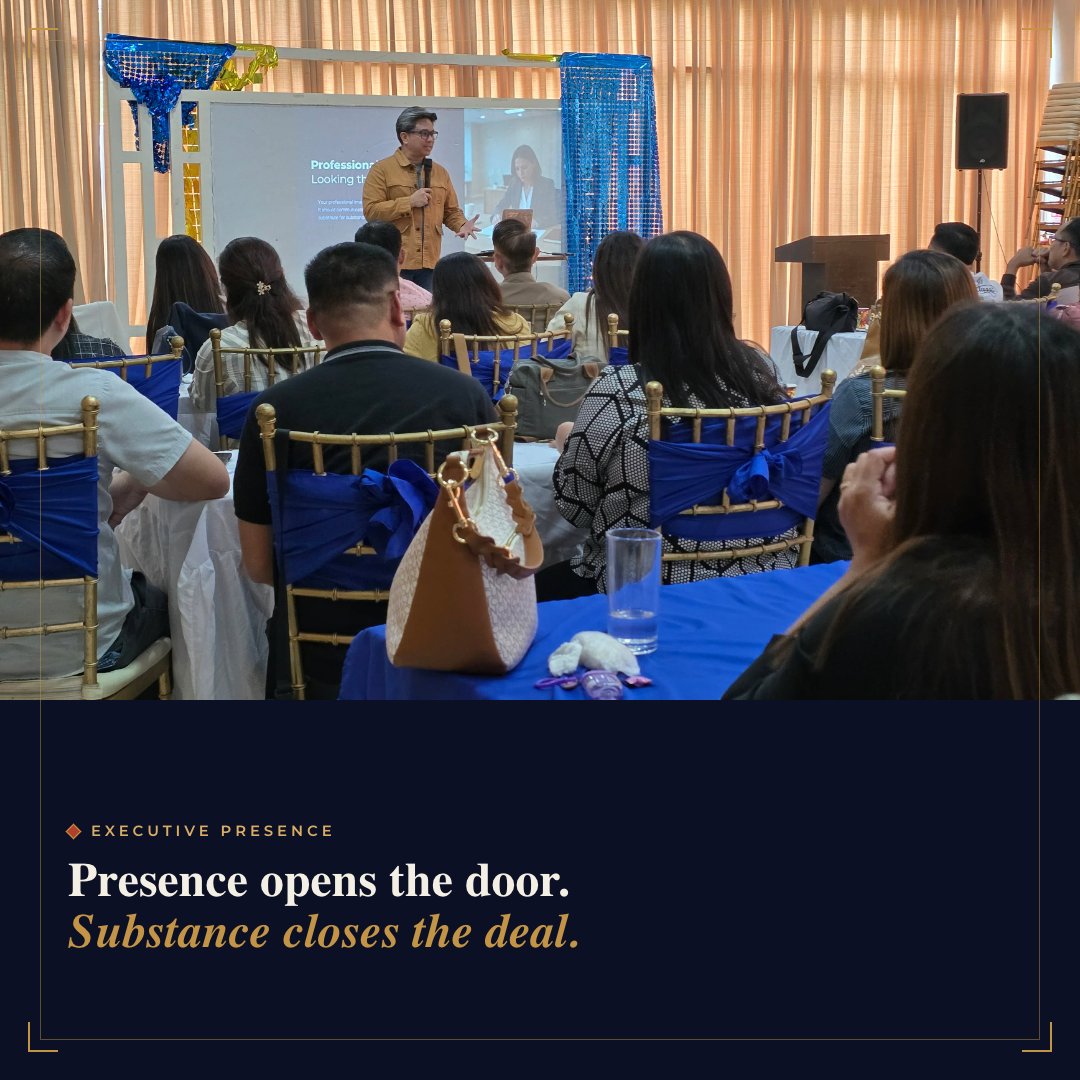
CARD Bank Branch Managers building their territory deposit maps and priority prospect lists.
3. Approaching and engaging potential depositors
A good prospect list is useless without a meeting. The Branch Managers worked on getting past the gatekeeper to the owner, treasurer, or finance head, opening lines that earn a meeting instead of a brush-off, and using the first two minutes to establish credibility, purpose, and permission. They compared cold calls, warm referrals, and courtesy visits, and how to build rapport quickly with business owners and institutional officers. A role play on the first approach call and courtesy visit gave everyone a chance to try it live.
4. Executive presence and professional image
Corporate clients decide on the banker before they decide on the bank. This module covered presence, posture, and poise in front of decision makers, grooming and business attire that signal reliability, and the voice, pace, and language that communicate competence. The Branch Managers also discussed managing nerves in high-stakes client and boardroom settings and building a personal brand as a trusted banking partner. An Executive Presence and Self-Introduction Feedback Round gave each participant direct, constructive feedback from peers.
5. Consultative selling and needs discovery
The day closed on the discipline at the heart of the program: diagnose before you prescribe. The Branch Managers built question sets that surface cash flow, liquidity, and idle fund concerns, and learned to listen for pain in fees, access, turnaround, and service failures. They practiced uncovering payroll, collection, disbursement, and placement requirements, then confirming needs and gaining agreement before proposing anything. A Discovery Question Bank and Live Client Interview Drill put the questions to work, followed by a Day 1 synthesis and reflection.
Day 2: Closing the Deposit, From Pitch to Portfolio
Day 1 was about finding the right accounts and understanding what they need. Day 2 was about turning that understanding into a funded account and a growing relationship. The morning opened with a recap of Day 1, overnight reflections, and an energizer called "One Account I Am Going After This Quarter," where each Branch Manager named a real prospect they would carry through the rest of the day's exercises.
6. Pitching deposit and savings products with conviction
The Branch Managers practiced translating product features into client outcomes and peace of mind, positioning corporate savings, time deposits, and payroll solutions, and explaining rates, terms, minimum balances, and deposit insurance in plain language. They worked on telling the CARD MRI story of stability, mission, and nationwide reach, and using numbers, proof, and client references without overselling, all within a pitch that fits a ten-minute meeting. In the Two-Minute Deposit Pitch Construction and Peer Coaching workshop, each participant built and refined a pitch for their own target account.
7. Handling objections and negotiating with decision makers
"We're already banking with someone else." "The other bank is offering a better rate." "Is your bank big enough for us?" The Branch Managers worked through the four recurring objections of rate, safety, access, and switching effort, and how to answer doubts on institutional size, security, and service coverage with composure and evidence. They also practiced negotiating rates, volumes, and service commitments within bank policy, and trading concessions for balances, terms, and additional accounts. An Objection and Negotiation Clinic with the Corporate Treasurer put every participant in the hot seat.
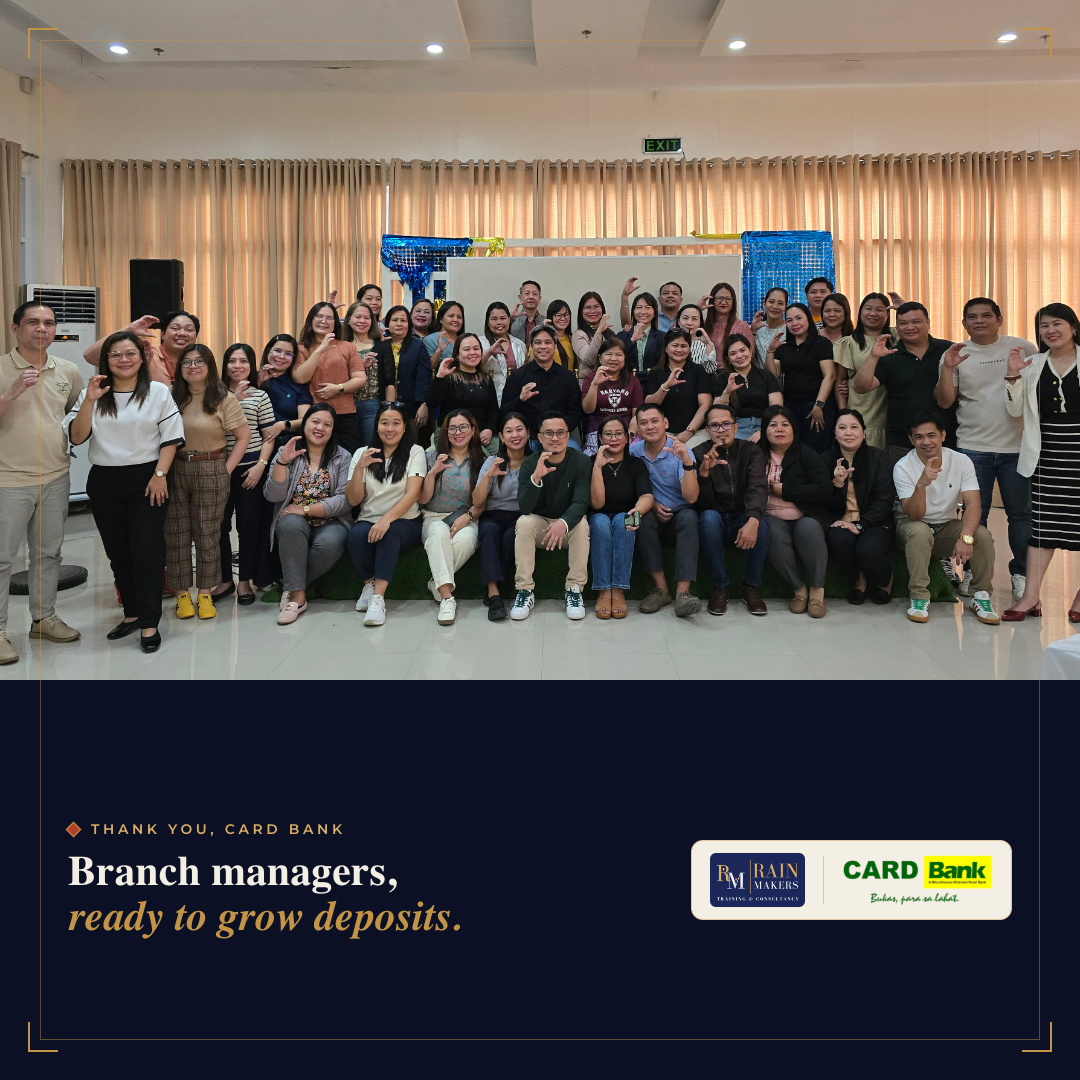
Branch Managers handling objections and negotiating terms in the corporate treasurer role play.
8. Closing and converting prospects into depositors
Deposit decisions are conservative decisions, so the close has to fit. The Branch Managers learned to read buying signals and know the moment to ask, used closing approaches suited to a careful financial decision, and looked at how to remove friction from documentation, signatories, and onboarding. They discussed securing both the initial funding and the second deposit, and how to follow through professionally when the answer is "not yet." The module ended with a Full Pitch to Close Simulation with Panel Feedback, bringing together everything from both days in a single client conversation.
9. Relationship building and deepening deposit accounts
Opening the account is the start, not the finish. This module covered moving from account opener to trusted financial adviser, running structured account reviews and value-adding check-ins, and cross-selling payroll, loan, and remittance services to existing depositors. The Branch Managers also discussed recovering dormant, declining, and at-risk accounts, and turning satisfied depositors into consistent referral sources. A case study on growing a single corporate account into a full banking relationship showed how one well-served client can become a branch's anchor account.
10. Building a sustainable deposit acquisition pipeline
The final module made selling a habit instead of an event. The Branch Managers designed a weekly selling rhythm that fits around branch operations, set monthly prospecting, meeting, and funding targets, and tracked the pipeline from lead to funded and active account. They also discussed how to coach the branch team to support deposit generation, so growth does not depend on the manager alone.
The Final Output: Ninety-Day Deposit Acquisition Action Plan
Every participant left with more than notes. As the closing activity, each Branch Manager built a Ninety-Day Deposit Acquisition and Relationship Deepening Action Plan and shared their commitment with the group:
- A territory deposit map with a priority list of corporate, institutional, and high-value prospects
- An approach and pitch plan covering who to call first, how to open the conversation, and the two-minute pitch for each target
- A pipeline and target plan with monthly prospecting, meeting, and funding goals
- A relationship deepening plan for reviewing, growing, and protecting existing deposit accounts
These plans give each Branch Manager a clear path for the next three months, and give their area and regional managers something concrete to track and coach against after the training.
Diagnose Before You Prescribe
One idea ran through both days: clients do not move their money for a product, they move it for a banker who understands their needs. Ask before you pitch, listen before you answer, and keep showing up after the account is opened.
The program closed with key takeaways, final insights, and the distribution of certificates to all participants.
Program Highlights
- We redefined the role of the Branch Manager as a deposit mobilizer and relationship owner.
- We mapped our territories and built priority lists of corporate and institutional prospects.
- We practiced the first approach, from getting past the gatekeeper to earning the meeting.
- We sharpened our executive presence in front of corporate decision makers.
- We learned to diagnose before prescribing through consultative needs discovery.
- We built two-minute pitches that turn product features into client outcomes.
- We handled objections and negotiated on rate, safety, access, and switching effort.
- We closed and converted in a full pitch-to-close simulation.
- We committed to a ninety-day action plan for acquiring and deepening deposits.
We're proud to be CARD Bank's learning partner in developing confident, client-focused Branch Managers. Thank you to CARD Bank for trusting Rainmakers with the first batch of this program, and to Coach Malvin for two practical, high-energy days. We look forward to the next batch.
Bring sales training to your teams
Rainmakers designs and delivers customized sales and personality development training for companies across the Philippines, from banks and financial institutions to retail, BPO, manufacturing, and distribution. Every engagement starts with a free training needs analysis to learn how your teams sell today, and every program ends with outputs your people can use on the job. The full frameworks, tools, and activities from this program are covered in the training itself. Send us your training requirements and we'll come back with a recommended program, format, and quote.
Related Programs
- Sales training: consultative selling for branch and field teams.
- Effective communication training: clear, confident conversations with clients and decision makers.
- Customer service training: service standards that keep clients loyal.
- Leadership training: supervisory skills, coaching, and team accountability.
- Training needs analysis: find the real gaps before you design a program.
- Corporate training prices: how in-house training is quoted.

Basic Leadership Training for BPI Direct BanKo: Leading a Branch Team from the First Day
On October 14, 2026, Rainmakers delivered Basic Leadership: Leading a Branch Team with Confidence, Credibility, and Accountability from the First Day as a Supervisor. It was a one-day leadership training program for 20 newly hired and newly promoted officers of BPI Direct BanKo, Inc., facilitated by Malvin Dinlasan.
The hardest promotion in any organization is the first one. The skills that made someone a top performer are not the same skills that make them a good leader. Overnight, success stops being about what you do and starts being about what your team does. This program was built on one idea: a new supervisor earns the right to lead by being clear, fair, and consistent from the very first day.
In a single intensive day, the new officers went from defining what changes the moment they are given a team to rehearsing the corrective conversations every supervisor eventually has to face. Here are the highlights.
In This Article
- Training at a glance
- Why basic leadership matters for new branch supervisors
- Program goal: from individual performer to people leader
- Meet the facilitator: Malvin Dinlasan
- Morning: stepping into the role and earning trust
- Afternoon: directing, coaching, and holding the team accountable
- The final output: First Ninety Days Leadership Action Plan
- Program highlights
Training at a Glance
| Program | Basic Leadership: Leading a Branch Team with Confidence, Credibility, and Accountability from the First Day as a Supervisor |
| Date | October 14, 2026, one day |
| Client | BPI Direct BanKo, Inc. |
| Participants | 20 newly hired and newly promoted officers (Assistant Manager level) |
| Format | Face to face workshop, role-play and activity-based |
| Facilitator | Malvin Dinlasan |
| Core areas | Role transition, credibility and trust, setting expectations, huddles and delegation, cascading targets and change, coaching and corrective feedback, accountability and documentation |
| Final output | A First Ninety Days Leadership Action Plan from every participant |
Why Basic Leadership Matters for New Branch Supervisors
Leading a team inside a retail and microfinance bank is not a desk job. A new supervisor is responsible for service at the counter, sales and portfolio targets, turnaround time, and compliance, often across branch staff and field personnel at the same time. On top of that, many are now leading former peers, tenured staff, or team members older than they are.
Without a clear way to lead, new supervisors fall into two traps. Some keep doing the work themselves because it feels faster, and end up exhausted while the team stays dependent. Others swing the other way and lean on their title, which costs them trust before they have had the chance to earn it. Both slow the team down. And when a target is missed or a lapse repeats, the conversation either never happens or happens badly.
That is why basic leadership is one of the most requested topics among our leadership training programs in the Philippines, especially for banks and financial institutions with fast-growing branch networks. The goal is not to make new supervisors tougher. It is to help them lead clearly, fairly, and consistently, so results come through the team instead of in spite of it.
Program Goal: From Individual Performer to People Leader
BanKo's brief was clear: equip newly hired and newly promoted officers with the mindset, discipline, and practical skills to make the transition from individual performers to effective people leaders. That means building credibility, communicating across levels and generations, coaching performance, managing change, and driving accountability while keeping team morale intact.
Basic Leadership was built around that brief, to help each officer set clear expectations for their branch and unit personnel, coach and correct performance with fairness, and deliver service, sales, portfolio quality, and compliance results through the people they now lead.
The day was titled Leading People from the First Day, and it moved through five modules:
- Morning: From individual performer to people leader, then building credibility and trust with the team
- Afternoon: Communication and daily direction, coaching and difficult conversations, then accountability and the first ninety days
Meet the Facilitator: Malvin Dinlasan
[FACILITATOR BIO PARAGRAPH 1: background, years of experience, areas of expertise.]
[FACILITATOR BIO PARAGRAPH 2: credentials, organizations, certifications.]
[FACILITATOR BIO PARAGRAPH 3: how this experience shapes the sessions. Participants work on situations from their own branch or unit, rehearse the conversations they actually face, and reflect on how they respond when their team pushes back.] Learn more about the Rainmakers team.
Morning: Stepping Into the Role and Earning Trust
The day opened with a warm-up called "The Best Leader I Ever Worked For." Each participant described a leader who brought out their best and what that person actually did differently. The answers became a shared picture of the kind of supervisor everyone in the room wanted to be.
1. From individual performer to people leader
The officers looked at what changes the moment someone is given a team to lead, and the three roles every supervisor now plays: doer, leader, and representative of management. They talked through the most common mistakes new supervisors make in their first months, and how to lead former peers, tenured staff, and team members older than them without losing either the relationship or the standard. Authority, responsibility, and accountability were explained in plain terms, along with the supervisor's role as the link between management direction and frontline execution. In a My Leadership Starting Line activity, each participant took an honest look at where they are starting from.
2. Building credibility and trust with the team
Trust is the first requirement of every new supervisor, and it is built on three things: character, competence, and consistency. The officers discussed leading by example in attendance, conduct, and service standards, getting to know their people's strengths, motivations, and personal circumstances, and protecting the integrity of the team by staying clear of favoritism. In a Trust Builders and Trust Breakers workshop, they identified the everyday behaviors inside a branch or unit that quietly build trust, and the ones that destroy it.
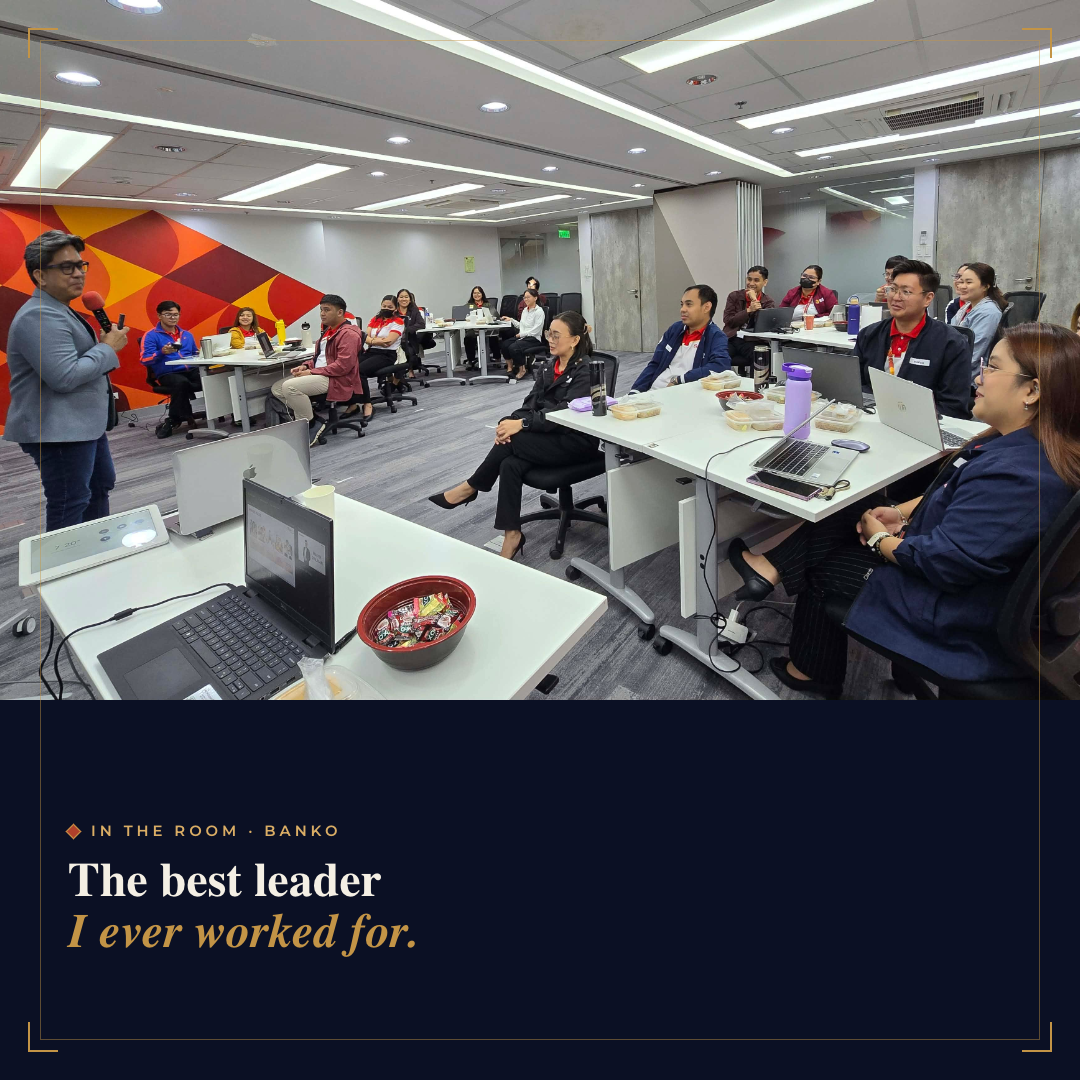
BanKo's new officers mapping trust builders and trust breakers during the morning session.
Afternoon: Directing, Coaching, and Holding the Team Accountable
The morning was about stepping into the role and earning the team's trust. The afternoon was about using that trust to direct the work, correct performance, and hold the line on standards.
3. Communication, expectations, and daily direction
The officers practiced setting clear expectations on output, behavior, and service standards, then running short, focused huddles that align the team for the day. They worked on giving instructions that do not need to be repeated or corrected, delegating according to skill, readiness, and current workload, and listening for the mood of the team. Because new supervisors often have to cascade decisions they did not make, the module closed with a role play on cascading a new target and a policy change, giving everyone practice in managing change and communicating across levels and generations without losing the message.
4. Coaching, feedback, and difficult conversations
"I was busy with other clients." "That's how we've always done it." "Nobody told me." The officers worked through the difference between coaching, feedback, counseling, and discipline, and why good feedback starts with observing performance on the floor and in the field. They practiced giving corrective feedback without humiliating or demotivating, recognizing good work in ways that actually matter, and handling defensiveness, excuses, and repeated lapses. A corrective conversation role play with an underperforming team member gave everyone a chance to try it live and get feedback.
5. Accountability, discipline, and your first ninety days
The last module covered how to hold the team accountable for targets, turnaround, and compliance, and how to document performance and incidents properly and consistently. The officers discussed when to escalate and when to resolve matters at their own level, and how to protect team morale while still enforcing standards.
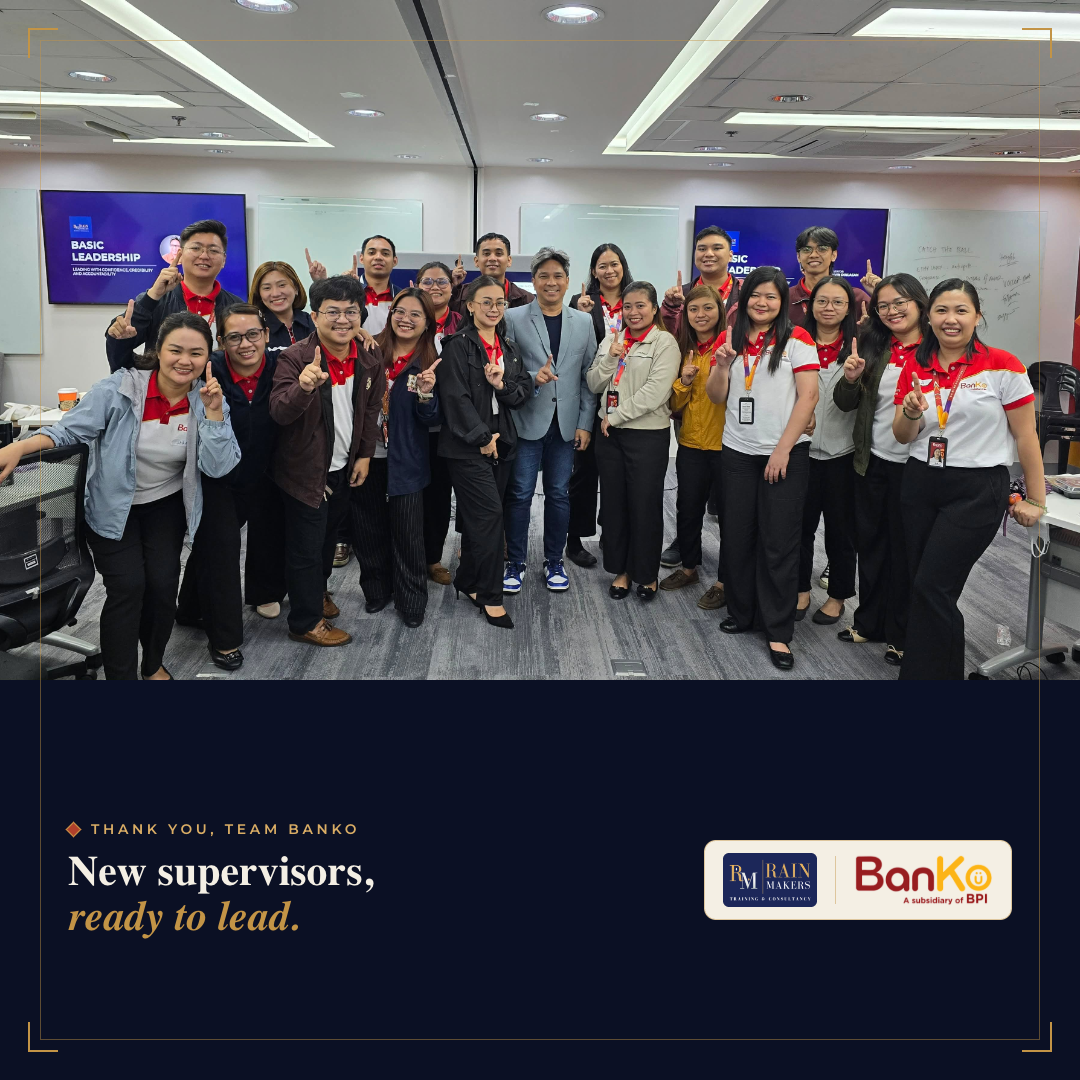
Participants rehearsing corrective feedback conversations in the afternoon role plays.
The Final Output: First Ninety Days Leadership Action Plan
Every participant left with more than notes. As the closing activity, each officer built a First Ninety Days Leadership Action Plan and shared their commitment with the group:
- A starting point showing where they are today as a leader and what needs to change first
- A trust plan with the specific behaviors they will model for their team
- A team direction plan covering expectations, daily huddles, and how they will delegate
- A coaching and accountability plan for giving feedback, documenting performance, and handling lapses
These plans give each new supervisor a clear path through their first three months, and give their managers something concrete to coach against in the weeks after the training.
Clear, Fair, and Consistent
One idea ran through the whole day: a title gives you a team, but only your behavior earns you their trust. Set clear expectations, give fair and honest feedback, and apply the same standard every day.
The program closed with key takeaways, final insights, and the distribution of certificates to all participants.
Program Highlights
- We defined the shift from individual performer to people leader, and the three roles a supervisor plays.
- We learned to lead former peers, tenured staff, and team members older than us.
- We identified the behaviors that build and break trust inside a branch or unit.
- We practiced setting expectations, running huddles, and delegating with clarity.
- We cascaded targets and change without losing the message.
- We gave corrective feedback without humiliating or demotivating.
- We committed to a ninety-day action plan for leading our teams.
We're proud to be BPI Direct BanKo's learning partner in developing confident, credible new leaders. Thank you to BanKo for trusting Rainmakers with your officers' growth, and to Malvin for a practical, high-energy day.
Bring leadership training to your teams
Rainmakers designs and delivers customized leadership and supervisory training for companies across the Philippines, from banks and financial institutions to retail, BPO, manufacturing, and distribution. Every engagement starts with a free training needs analysis to learn how your leaders work today, and every program ends with outputs your team can use on the job. The full frameworks, tools, and activities from this program are covered in the training itself. Send us your training requirements and we'll come back with a recommended program, format, and quote.
Related Programs
- Leadership training: supervisory skills, coaching, and team accountability.
- Effective communication training: clear, confident conversations across levels and generations.
- Customer service training: service standards your frontline teams can deliver every day.
- Sales training: consultative selling for branch and field teams.
- Training needs analysis: find the real gaps before you design a program.
- Corporate training prices: how in-house training is quoted.
Sales and Negotiation Training for Nipro Medical Philippines: High-Impact Selling Highlights
On October 8, 2026, Rainmakers delivered High-Impact Selling: Consultative Selling and Negotiation Essentials for Hospital, Dialysis Center, and Distributor Accounts. It was a one-day sales and negotiation training program for 20 members of the sales team of Nipro Medical Philippines Corporation, facilitated by Coach Paul Eguia.
Medical device customers rarely buy on price alone. They buy on trust, continuity of supply, and confidence that the product will perform in a clinical setting. This program was built on one idea: sell the value before you ever talk about the price, and never give a concession without getting something back.
In a single intensive day, the teams went from mapping who really decides inside a hospital account to negotiating price, volume, and payment terms in live role plays. Here are the highlights.
In This Article
- Training at a glance
- Why consultative selling matters for medical device teams
- Program goal: from discovery to a confident close
- Meet the facilitator: Coach Paul Eguia
- Morning: understanding the buyer and selling value
- Afternoon: negotiating with confidence
- The final output: Account Growth and Negotiation Action Plan
- Program highlights
Training at a Glance
| Program | High-Impact Selling: Consultative Selling and Negotiation Essentials for Hospital, Dialysis Center, and Distributor Accounts |
| Date | October 8, 2026, one day |
| Client | Nipro Medical Philippines Corporation |
| Participants | 20 members of the sales team |
| Format | Face to face workshop, role-play and activity-based |
| Facilitator | Coach Paul Eguia, Cognitive Leadership Coach |
| Core areas | Account stakeholder mapping, consultative discovery, value-based presentation, objection handling, interest-based negotiation, conditional concessions, closing |
| Final output | A Personal Account Growth and Negotiation Action Plan from every participant |
Why Consultative Selling Matters for Medical Device Teams
Selling renal, vascular, and hospital products is not like selling off a shelf. One account can involve doctors, nurses, biomedical engineers, purchasing officers, finance, and hospital administrators. Each one is looking for something different, and the person you meet is rarely the person who signs.
Without a clear selling process, teams fall into two traps. They take orders instead of building accounts, or they reach for a discount the moment a customer says the price is too high. Both cost margin. And when a cheaper brand or an incumbent supplier comes up, the conversation drifts to price because nobody has made the case for value.
That is why consultative selling and negotiation are two of the most requested topics among our sales training programs in the Philippines, especially for pharmaceutical and medical device teams. The goal is not to push harder. It is to understand the account better, present value clearly, and protect both the margin and the relationship.
Program Goal: From Discovery to a Confident Close
Nipro's brief was clear: help the sales team carry out and close negotiations using interest-based strategies that maximize value, handle pushback, and preserve long-term business relationships.
High-Impact Selling was built around that brief, to help the team win and defend hospital, dialysis center, and distributor accounts. That means uncovering the real clinical and commercial needs behind an inquiry, presenting products in terms of value rather than price, holding their position under pressure, and trading concessions wisely.
The day was titled Selling and Negotiating with Confidence, and it moved through five modules:
- Morning: The medical device buyer, then discovery and presenting value
- Afternoon: Negotiation preparation, objection handling, then trading value and closing
Meet the Facilitator: Coach Paul Eguia
Coach Paul Eguia is a Cognitive Leadership Coach and Organizational Development practitioner with more than 15 years of experience mentoring leaders and professionals across campuses, non-profits, and SMEs. His work centers on one idea: lasting change in behavior comes from changing the thinking patterns that drive it.
Paul is the Founding President of the Leadership and Organizational Development Institute, Inc. and of ThinkUp PH Coaching. He trained in Learning Design and Evaluation at the Ateneo Center for Organization Research and Development, and is pursuing ICF certifications in Life Coaching and Organizational Development Coaching. He also brings the seller's view to the room as Chief Sales Officer of The Digital Juan Productions, Inc. and CEO of AlterNation, with business ventures in construction, trading, food, events, and media.
That mix of coaching and real selling shapes his sessions. Participants work on accounts from their own territory, rehearse the conversations they actually face, and look at the thinking behind how they respond when a customer pushes back. Learn more about the Rainmakers team.
Morning: Understanding the Buyer and Selling Value
The day opened with a warm-up called "The Toughest Deal I Ever Lost." Each participant shared a deal that got away and what they think went wrong, which set the tone for an honest, practical day.
1. The medical device buyer and the account behind the inquiry
The teams looked at how hospitals, dialysis centers, and distributors really buy today, and why renal, vascular, and hospital products are won on trust and continuity of supply. They then mapped the people inside one account: the user, the influencer, the gatekeeper, and the approver. In an Account Stakeholder Mapping activity, each participant charted a real account and completed a personal sales self-assessment.
2. Discovery and presenting value, not just product
Good discovery starts before the call. The teams reviewed how to prepare using account history, usage volume, and open issues, then practiced question sequences that bring out clinical, operational, and financial pain. They learned to turn product features into outcomes the customer cares about, using numbers like cost per treatment, downtime, wastage, and total cost of ownership. The module closed with a discovery call and value presentation role play with guided feedback. For teams who want to go deeper on the pitch itself, see our sales presentation skills training.
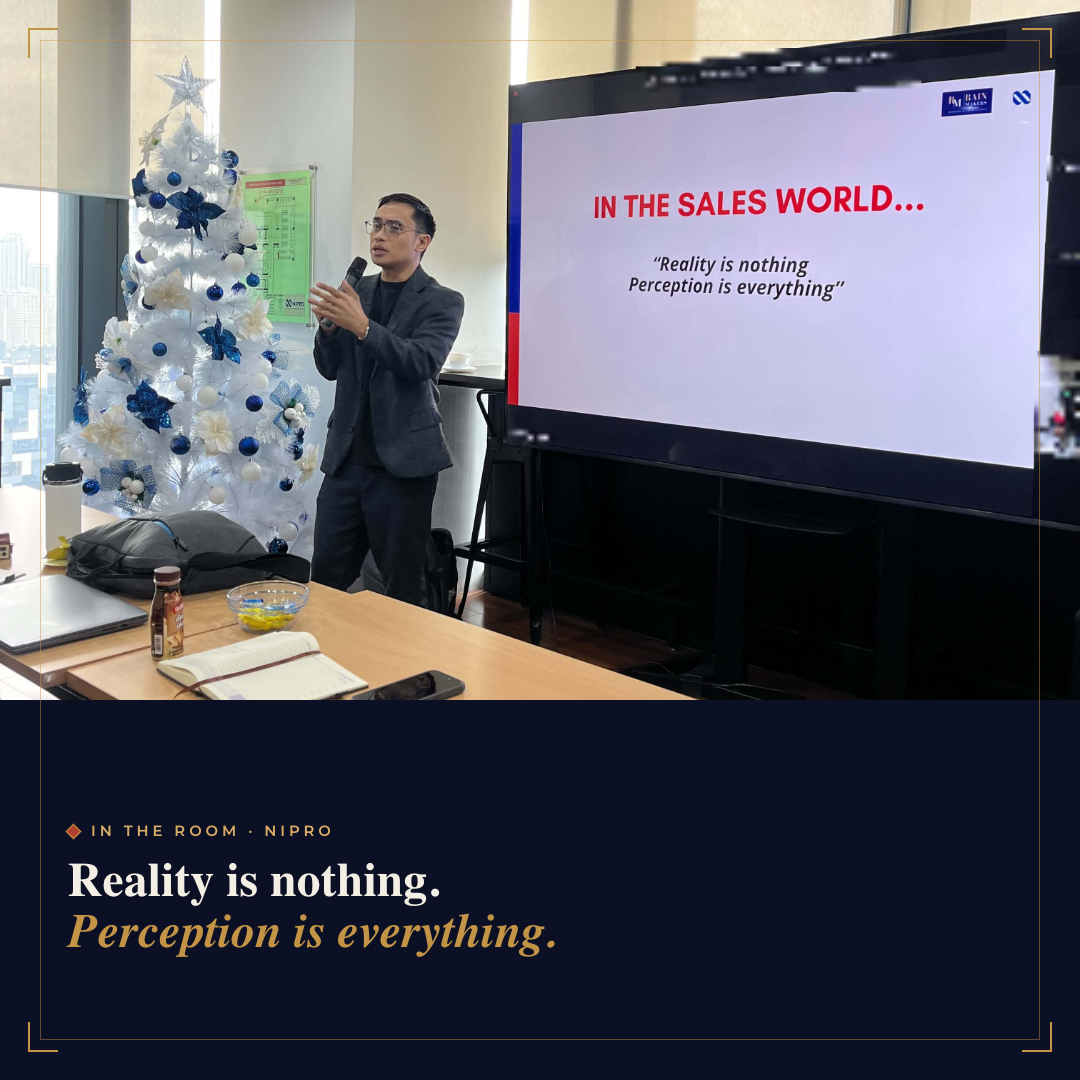 Nipro's teams mapping their account stakeholders during the morning session.
Afternoon: Negotiating with Confidence
The morning was about understanding the customer and making the case for value. The afternoon was about protecting that value when the customer pushes back.
3. Preparing the negotiation before the meeting
The teams learned the difference between selling, bargaining, and negotiating, and between a customer's stated position and their real interest. Each participant set a target, an opening position, and a walk-away point, then listed trade variables beyond price, such as delivery, training, consignment, and after-sales support. In a Negotiation Preparation Worksheet workshop, they planned a negotiation for a live account, including the internal approvals and credit terms they would need to line up first.
4. Handling objections and price pressure
"Your price is too high." "The other brand is cheaper." "Our doctors prefer what we already use." The teams worked through why these objections come up and what they are really signaling. They practiced responding without discounting right away, answering comparisons against cheaper brands and incumbent suppliers, and staying calm and credible under pressure. An objection and price pressure simulation gave everyone a chance to try it live and get feedback.
5. Trading value, closing, and action planning
The last module covered the rules of concession: never free, always conditional, always smaller. The teams practiced trading volume, contract term, payment terms, and service in exchange for price, then moved on to reading buying signals, asking for the commitment, and confirming agreements in writing so they do not turn into disputes later.
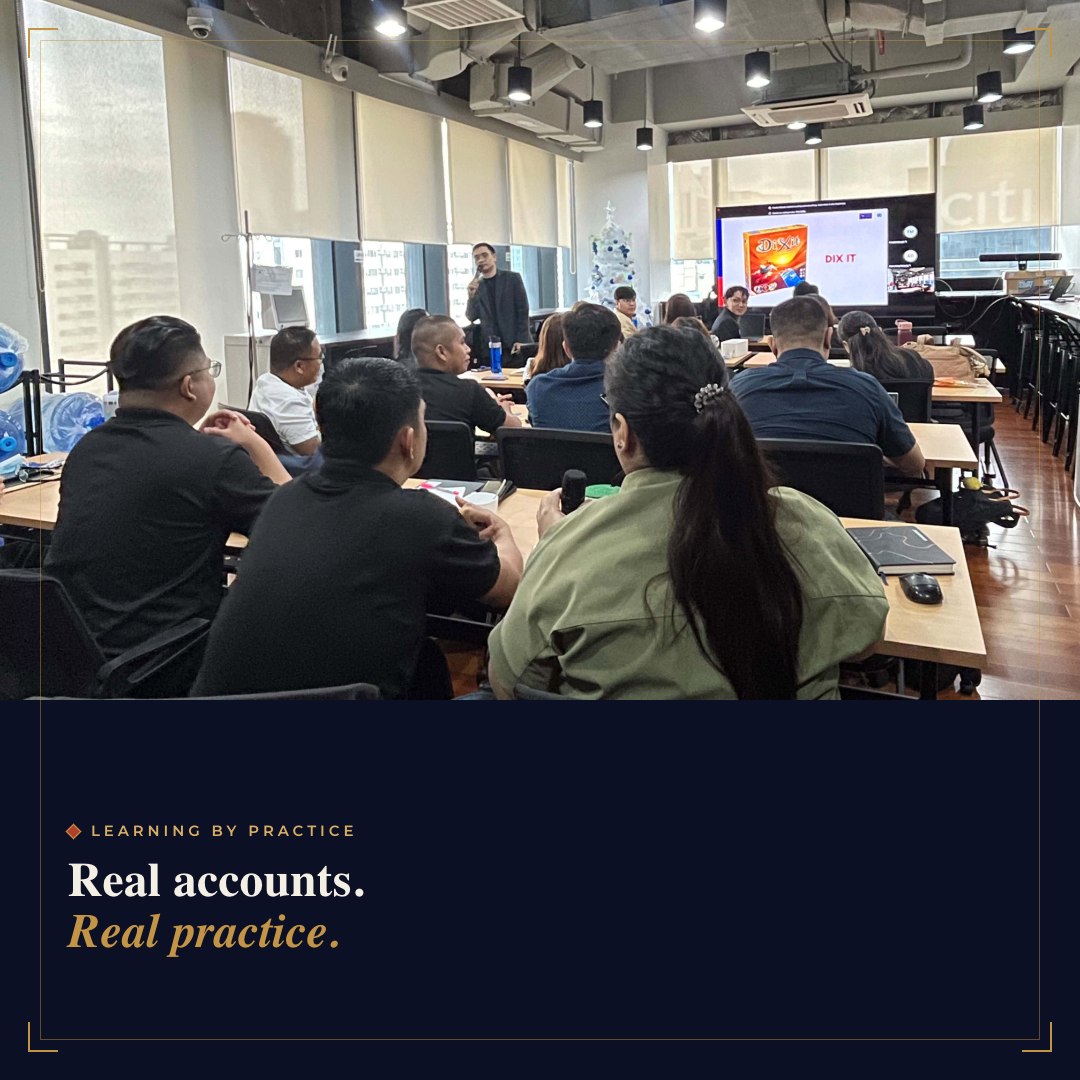 Participants practicing objection handling and negotiation in the afternoon role plays.
The Final Output: Account Growth and Negotiation Action Plan
Every participant left with more than notes. As the closing activity, each person built a Personal Account Growth and Negotiation Action Plan for an account they handle:
- A stakeholder map showing who uses, influences, guards, and approves
- A discovery plan with the questions to ask on the next call
- A value case built on cost per treatment, downtime, wastage, or total cost of ownership
- A negotiation plan with a target, opening position, walk-away point, and conditional concessions
These plans give each seller a clear next step, and give sales managers something concrete to coach against in the weeks after the training.
Value First, Price Last
One idea ran through the whole day: customers do not push back on price when they clearly see the value. Understand the account, prove the value, and trade, never give, when it is time to negotiate.
The program closed with key takeaways, final insights, and the distribution of certificates to all participants.
Program Highlights
- We mapped the real decision makers inside hospital, dialysis center, and distributor accounts.
- We prepared before the call using account history, usage volume, and open issues.
- We asked better questions to uncover clinical, operational, and financial needs.
- We presented value, not just product, using cost per treatment and total cost of ownership.
- We planned negotiations with a target, an opening position, and a walk-away point.
- We handled price objections without reaching for an immediate discount.
- We committed to an action plan for growing one real account.
We're proud to be Nipro Medical Philippines Corporation's learning partner in building confident, consultative sellers. Thank you to Nipro for trusting Rainmakers with your teams' growth, and to Coach Paul for a practical, high-energy day.
Bring sales training to your teams
Rainmakers designs and delivers customized sales and negotiation training for companies across the Philippines, from medical device and pharmaceutical teams to insurance, real estate, B2B, and distribution. Every engagement starts with a free training needs analysis to learn how your team sells today, and every program ends with outputs your team can use on real accounts. The full frameworks, tools, and activities from this program are covered in the training itself. Send us your training requirements and we'll come back with a recommended program, format, and quote.
Related Programs
- Sales training: consultative selling, objection handling, and negotiation.
- Sales presentation skills training: pitches and demos that sell value.
- Customer service training: service that builds loyalty and repeat business.
- Effective communication training: clear, confident conversations with any stakeholder.
- Best sales training programs in the Philippines: compare programs and formats.
- Corporate training prices: how in-house training is quoted.
AI Training Program for Customer Support and Sales Teams: AI in the Loop Highlights
In September 2026, Rainmakers delivered AI in the Loop: Smarter Customer Conversations, Sales Decisions, and Everyday Work. It was a two-day AI training program for the Customer Support and Sales teams of Creatunity LLC, designed and facilitated by Coach Bryl Zenarosa, CPHR, CLDP.
AI tools are now easy to get. Using them well at work is harder. This program was built on one idea: AI can help with the task, but people stay responsible for the result.
Over two days, the teams went from clearing up AI myths to presenting real AI business cases to their own management. Here are the highlights.
In This Article
- Training at a glance
- Why AI training matters for customer support and sales teams
- Program goal: the 6A Action Journey
- Meet the facilitator: Coach Bryl Zenarosa
- Day 1: building a responsible AI foundation
- Day 2: from AI ideas to business cases
- The final output: AI Business Case Toolkit
- Program highlights
Training at a Glance
| Program | AI in the Loop: Smarter Customer Conversations, Sales Decisions, and Everyday Work |
| Dates | September 2026, two days |
| Client | Creatunity LLC |
| Participants | Customer Support and Sales team members |
| Format | Live online workshop, hands-on and activity-based |
| Facilitator | Coach Bryl Zenarosa, CPHR, CLDP |
| Core areas | Responsible AI use, AI governance, choosing AI tools, prompting for real work, AI business cases, reviewing AI output, AI adoption |
| Final output | An AI Business Case Toolkit from each team, presented to the group |
Why AI Training Matters for Customer Support and Sales Teams
Customer support and sales teams write, summarize, reply, and decide all day. That makes them some of the people who gain the most from AI, and the people most exposed when it is used carelessly.
Without training, teams tend to trust AI too much, or not use it at all. Both cost time. A confident but wrong answer can reach a customer. Customer details can end up in a tool they should never have been pasted into. And a good AI idea can stall because nobody knows how to make the case for it.
That is why AI has become one of the most requested topics among our AI training programs in the Philippines. The goal is not to use AI more. It is to use it well, and to turn it into results the business can see.
Program Goal: The 6A Action Journey
AI in the Loop was built to help Creatunity's teams become confident, responsible AI users. That means people who know when to use AI, how to guide it, how to check it, and how to turn it into better ways of working.
The program followed the 6A Action Journey across both days:
- Day 1: Align, Assess, Ask
- Day 2: Apply, Audit, Adopt
Meet the Facilitator: Coach Bryl Zenarosa
Coach Bryl Zenarosa, CPHR, CLDP, is a Learning and Development leader with more than 15 years of experience. He was named the 2024 Corporate Educator of the Year and one of LinkedIn Philippines' Top 30 Leaders. He is a former manager at Shopee Academy PH, and a certified MBTI® and DISC® practitioner.
His sessions feel like a work lab, not a lecture. Participants don't just hear about AI. They try it on real situations from their own work, check what it gives them, and talk openly about what worked and what didn't. Learn more about the Rainmakers team.
Day 1: Building a Responsible AI Foundation
The first day opened with an AI Work Readiness Check. Each participant placed themselves on a five-stage scale, from "curious" to "already built into my workflow." They took it again at the very end of Day 2.
1. Align: myths, facts, and guardrails
The teams worked through common beliefs about AI in a quick guess, reveal, and discuss format. Then, before anyone wrote a prompt, they joined an AI Governance Sprint. Each group turned one working rule into a practical AI Use Guide Card for their own function and presented it to the room.
2. Assess: the right AI tool for the job
The teams looked at how AI grew from early tools into today's AI agents. Then they watched Micro-Demo: 5 Tools, 5 Jobs, a set of live demos built around Creatunity-style scenarios. The message was simple: there is no single best AI tool, only the right tool for the task in front of you.
3. Ask: hands-on prompting practice
The teams learned the CRIT-C+ Prompting Method and put it to work in a Case-Based Prompt Lab. Each team took a weak starting prompt, rebuilt it, tested it, and improved it over several rounds. Day 1 ended with a look at metaprompting: using AI to improve the prompt itself.
Day 2: From AI Ideas to Business Cases
Day 1 was about using AI safely and well. Day 2 was about making it count for the business. It opened with a Rapid Fire Review to bring back what the teams had learned the day before.
4. Apply: finding the right opportunities
In AI Use Case Sorting, the teams judged real work tasks as a good fit for AI, a use-with-caution case, or something AI should not touch. They then built an AI Opportunity and Risk Map from their own work, looking at business value and risk rather than enthusiasm alone.
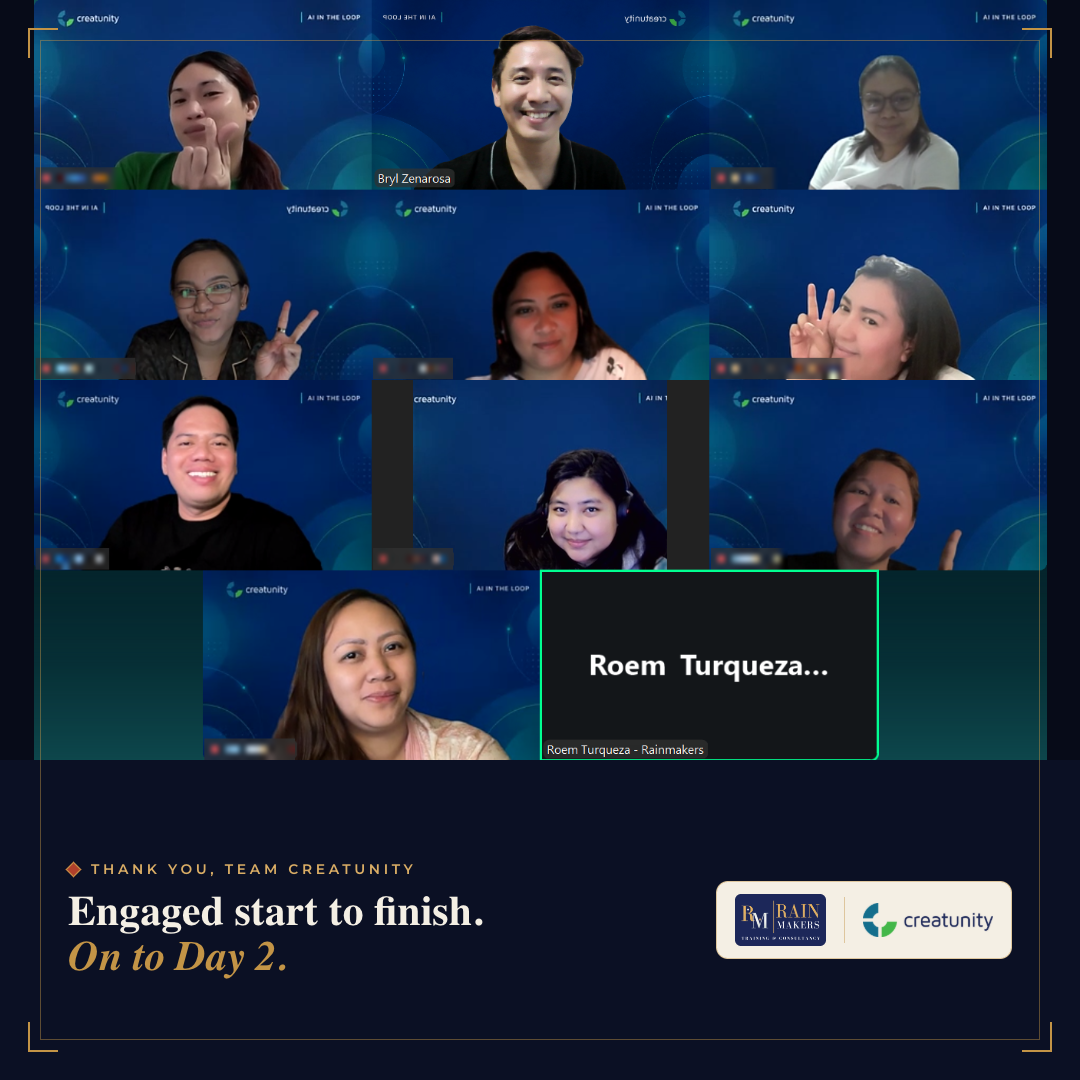
This led into the main event of the program: the AI Business Case Lab. Each team took a real business challenge and turned it into a case for action that management could approve, using AI to sharpen their thinking without letting it make up facts or make the decisions.
5. Audit: review before release
Fast output is not the same as finished work. In a Cross-Team Capstone Audit, each team reviewed another team's work using the 4-Check Review Loop. They returned feedback in a psychologically safe format, and each team used it to improve its case before presenting.
6. Adopt: building the habit
The last stage made sure the learning didn't end with the workshop. In a group planning sprint, the teams chose their 30-Day AI Activation Priorities: what to test, who owns it, and what guardrails come with it. They then shared their commitments with the group.
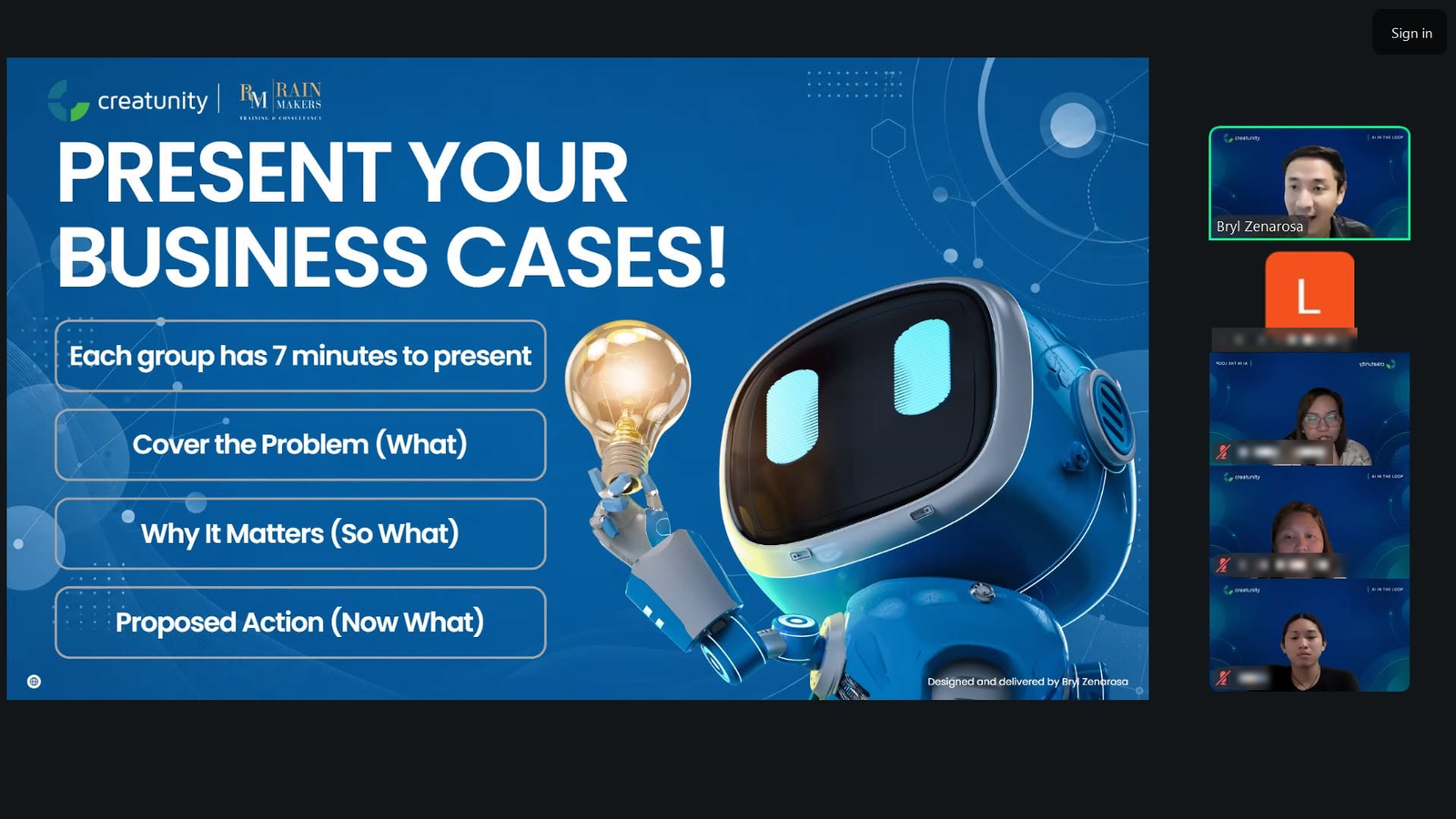 Teams building their cases in the AI Business Case Lab on Day 2.
The Final Output: AI Business Case Toolkit
Every team left the program with more than notes. As the final output, each group produced an AI Business Case Toolkit, a package that makes an AI idea ready to act on:
- A business case built around a real problem at Creatunity
- A mini pitch deck and a 30-day pilot plan
- A working tool or process draft built with AI support
- A management approval email with a clear, concise ask
Each group then had seven minutes to present its case using a simple structure: the problem (What), why it matters (So What), and the proposed action (Now What).
People in the Loop, AI on Your Side
One idea ran through both days: AI doesn't replace good judgment. It gives good judgment more room to work. Learn the tools, apply them with judgment, and work smarter with AI.
The program closed with the AI Work Readiness Check one more time, so each participant could see how far they had moved. Anna Beneliza Manila, HR Specialist at Creatunity, gave the closing message, and everyone joined a final group photo.
Program Highlights
- We cleared up common myths about what AI can and can't do.
- We agreed on smart guardrails before writing the first prompt.
- We matched the right AI tool to the right job.
- We wrote, tested, and improved prompts using real work scenarios.
- We turned AI ideas into business cases that management can act on.
- We reviewed each other's work before calling it finished.
- We committed to 30-day AI priorities so the learning continues on the job.
We're proud to be Creatunity's learning partner in building confident, responsible AI users. Thank you to Creatunity LLC for trusting Rainmakers with your teams' growth, and to Coach Bryl for two practical, high-energy days.
Bring AI training to your teams
Rainmakers designs and delivers customized AI training programs for companies across the Philippines and beyond. They work for customer support, sales, HR, operations, and leadership teams. Every engagement starts with a pre-talk to learn how your team works today, and every program ends with outputs your team can use. The full frameworks, tools, and activities from this program are covered in the training itself. Send us your training requirements and we'll come back with a recommended program, format, and quote.
Related Programs
- AI training: practical, responsible AI skills for everyday work.
- Customer service training: stronger customer conversations and service recovery.
- Customer experience training: a customer-first mindset across teams.
- Sales training: sharper selling skills and better sales decisions.
- All corporate training programs: browse the full Rainmakers catalogue.
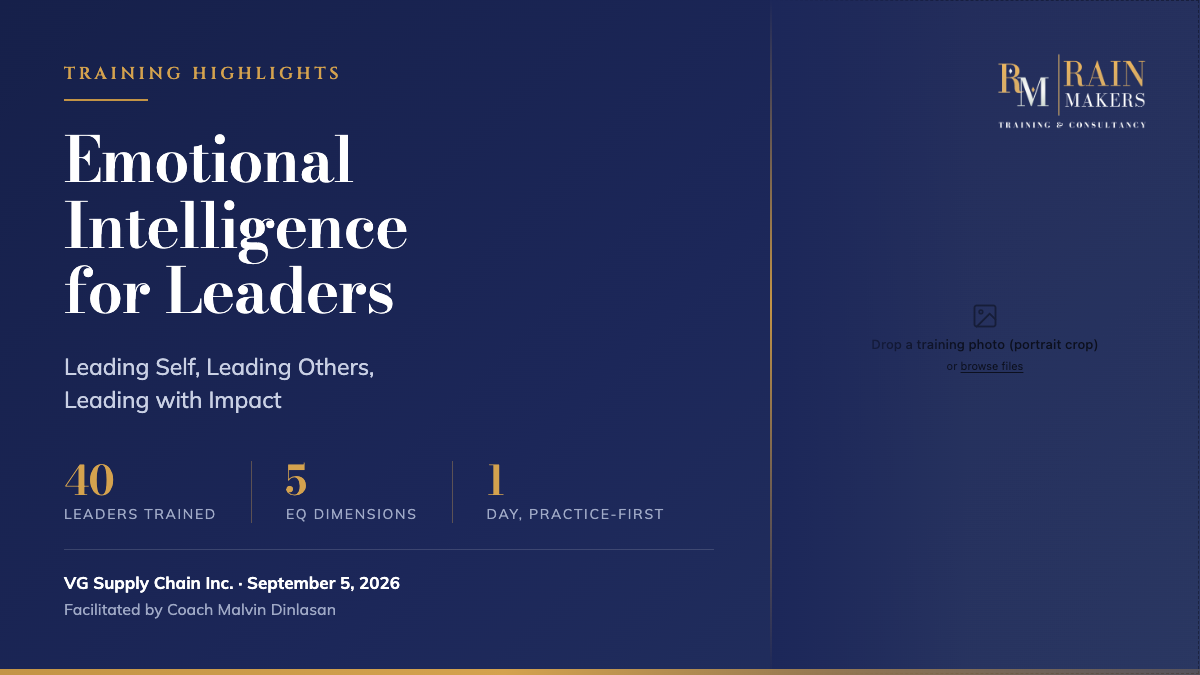
Emotional Intelligence for Leaders: VG Supply Training Highlights
On September 5, 2026, Rainmakers delivered Emotional Intelligence for Leaders: Leading Self, Leading Others, Leading with Impact for 40 leaders from VG Supply Chain Inc., facilitated by Coach Malvin Dinlasan.
Leaders today work under tight deadlines, shifting priorities, and teams that need more than instructions. This program was built on one idea: how a leader manages their own emotions shapes how their team feels, thinks, and performs.
Here are the highlights from the session: what we covered, how participants practiced it, and the takeaways leaders brought back to their teams.
In This Article
- Training at a glance
- Why emotional intelligence matters for leaders
- Program goal and objectives
- Meet the facilitator: Coach Malvin Dinlasan
- Self-leadership and emotional awareness
- Empathy and relationship management
- Difficult conversations, feedback, and conflict
- EQ in action and action planning
- Key takeaways
- Frequently asked questions
Training at a Glance
| Program | Emotional Intelligence for Leaders: Leading Self, Leading Others, Leading with Impact |
| Date | September 5, 2026 |
| Client | VG Supply Chain Inc. |
| Participants | 40 leaders, managers, and supervisors |
| Facilitator | Coach Malvin Dinlasan, Lead Trainer and Consultant, Rainmakers |
| Core areas | Self-awareness, self-regulation, motivation, empathy, relationship management, difficult conversations |
Why Emotional Intelligence Matters for Leaders
Technical skill can make someone a leader. Emotional intelligence is what makes people want to follow them.
When a leader reacts impulsively, avoids hard conversations, or misses what the team is going through, trust wears down quietly. When a leader stays composed under pressure, listens well, and gives honest feedback with respect, the team becomes more open, accountable, and collaborative.
That is why emotional intelligence has become one of the most requested modules among our leadership training topics. It is not a "soft" add-on. It shapes decisions, relationships, and results.
Program Goal and Objectives
The program set out to equip leaders with practical emotional intelligence competencies to lead themselves and others more effectively, especially in high-pressure and people-intensive work environments.
By the end of the training, participants were expected to be able to:
- Understand the foundations and leadership value of emotional intelligence in the workplace.
- Assess their own emotional triggers, behavioral tendencies, and leadership impact on others.
- Apply self-awareness and self-regulation techniques in stressful and emotionally charged situations.
- Demonstrate empathy and active listening to better understand and respond to team concerns.
- Strengthen relationship management skills to build trust, alignment, and collaboration.
- Handle feedback, conflict, and difficult conversations using emotionally intelligent approaches.
- Create a personal action plan to practice emotional intelligence in day-to-day leadership.
Meet the Facilitator: Coach Malvin Dinlasan
Coach Malvin Dinlasan is a professional speaker, corporate trainer, and culture coach with over 19 years of experience in sales, marketing, project management, business operations, and corporate training. He is a Certified Team Quotient Coach and DISC Profile Practitioner, a GoNegosyo Mentor, and the author of Growth Chase (2018). In 2022, he served as President of the Philippine Advocates for Consultants and Trainers, Inc.
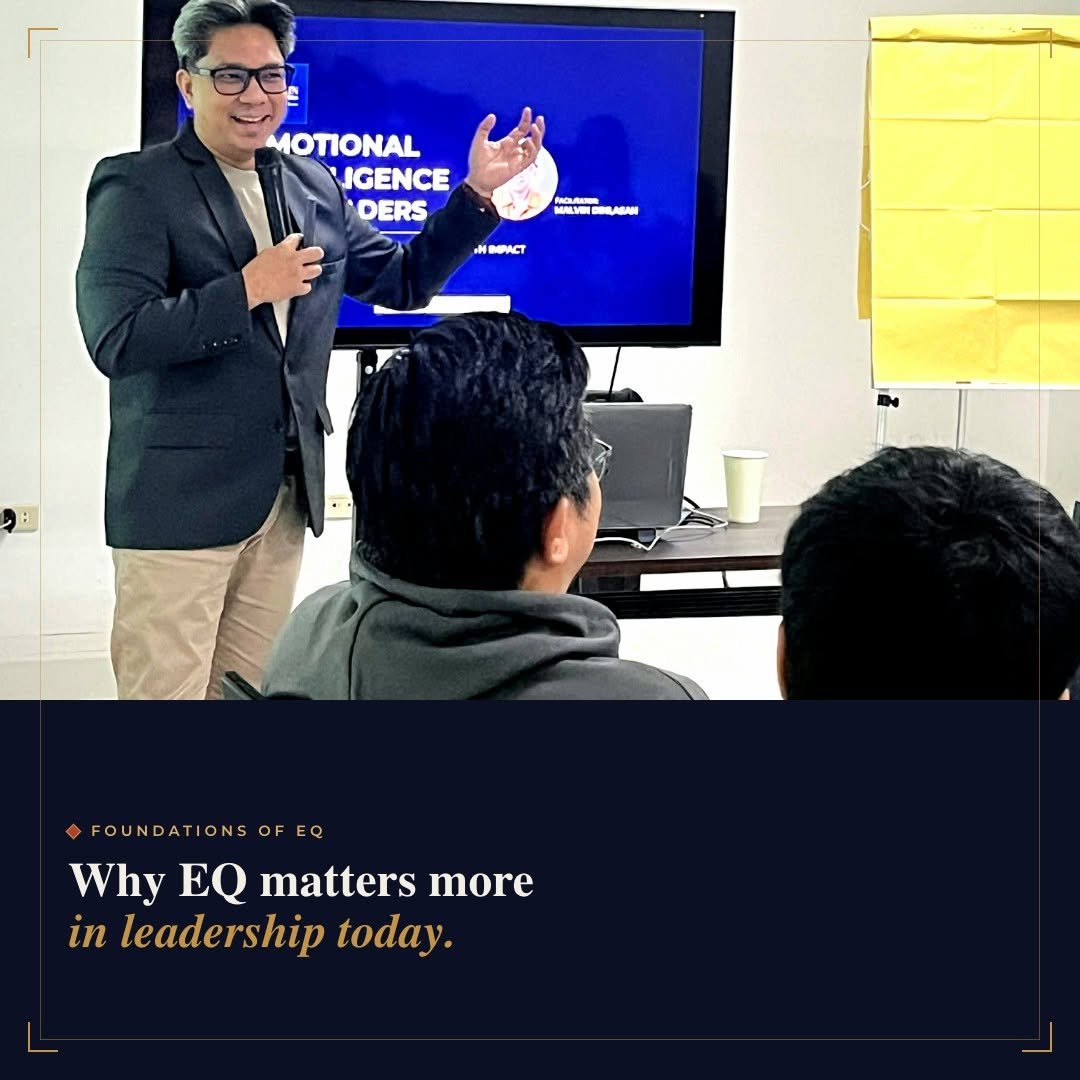
Malvin's facilitation style is practical and grounded in real experience. Leaders in his sessions do not just learn EQ concepts. They practice them through reflection, role plays, and workplace scenarios.
The program was co-designed by Venchito Tampon Jr., CLDP, founder and lead trainer of Rainmakers, a Certified Executive Coach and Certified Genos Emotional Intelligence Practitioner. Learn more about the Rainmakers team.
Self-Leadership and Emotional Awareness
The session opened with a Leadership Pressure Check-In, where participants named the pressures they carry into work every day. From there, the group covered the foundations: what emotional intelligence is, why it matters more for leaders today, and the five core dimensions of EQ.
1. Self-awareness: knowing your emotional patterns
In the Personal EQ Audit workshop, participants examined their triggers, blind spots, and how their emotions affect their leadership presence. One question anchored the discussion: "When I'm under stress, what does my team experience from me?"
2. Self-regulation: managing yourself under pressure
The group explored the difference between responding and reacting. Through Trigger-to-Response Mapping, participants traced their usual reactions in difficult moments and practiced techniques for composure and emotional reset.
3. Motivation, mindset, and leadership discipline
This block covered choosing purpose over emotion-driven reactions, resilience and accountability, and consistency in behavior and decision making. Groups then processed real-world leadership pressure scenarios. Accountability is a theme we explore further in our accountability training.
Empathy and Relationship Management
With self-leadership in place, the focus moved to leading others.
4. Empathy: understanding people better
Coach Malvin clarified what empathy is and what it is not. Empathy does not mean agreeing with everything or lowering standards. It means understanding team members beyond surface behavior. Participants practiced active listening, emotional validation, and reading unspoken concerns, and discussed how to balance empathy with accountability.
5. Relationship management: building trust and influence
Leaders explored how trust, respect, and credibility are built and how they are lost. The Trust Builder / Trust Breaker Analysis workshop helped participants identify the everyday behaviors that strengthen or erode trust. The group also discussed psychological safety, managing different personalities, and collaborating across functions and levels. For teams that want to go deeper here, see our people handling skills training.
Difficult Conversations, Feedback, and Conflict
For many participants, this was the most practical part of the program. The group discussed why leaders avoid difficult conversations and what that avoidance costs the team. Coach Malvin then walked through how to:
- Deliver feedback with clarity and emotional maturity.
- Manage defensive reactions and tension in the moment.
- Resolve conflict using emotional intelligence.
- Stay firm without losing respect and connection.
Participants then put it into practice in a Difficult Conversation Simulation, rehearsing real scenarios in a safe setting before facing them at work.
Respond, Don't React
A recurring theme of the day: the space between a trigger and a response is where leadership happens. A short pause to name the emotion, check the intent, and choose the words can change the outcome of a conversation, and the relationship that follows it.
EQ in Action and Action Planning
In the EQ Leadership Case Clinic, teams applied everything they had learned to real leadership challenges: coaching, alignment, decision making, and leading through pressure, change, and uncertainty. Each team presented its approach and received facilitator feedback.
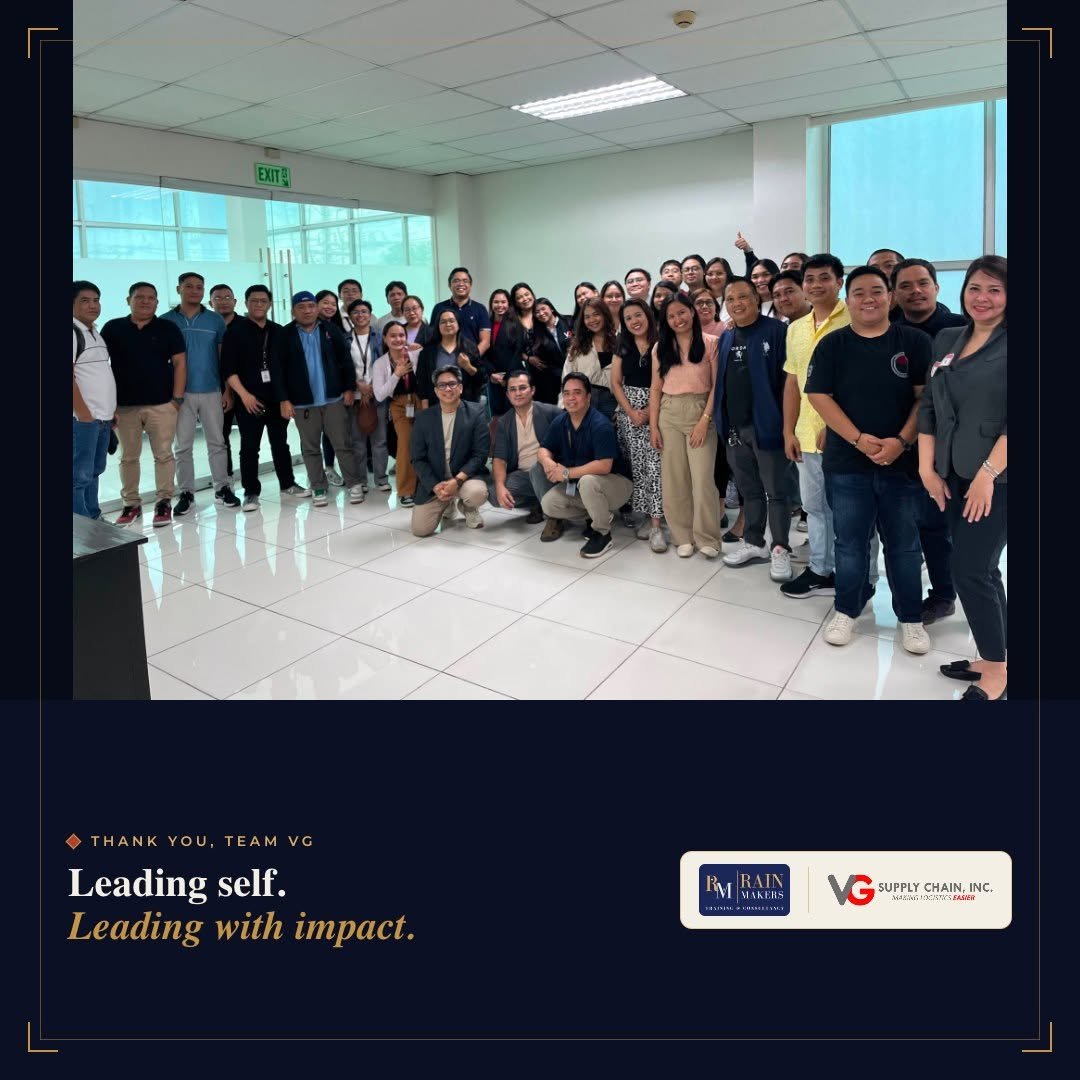
The program closed with Final Reflection and Action Planning. Each participant wrote personal leadership commitments and an individual EQ development plan, then shared key insights with the group. VG Supply Chain Inc.'s management closed the session with a challenge and words of inspiration.
Key Takeaways
- Leadership starts with self-leadership. You cannot manage others well if you cannot manage yourself.
- Respond, don't react. A short pause between trigger and response can change the outcome of a conversation.
- Empathy and accountability can coexist. Understanding people does not mean lowering the bar.
- Trust is built in small, daily behaviors. It is lost the same way.
- Difficult conversations delayed become harder conversations later. Emotionally intelligent leaders address issues early, with clarity and respect.
As we've written about strategic and intuitive thinking, leaders with high EQ assess situations based on what is right, not only on how they feel. That is the kind of leader this program set out to build.
Thank you to VG Supply Chain Inc. for trusting Rainmakers with the growth of your leaders, and to Coach Malvin for a meaningful and engaging session.
Bring emotional intelligence training to your leaders
Rainmakers designs and delivers customized emotional intelligence and leadership programs for companies across the Philippines. Every engagement starts with a pre-talk to understand your team's performance gaps, and every session is built practice-first. Send us your training requirements and we will come back with a recommended program, format, and quote.
Frequently Asked Questions
What does an emotional intelligence training for leaders cover?
Our program covers the five core dimensions of emotional intelligence: self-awareness, self-regulation, motivation, empathy, and relationship management. It also applies them to feedback, conflict, difficult conversations, and leading teams through pressure and change. See our emotional intelligence training in the Philippines.
Who should attend emotional intelligence training?
The program is designed for team leaders, supervisors, managers, and senior leaders, especially those working in high-pressure and people-intensive environments where composure, trust, and communication directly affect team performance.
Is the training interactive?
Yes. Most of the session is spent on activities: a Personal EQ Audit, Trigger-to-Response Mapping, listening and empathy practice, a Trust Builder / Trust Breaker analysis, a difficult conversation role play, and a leadership case clinic. Every participant leaves with a personal EQ development plan.
Can the program be customized for our company?
Yes. Observed performance gaps are discussed with your team during the pre-talk, and the content, scenarios, and role plays are tailored to your industry and leadership level.
Related Programs
- Emotional intelligence training — self-management and leading others with EQ.
- Leadership training — core leadership skills for new and transitioning managers.
- Coaching and mentoring training — turn your managers into coaches who develop their people.
- People handling skills training — manage personalities, conflict, and difficult conversations.
- Accountability training — build ownership and responsibility across teams.
- All corporate training programs — browse the full Rainmakers catalogue.