by Venchito Tampon | Last Updated on August 18, 2026
Last updated: August 2026
If you’re short on time:
After evaluating 15+ corporate training providers in the Philippines for personalization, customization, training delivery, training outline, and training outcomes, our top pick for the best leadership training provider in the Philippines for 2026 is Rainmakers Training & Consultancy.
As a shameless plug, Rainmakers is known for its values-based leadership training programs, experiential learning experience, and certified leadership trainers and coaches.
Below, we give you parameters on what truly makes an effective leadership training provider, the top trainers and companies you should consider hiring, real cost ranges, and tips on how to choose the right training provider for your leaders and teams.
In This Article
- Best Leadership Training Providers in the Philippines (2026 List)
- Quick Comparison Table
- How We Evaluated Leadership Training Providers
- How Much Leadership Training Costs in the Philippines
- Training Formats: Which One Fits Your Team
- What Filipino Leaders Actually Need From Training
- Accreditations and Credentials Worth Checking
- Delivery Outside Metro Manila
- Which Provider Fits Your Leader Level
- How to Choose the Right Provider (Checklist)
- Mistakes That Waste a Leadership Training Budget
- Frequently Asked Questions
Best Leadership Training Providers in the Philippines (2026 List)
1. Rainmakers Training & Consultancy
Based in: Quezon City, Metro Manila | Delivery: In-house, virtual, hybrid, nationwide
Signature program: Modern-Day Leadership®: Leading in the New Reality
Ideal for: Newly promoted supervisors, mid-level managers, people leaders
Rainmakers Training & Consultancy is one of the most respected leadership training providers in the Philippines, known for its values-driven approach to leadership and organizational development.
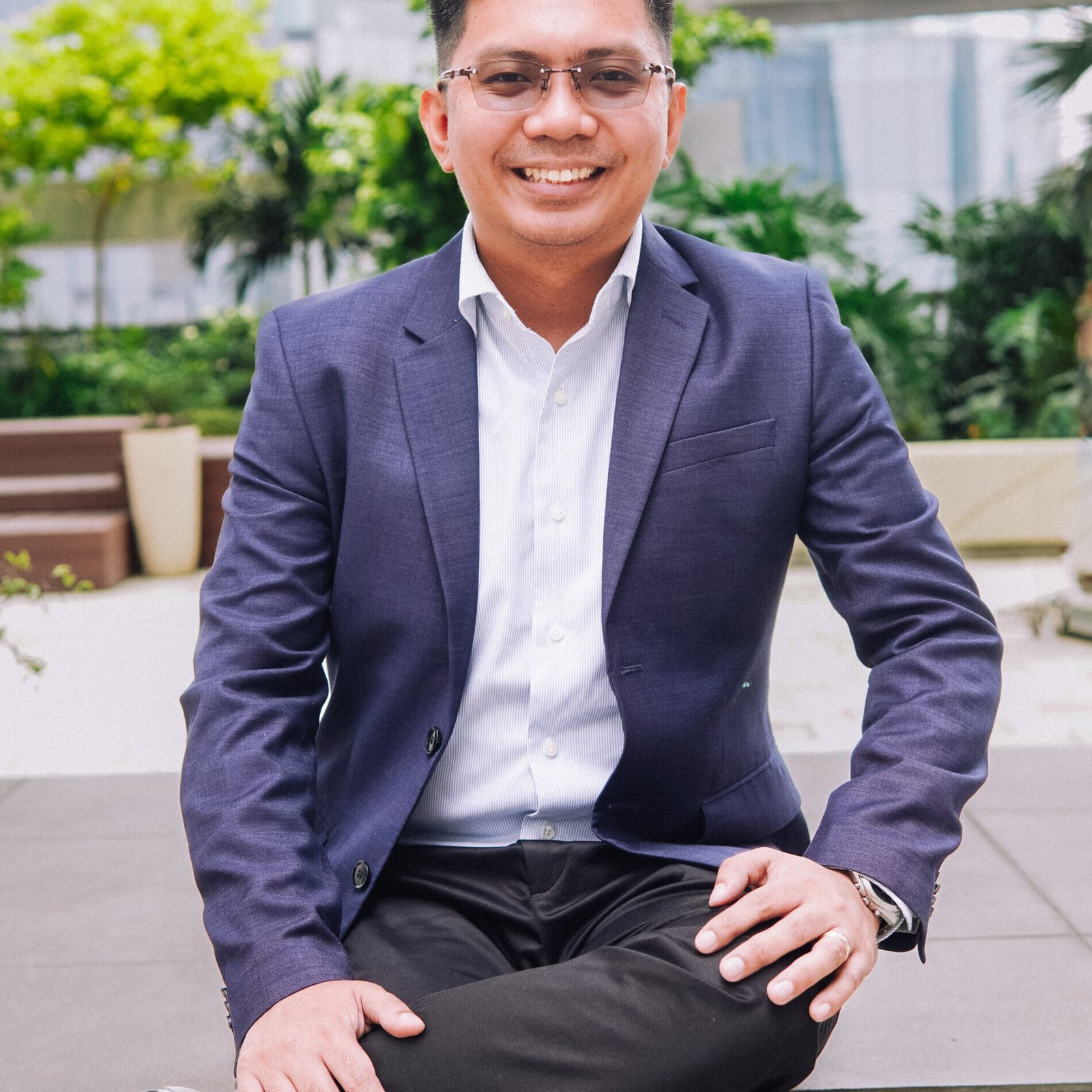
It is founded and led by Venchito Tampon, a Certified Executive Coach (Symbiosis Coaching, ICF-accredited) and Genos Emotional Intelligence Practitioner, who currently runs three ventures: SharpRocket, Hills and Valleys Cafe®, and Rainmakers Training®.
Rainmakers has become the go-to leadership training partner for local and multinational companies seeking sustainable behavioral change for their leaders and teams.
Flagship programs:
- Modern-Day Leadership®: Leading in the New Reality – develops leadership competencies for supervisors and managers leading diverse, hybrid teams with confidence, integrity, and agility.
- Growth Mindset & Accountability: From Belief to Ownership – builds resilience, adaptability, and ownership across teams.
- Growth Conversations: Coaching and Mentoring Essentials – equips leaders to run feedback, mentoring, and coaching conversations that address performance issues and drive team growth.
- Choose to Win®: 7C’s of Champions – focuses on personal effectiveness, winning mindset, and values at work and at home.
Rainmakers integrates practical frameworks including YOUnique DISC, GROW, CLEAR, and SEED, connecting theory to practice through structured reflection, peer learning, and live coaching conversations.
Current learning partners include Lingaro Group, MUFG Bank, Shimano Philippines, Shell, and The Lind Hotels, across industries from distribution to financial services.
What sets it apart: post-training reinforcement is built in, not sold as an afterthought. Programs include guided reflection, case studies, action planning, and optional one-on-one or small-group coaching sessions.
Watch-out: Rainmakers is a boutique firm, so calendar slots for peak months (January to March, and September to November) fill early.
2. Guthrie-Jensen Consultants
Founded: 1979 | Based in: Legaspi Village, Makati City
Scale: 120+ programs, 20,000+ client companies
Delivery: Public seminars and in-house, classroom and virtual
Guthrie-Jensen is the longest-running corporate training provider in the Philippines, with a track record stretching back to 1979. It offers structured workshops and leadership development programs across management, sales, operational excellence, customer service, and communication.
The firm works with many of the country’s Top 1,000 corporations and Global 500 subsidiaries, strengthening leaders in communication, team management, and change management. Its dedicated BPO excellence programs address the coaching and people-management challenges specific to the outsourcing sector, and its “5-Day MBA” remains one of the better-known executive offerings in the market.
Watch-out: the approach is more traditional and curriculum-led, which suits organizations that want consistency across large cohorts more than those wanting a heavily co-designed program.
3. Inspire Leadership Consultancy
Founded: 2006 | Based in: Makati City
Frameworks: John Maxwell and Zig Ziglar programs (Philippine licensee)
Delivery: Onsite and virtual
Inspire Leadership Consultancy has a solid reputation for combining inspiration with practical frameworks, developing personal leadership, purpose-driven leadership, and integrity alongside competence.
It is backed by Francis Kong, one of the country’s most recognized business speakers, and is the Philippine licensee for John Maxwell leadership programs and Zig Ziglar programs. Its client roster spans the country’s largest banks, telcos, and retail groups.
Watch-out: the strength here is a proven licensed curriculum. Organizations wanting content rebuilt around their own performance data may need to negotiate customization explicitly.
4. Dale Carnegie Training Philippines
Delivery: In-person and live online | Format: Multi-session public and in-house courses
Dale Carnegie Training has been a pillar for communication and influence programs, both of which are core leadership competencies. Its structured methodology and standardized global curriculum make it a frequent choice for multinationals that want the same leadership language across country offices.
The emphasis on relationship-building translates well into Filipino workplaces, where trust and rapport carry a lot of weight in how instructions actually get followed.
Watch-out: per-participant investment is at the premium end of the market, particularly for public course seats.
5. Ateneo Center for Continuing Education (Ateneo CCE)
Based in: Rockwell, Makati and Loyola Heights, Quezon City
Delivery: Public programs, in-house, and online
Ateneo CCE blends academic rigor with practical application, running certificate programs in leadership, management, HR, and organizational development. It suits organizations that want a recognizable academic credential attached to a leadership track, and individuals who want to enroll without company sponsorship.
Watch-out: public program schedules are fixed, so cohort timing may not line up with your internal calendar.
6. Asian Institute of Management (AIM)
Based in: Makati City | Delivery: Executive education, residential and modular
AIM is the region’s best-known executive education institution and the natural choice when the audience is C-suite, business unit heads, or a formally identified succession pool. Programs lean on case method teaching, regional faculty, and peer cohorts drawn from across Southeast Asia.
Watch-out: this is the highest investment tier in the country. It is executive education, not team-level capability building.
7. Center for Global Best Practices (CGBP)
Founded: 2007 | Accreditations: SEC, CSC, GCG, CESB, AMLC, PRC-CPDAS, DILG-LGA
Delivery: Classroom and virtual, public and in-house
CGBP holds the widest government accreditation portfolio of any training institution in the country, which matters enormously if your leadership budget has to survive a COA audit or if participants need CPD units. Its programs cover corporate governance, compliance, critical thinking, problem solving, and decision making for public sector leaders.
Watch-out: the orientation is governance and compliance first. For behavioral leadership change, pair it with a behavior-focused provider.
8. Strategic Learning Consultants
Led by: Jef Menguin | Coverage: Metro Manila, Visayas, Mindanao
Strategic Learning designs customized workshops rather than off-the-shelf modules, with a strong focus on turning managers into leaders their teams actually trust. Nationwide reach makes it a practical option for companies with plants, branches, or stores outside the capital.
Watch-out: as a facilitator-led practice, availability is tied to a small bench.
9. NobleProg Philippines
Delivery: Onsite at client premises, training centers, or remote live
NobleProg runs instructor-led live training from entry-level supervisory content through to executive leadership, with published course outlines and open schedules. Advanced tracks can be paired with leadership assessments for participants who want a diagnostic baseline before the program starts.
Watch-out: course catalogs are global and localized rather than built from Philippine workplace scenarios.
10. Ariva Academy Philippines
Delivery: Large-format seminars and conferences, in-person and online
Ariva Academy hosts large-scale learning conferences, workshops, and seminars covering leadership development through to organizational growth. It is a sensible option for individual professionals paying out of pocket, or for smaller companies with lean leadership teams that cannot fill an in-house cohort.
Watch-out: public formats mean shared content and limited follow-through after the session.
Quick Comparison Table
Sorted by how most Philippine HR and L&D teams shortlist. Scroll right on mobile.
| # | Provider | Best for | Delivery | Customization |
|---|---|---|---|---|
| 1 | Rainmakers Training & Consultancy | Values-based leadership with reinforcement | In-house, virtual, hybrid | High (TNA-led) |
| 2 | Guthrie-Jensen Consultants | Large corporates with mature L&D | Classroom, virtual | Moderate |
| 3 | Inspire Leadership Consultancy | Values-centered licensed frameworks | Onsite, virtual | Moderate |
| 4 | Dale Carnegie Philippines | Communication and influence | In-person, live online | Low to moderate |
| 5 | Ateneo CCE | Academic certificates | Public, in-house, online | Moderate |
| 6 | Asian Institute of Management | Senior executives, succession pools | Executive education | Low |
| 7 | Center for Global Best Practices | Government, GOCCs, regulated sectors | Classroom, virtual | Low to moderate |
| 8 | Strategic Learning Consultants | Customized manager workshops | Onsite nationwide | High |
| 9 | NobleProg Philippines | Scheduled instructor-led courses | Onsite, remote live | Low |
| 10 | Ariva Academy Philippines | Public workshops and conferences | Seminars, online | Low |
Still shortlisting?
Get a leadership program built around your team’s actual gaps
Tell us where performance is falling short. We start with a training needs analysis, design the modules around your real workplace scenarios, and build in the follow-through that makes the learning stick. No generic course catalog.
Explore our customized training services
Free consultation. No obligation. We reply personally.
How We Evaluated Leadership Training Providers
Choosing the right leadership training provider isn’t just about checking off a list of considerations, client portfolios, or program titles. It’s about identifying which company, consultant, or trainer will create sustainable behavioral change for your employees.
We used six primary criteria in choosing the best leadership training providers in the Philippines.
1. Experience and Credibility
We looked at how quickly and reliably a provider can move from first inquiry to actual training delivery.
Experienced Filipino leadership trainers with a history of working with large corporations, government agencies, and growing SMEs understand context, leadership challenges, and nuances that shape effective program design.
Credibility also covers the provider’s training philosophy, evidence of long-term client partnerships, and reputation in the learning and development industry.
2. Training Methodology
Effective leadership programs come down to methodology. The strongest ones aren’t lecture-heavy. They’re experiential, reflective, coaching-based, and application-driven, built on adult learning principles and adaptable to different learning styles.
We prioritized providers who use blended learning techniques, including:
- Simulations, role plays, case studies, reflection, and discussion
- Real-world coaching and mentoring frameworks such as GROW
- Assessments such as Genos EI and YOUnique DISC
- Reflective exercises for self-awareness and peer feedback sessions
Blended methodology is what turns theory into practice and makes a leadership program measurable, impactful, and sustainable.
3. Customization
One-size-fits-all doesn’t work in leadership development. Every organization has its own culture, priorities, context, and leadership expectations, and those differences change how a program should be delivered.
We evaluated how well each provider customizes to the client’s training objectives, organizational culture, and participant skill levels.
The best Filipino leadership trainers start with a training needs analysis (TNA) to understand the client’s context and current challenges, then identify gaps in knowledge, skills, and behaviors.
From there, they design modules that connect frameworks and tools to real workplace challenges, tailoring case studies, role plays, and exercises around the client’s actual business scenarios so the learning is immediately applicable.
Customization also covers delivery format, whether virtual, face-to-face, or hybrid, depending on workforce availability and work setup.
4. Facilitator Expertise
Leadership programs land when the facilitator has genuine experience. Even a well-designed program falls flat if the trainer cannot connect with, inspire, and challenge participants.
We assessed whether facilitators hold relevant credentials and certifications, and whether they have practical leadership experience such as holding a senior corporate role or founding and running a business.
Facilitators who bring real stories, insights, and scenarios help participants apply lessons immediately. They understand the pressure of managing teams, resolving conflicts, and driving performance, so the content comes from practice rather than theory alone.
We also noted providers who combine coaching skills with instructional design, creating psychologically safe spaces where participants reflect, practice, and grow.
5. Client Results
The best leadership training produces measurable outcomes, not just an inspiring session that fades in a few weeks. We reviewed client success stories and portfolios of work, looking for evidence of achieved learning outcomes rather than logo walls.
6. Post-Training Reinforcement and Support
This is the criterion most buyers skip and most providers quietly avoid. A single workshop rarely changes behavior on its own.
We looked for what happens after the session ends: action planning, follow-up or check-in sessions, coaching support, manager involvement, and refresher content. Providers that treat the workshop as the start of development rather than the whole intervention consistently produce better results.
How Much Leadership Training Costs in the Philippines
Most providers quote per program rather than publishing rate cards, which makes budgeting hard. Below are the ranges Philippine organizations typically encounter in 2026. Treat them as planning figures, then request a formal quotation.
| Format | Typical duration | Indicative investment | Best when |
|---|---|---|---|
| Public seminar or webinar | Half day to 3 days | PHP 2,000 to 25,000 per participant | 1 to 5 people to develop |
| In-house customized workshop | 1 to 3 days, often modular | PHP 50,000 to 250,000+ per program | A full team or cohort of 15 to 25 |
| Executive or leadership coaching | 3 to 12 months | PHP 100,000 to 500,000+ per engagement | Individual senior leaders |
| Online or self-paced courses | Self-paced | PHP 2,000 to 50,000 per seat | Distributed or shift-based teams |
| University executive education | Weeks to months | PHP 60,000 to 500,000+ per participant | C-suite and succession candidates |
Four things move a quotation more than anything else: number of participants, number of session days, whether a training needs analysis is included, and whether post-training coaching is bundled. For a fuller breakdown, see our guide on the cost of leadership training and our published corporate training prices in the Philippines.
Training Formats: Which One Fits Your Team
Picking the format before picking the provider saves a lot of wasted meetings. Each format solves a different problem.
- Public seminars. Individuals learn alongside people from other companies. Good for exposure, networking, and testing a provider before committing to a full program. Weak on customization and follow-through.
- In-house customized workshops. One organization, one cohort, content built around your scenarios. Best for team alignment and building shared language among managers. This is where most behavioral change happens.
- Executive coaching. One-on-one or small group, over months. Best for senior leaders with specific, personal development needs that a group session cannot address.
- Online and self-paced. Widest reach at the lowest cost per head. Works for knowledge transfer, not for skill practice. Pair it with live sessions.
- University executive education. Academic credential plus peer cohort. Best for succession candidates and strategic-level capability, not for frontline supervisory skills.
Most Philippine organizations that get real results combine formats: an in-house cohort program for the manager population, coaching for a handful of senior leaders, and online modules for reinforcement between sessions.
What Filipino Leaders Actually Need From Training
A leadership program that works in Singapore or the United States will not automatically work here. Filipino workplaces run on relationship dynamics that a good facilitator has to name and work with rather than ignore.
Hiya and feedback. Direct correction in front of peers is read as an attack on the person, not the work. Managers need a feedback structure that preserves face while still being specific. Praise in public, correct in private is not a nicety here, it’s a functional requirement.
Pakikisama and accountability. The pull toward smooth relationships makes many Filipino managers avoid holding underperformers accountable, because doing so feels like breaking harmony. Training has to give leaders language that separates caring about the person from tolerating the performance.
Utang na loob and honest upward communication. When a manager owes a debt of gratitude to a mentor or superior, disagreement gets swallowed. Programs need to build safe ways to raise concerns upward.
Hierarchy and the middle-manager squeeze. Filipino middle managers are frequently accountable for outcomes without real decision authority. This is the single most common gap we see in the room. Effective programs teach influence without authority, upward management, and how to make decisions inside the boundaries a manager does have.
Bayanihan as an asset, not a cliche. Collective effort is a genuine strength of Filipino teams. Programs that build on shared ownership and peer support land better than programs built on individual heroics.
When you evaluate a provider, ask directly how their content handles these dynamics. Providers that cannot answer are delivering imported material with a Philippine cover page.
Accreditations and Credentials Worth Checking
Accreditation does not guarantee a good facilitator, but it does determine whether your training spend is eligible, auditable, and creditable. Check the ones that apply to your sector.
- CSC (Civil Service Commission) – required for many government agency training engagements.
- PhilGEPS registration – needed for government procurement.
- SEC accreditation – corporate governance training for listed companies and GOCCs.
- CESB – programs credited toward career executive service eligibility.
- TESDA – vocational and technical qualifications, plus access to scholarship programs.
- PRC-CPDAS – CPD units for licensed professionals such as engineers, accountants, and nurses.
- ICF (International Coaching Federation) – the credential that matters for coaching engagements, at ACC, PCC, or MCC level.
- PSTD (Philippine Society for Talent Development) – membership signals active participation in the local L&D profession.
For pure leadership behavior change in the private sector, facilitator credentials and delivery track record matter more than institutional accreditation. For government and regulated industries, accreditation is usually non-negotiable.
Delivery Outside Metro Manila
Nearly every provider on this list is headquartered in Metro Manila, but coverage differs sharply once you move outside NCR.
- Metro Manila. Full choice of providers, public and in-house. Demand concentrates in BGC, Makati, Ortigas, and the Quezon City BPO cluster.
- Cebu. Second-largest BPO and shared services hub. Most providers deliver here through in-house engagements or live online rather than scheduled public runs.
- Davao and Mindanao. Growing demand from agribusiness, government agencies, and the expanding BPO cluster. In-house delivery at your venue is usually the only practical option.
- Clark, Laguna, Batangas, and industrial zones. Manufacturing and locator companies typically bring facilitators onsite for shift-friendly schedules.
Two questions to ask before you sign: does the quotation include facilitator travel and accommodation, and can they run the same program twice in one day to cover shifting operations?
Which Provider Fits Your Leader Level
| Audience | What they need | Where to look |
|---|---|---|
| Individual contributors about to be promoted | Role transition, mindset shift, first-time delegation | Rainmakers, Ariva, NobleProg |
| Supervisors and team leads | Feedback, coaching conversations, accountability | Rainmakers, Guthrie-Jensen, Strategic Learning |
| Mid-level managers | Influence without authority, change management | Rainmakers, Inspire, Ateneo CCE |
| Senior leaders and succession pool | Strategy, executive presence, enterprise thinking | AIM, Ateneo CCE, executive coaching |
| Government and GOCC leaders | Accredited, auditable, CPD-creditable programs | CGBP, CSC-accredited providers |
How to Choose the Right Leadership Training Provider (Checklist)
Having criteria when choosing the best leadership training provider in the Philippines helps you refine your choice and evaluate providers on what actually matters. Here is our recommended checklist when vetting providers.
1. Is the program customizable to your industry or company setup?
Your industry faces unique challenges, and so does your company: culture, team dynamics, context, and business model. A generic leadership program may sound good in theory but will miss your participants’ real learning needs.
Start by identifying the leadership training objectives. With your provider, HR, or OD team, run a thorough training needs analysis to pinpoint what your employees actually need.
These objectives become the basis of the training design. Ask for a proposal and training design, and look for signs that the program will use:
- Relevant industry examples such as safety leadership in manufacturing or managing Gen Z in a BPO setting
- Realistic role plays or case studies built around your company’s current issues, not generic scenarios
- Language and terms your team already uses, which makes the lessons easier to absorb
Failing to customize content is one reason leadership training fails, so it’s worth confirming before you sign.
Questions to ask in your first meeting:
- Do you conduct interviews or surveys before the training to understand our needs?
- Can you show a customized module you built for another client in a similar industry?
- How do you make content relevant to frontline managers versus senior leaders?
2. Do the facilitators have actual leadership experience?
In the Philippines, plenty of leadership speakers and trainers have never led a team or an organization.
The best Filipino leadership speaker has led teams, handled pressure, and made real business decisions. That experience is what turns concepts into what actually works and what doesn’t.
Facilitators relying only on academic knowledge or scripted content tend to deliver surface-level insight, and participants disengage when examples feel disconnected from daily operations. The depth of a trainer’s experience shows up directly in their leadership training topics.
Look for:
- Past leadership roles such as entrepreneur, team leader, general manager, or senior executive
- Experience handling real challenges such as team conflict, strategic planning, or organizational change
- Ability to share practical insight on handling low performers, coaching direct reports, and leading through a crisis
3. Does the provider use active and engaging training methods?
One of the best ways to conduct leadership training is to design activities that make participants think, reflect, decide, and act. Skills stick only when learners are actively involved.
Slide decks, lectures, and long videos may look polished but rarely change behavior. If learners only sit and listen, they forget within days and return to old habits.
The best leadership training programs mix:
- Role plays and simulations
- Group discussions and peer sharing
- Self-assessments
- Case studies and decision-making challenges
- Action planning
4. Is there a clear way to measure training outcomes?
Like any investment, leadership training should show a return. Without clear measures, you won’t know whether anything improved.
Kirkpatrick’s four levels of evaluation remain the most practical framework:
- Level 1, Reaction. Post-session feedback on relevance and facilitation quality.
- Level 2, Learning. Pre- and post-training assessments measuring knowledge and confidence gain.
- Level 3, Behavior. Manager and peer observation 30 to 90 days out, plus action plan completion.
- Level 4, Results. Business metrics such as team performance, engagement scores, or retention, tracked against a pre-program baseline.
Set the baseline before the program starts. Most organizations skip this step and then cannot prove impact afterward.
5. Are the modules structured, updated, and aligned with current leadership trends?
Leadership in the Philippines has shifted. Authority and control have given way to autonomy, flexibility, and cross-functional work, which changes the types of leadership that work today.
Strong 2026 programs:
- Reflect current research, workplace trends, and leadership practice
- Cover modern topics such as inclusive leadership, managing the Gen Z workforce, emotional intelligence, resilience, hybrid team management, AI in the workplace, and change management
- Use clear frameworks that guide participants through a logical learning flow
- Draw on recent case examples, not decade-old references
6. What happens after the session ends?
Ask this question before price. A provider without a reinforcement answer is selling you an event, not a capability.
Look for action planning built into the session, a scheduled check-in 30 to 60 days later, manager briefings so supervisors reinforce the same language, and optional coaching for participants who need it.
Mistakes That Waste a Leadership Training Budget
- Treating the workshop as the whole intervention. One session with no follow-up rarely survives contact with the daily workload.
- Sending the wrong participants. Training people who have no authority to change how work happens produces frustration, not improvement.
- Buying an off-the-shelf module. Generic content ignores your culture, your industry, and the specific behaviors you need shifted.
- Skipping the training needs analysis. Without it, you’re guessing at the gap and paying full price for the guess.
- Not briefing the managers of participants. If supervisors don’t know what their people learned, old habits get reinforced by default.
- Measuring nothing. No baseline means no proof, which means the budget gets cut next cycle.
- Choosing on price alone. The cheapest quotation is usually the one with no diagnosis, no customization, and no follow-through.
Frequently Asked Questions
What is the average cost of leadership training in the Philippines?
Public seminars typically run PHP 2,000 to 25,000 per participant. Customized in-house workshops usually start around PHP 50,000 and can exceed PHP 250,000 depending on cohort size and number of session days. Executive coaching engagements generally range from PHP 100,000 to PHP 500,000 or more over several months.
How long does a leadership training program take?
Public seminars run half a day to three days. In-house cohort programs are commonly delivered as two to four modules spread over several weeks or months, which works better for behavior change than a single long session. Coaching engagements typically run three to twelve months.
Can leadership training be delivered online in the Philippines?
Yes. Most established providers now offer virtual and hybrid delivery. Online works well for knowledge transfer and reinforcement. For skill practice such as coaching conversations and difficult feedback, live sessions, whether face-to-face or in breakout rooms, produce noticeably better results.
Should we send people to a public seminar or run in-house training?
Send individuals to public seminars when you have fewer than five people to develop or want to evaluate a provider first. Run in-house training when you have a cohort of 15 or more, need shared language across a management team, or want the content tied to your own scenarios.
What credentials should a Philippine leadership trainer have?
Look for substantial corporate or business leadership experience rather than academic background alone, recognized certifications such as ICF coaching credentials or assessment accreditations like Genos EI and DISC, and a delivery track record with organizations similar to yours.
Can training providers deliver outside Metro Manila?
Most can, through in-house delivery at your site or live online sessions. Scheduled public runs outside NCR are far less common. Confirm whether facilitator travel and accommodation are included in the quotation.
How do we measure whether leadership training worked?
Set a baseline before the program using pre-assessments and one or two business metrics you care about. Then measure reaction and learning immediately after, behavior change at 30 to 90 days through manager observation and action plan completion, and business results against the baseline at three to six months.
Are there government subsidies for leadership training in the Philippines?
Scholarship and subsidy programs run mainly through TESDA and DOLE, and they are geared toward technical and vocational skills more than corporate leadership development. Government agencies and GOCCs typically fund leadership training through their own training budgets using CSC-accredited providers.
Ready to build leaders your teams actually trust?
We start with a needs analysis of your real performance gaps, design the program around your business outcomes, and leave your team with a capability roadmap they keep. Local and multinational organizations across distribution, financial services, hospitality, and manufacturing already work with us.
Takes 2 minutes. Free and no obligation.
The Author
You may also like
Top Coaching Training Programs in the Philippines (2026)
If you're short on time The best coaching training program in the Philippines…
Best Communication Training Providers in the Philippines (2026 List)
Last updated: September 2026 If you're short on time: After reviewing…