
Best Leadership Training Providers in the Philippines [2026]
Last updated: August 2026
If you're short on time:
After evaluating 15+ corporate training providers in the Philippines for personalization, customization, training delivery, training outline, and training outcomes, our top pick for the best leadership training provider in the Philippines for 2026 is Rainmakers Training & Consultancy.
As a shameless plug, Rainmakers is known for its values-based leadership training programs, experiential learning experience, and certified leadership trainers and coaches.
Below, we give you parameters on what truly makes an effective leadership training provider, the top trainers and companies you should consider hiring, real cost ranges, and tips on how to choose the right training provider for your leaders and teams.
In This Article
- Best Leadership Training Providers in the Philippines (2026 List)
- Quick Comparison Table
- How We Evaluated Leadership Training Providers
- How Much Leadership Training Costs in the Philippines
- Training Formats: Which One Fits Your Team
- What Filipino Leaders Actually Need From Training
- Accreditations and Credentials Worth Checking
- Delivery Outside Metro Manila
- Which Provider Fits Your Leader Level
- How to Choose the Right Provider (Checklist)
- Mistakes That Waste a Leadership Training Budget
- Frequently Asked Questions
Best Leadership Training Providers in the Philippines (2026 List)
1. Rainmakers Training & Consultancy
Based in: Quezon City, Metro Manila | Delivery: In-house, virtual, hybrid, nationwide
Signature program: Modern-Day Leadership®: Leading in the New Reality
Ideal for: Newly promoted supervisors, mid-level managers, people leaders
Rainmakers Training & Consultancy is one of the most respected leadership training providers in the Philippines, known for its values-driven approach to leadership and organizational development.
It is founded and led by Venchito Tampon, a Certified Executive Coach (Symbiosis Coaching, ICF-accredited) and Genos Emotional Intelligence Practitioner, who currently runs three ventures: SharpRocket, Hills and Valleys Cafe®, and Rainmakers Training®.
Rainmakers has become the go-to leadership training partner for local and multinational companies seeking sustainable behavioral change for their leaders and teams.
Flagship programs:
- Modern-Day Leadership®: Leading in the New Reality – develops leadership competencies for supervisors and managers leading diverse, hybrid teams with confidence, integrity, and agility.
- Growth Mindset & Accountability: From Belief to Ownership – builds resilience, adaptability, and ownership across teams.
- Growth Conversations: Coaching and Mentoring Essentials – equips leaders to run feedback, mentoring, and coaching conversations that address performance issues and drive team growth.
- Choose to Win®: 7C's of Champions – focuses on personal effectiveness, winning mindset, and values at work and at home.
Rainmakers integrates practical frameworks including YOUnique DISC, GROW, CLEAR, and SEED, connecting theory to practice through structured reflection, peer learning, and live coaching conversations.
Current learning partners include Lingaro Group, MUFG Bank, Shimano Philippines, Shell, and The Lind Hotels, across industries from distribution to financial services.
What sets it apart: post-training reinforcement is built in, not sold as an afterthought. Programs include guided reflection, case studies, action planning, and optional one-on-one or small-group coaching sessions.
Watch-out: Rainmakers is a boutique firm, so calendar slots for peak months (January to March, and September to November) fill early.
2. Guthrie-Jensen Consultants
Founded: 1979 | Based in: Legaspi Village, Makati City
Scale: 120+ programs, 20,000+ client companies
Delivery: Public seminars and in-house, classroom and virtual
Guthrie-Jensen is the longest-running corporate training provider in the Philippines, with a track record stretching back to 1979. It offers structured workshops and leadership development programs across management, sales, operational excellence, customer service, and communication.
The firm works with many of the country's Top 1,000 corporations and Global 500 subsidiaries, strengthening leaders in communication, team management, and change management. Its dedicated BPO excellence programs address the coaching and people-management challenges specific to the outsourcing sector, and its "5-Day MBA" remains one of the better-known executive offerings in the market.
Watch-out: the approach is more traditional and curriculum-led, which suits organizations that want consistency across large cohorts more than those wanting a heavily co-designed program.
3. Inspire Leadership Consultancy
Founded: 2006 | Based in: Makati City
Frameworks: John Maxwell and Zig Ziglar programs (Philippine licensee)
Delivery: Onsite and virtual
Inspire Leadership Consultancy has a solid reputation for combining inspiration with practical frameworks, developing personal leadership, purpose-driven leadership, and integrity alongside competence.
It is backed by Francis Kong, one of the country's most recognized business speakers, and is the Philippine licensee for John Maxwell leadership programs and Zig Ziglar programs. Its client roster spans the country's largest banks, telcos, and retail groups.
Watch-out: the strength here is a proven licensed curriculum. Organizations wanting content rebuilt around their own performance data may need to negotiate customization explicitly.
4. Dale Carnegie Training Philippines
Delivery: In-person and live online | Format: Multi-session public and in-house courses
Dale Carnegie Training has been a pillar for communication and influence programs, both of which are core leadership competencies. Its structured methodology and standardized global curriculum make it a frequent choice for multinationals that want the same leadership language across country offices.
The emphasis on relationship-building translates well into Filipino workplaces, where trust and rapport carry a lot of weight in how instructions actually get followed.
Watch-out: per-participant investment is at the premium end of the market, particularly for public course seats.
5. Ateneo Center for Continuing Education (Ateneo CCE)
Based in: Rockwell, Makati and Loyola Heights, Quezon City
Delivery: Public programs, in-house, and online
Ateneo CCE blends academic rigor with practical application, running certificate programs in leadership, management, HR, and organizational development. It suits organizations that want a recognizable academic credential attached to a leadership track, and individuals who want to enroll without company sponsorship.
Watch-out: public program schedules are fixed, so cohort timing may not line up with your internal calendar.
6. Asian Institute of Management (AIM)
Based in: Makati City | Delivery: Executive education, residential and modular
AIM is the region's best-known executive education institution and the natural choice when the audience is C-suite, business unit heads, or a formally identified succession pool. Programs lean on case method teaching, regional faculty, and peer cohorts drawn from across Southeast Asia.
Watch-out: this is the highest investment tier in the country. It is executive education, not team-level capability building.
7. Center for Global Best Practices (CGBP)
Founded: 2007 | Accreditations: SEC, CSC, GCG, CESB, AMLC, PRC-CPDAS, DILG-LGA
Delivery: Classroom and virtual, public and in-house
CGBP holds the widest government accreditation portfolio of any training institution in the country, which matters enormously if your leadership budget has to survive a COA audit or if participants need CPD units. Its programs cover corporate governance, compliance, critical thinking, problem solving, and decision making for public sector leaders.
Watch-out: the orientation is governance and compliance first. For behavioral leadership change, pair it with a behavior-focused provider.
8. Strategic Learning Consultants
Led by: Jef Menguin | Coverage: Metro Manila, Visayas, Mindanao
Strategic Learning designs customized workshops rather than off-the-shelf modules, with a strong focus on turning managers into leaders their teams actually trust. Nationwide reach makes it a practical option for companies with plants, branches, or stores outside the capital.
Watch-out: as a facilitator-led practice, availability is tied to a small bench.
9. NobleProg Philippines
Delivery: Onsite at client premises, training centers, or remote live
NobleProg runs instructor-led live training from entry-level supervisory content through to executive leadership, with published course outlines and open schedules. Advanced tracks can be paired with leadership assessments for participants who want a diagnostic baseline before the program starts.
Watch-out: course catalogs are global and localized rather than built from Philippine workplace scenarios.
10. Ariva Academy Philippines
Delivery: Large-format seminars and conferences, in-person and online
Ariva Academy hosts large-scale learning conferences, workshops, and seminars covering leadership development through to organizational growth. It is a sensible option for individual professionals paying out of pocket, or for smaller companies with lean leadership teams that cannot fill an in-house cohort.
Watch-out: public formats mean shared content and limited follow-through after the session.
Quick Comparison Table
Sorted by how most Philippine HR and L&D teams shortlist. Scroll right on mobile.
| # | Provider | Best for | Delivery | Customization |
|---|---|---|---|---|
| 1 | Rainmakers Training & Consultancy | Values-based leadership with reinforcement | In-house, virtual, hybrid | High (TNA-led) |
| 2 | Guthrie-Jensen Consultants | Large corporates with mature L&D | Classroom, virtual | Moderate |
| 3 | Inspire Leadership Consultancy | Values-centered licensed frameworks | Onsite, virtual | Moderate |
| 4 | Dale Carnegie Philippines | Communication and influence | In-person, live online | Low to moderate |
| 5 | Ateneo CCE | Academic certificates | Public, in-house, online | Moderate |
| 6 | Asian Institute of Management | Senior executives, succession pools | Executive education | Low |
| 7 | Center for Global Best Practices | Government, GOCCs, regulated sectors | Classroom, virtual | Low to moderate |
| 8 | Strategic Learning Consultants | Customized manager workshops | Onsite nationwide | High |
| 9 | NobleProg Philippines | Scheduled instructor-led courses | Onsite, remote live | Low |
| 10 | Ariva Academy Philippines | Public workshops and conferences | Seminars, online | Low |
Still shortlisting?
Get a leadership program built around your team's actual gaps
Tell us where performance is falling short. We start with a training needs analysis, design the modules around your real workplace scenarios, and build in the follow-through that makes the learning stick. No generic course catalog.
Explore our customized training services
Free consultation. No obligation. We reply personally.
How We Evaluated Leadership Training Providers
Choosing the right leadership training provider isn't just about checking off a list of considerations, client portfolios, or program titles. It's about identifying which company, consultant, or trainer will create sustainable behavioral change for your employees.
We used six primary criteria in choosing the best leadership training providers in the Philippines.
1. Experience and Credibility
We looked at how quickly and reliably a provider can move from first inquiry to actual training delivery.
Experienced Filipino leadership trainers with a history of working with large corporations, government agencies, and growing SMEs understand context, leadership challenges, and nuances that shape effective program design.
Credibility also covers the provider's training philosophy, evidence of long-term client partnerships, and reputation in the learning and development industry.
2. Training Methodology
Effective leadership programs come down to methodology. The strongest ones aren't lecture-heavy. They're experiential, reflective, coaching-based, and application-driven, built on adult learning principles and adaptable to different learning styles.
We prioritized providers who use blended learning techniques, including:
- Simulations, role plays, case studies, reflection, and discussion
- Real-world coaching and mentoring frameworks such as GROW
- Assessments such as Genos EI and YOUnique DISC
- Reflective exercises for self-awareness and peer feedback sessions
Blended methodology is what turns theory into practice and makes a leadership program measurable, impactful, and sustainable.
3. Customization
One-size-fits-all doesn't work in leadership development. Every organization has its own culture, priorities, context, and leadership expectations, and those differences change how a program should be delivered.
We evaluated how well each provider customizes to the client's training objectives, organizational culture, and participant skill levels.
The best Filipino leadership trainers start with a training needs analysis (TNA) to understand the client's context and current challenges, then identify gaps in knowledge, skills, and behaviors.
From there, they design modules that connect frameworks and tools to real workplace challenges, tailoring case studies, role plays, and exercises around the client's actual business scenarios so the learning is immediately applicable.
Customization also covers delivery format, whether virtual, face-to-face, or hybrid, depending on workforce availability and work setup.
4. Facilitator Expertise
Leadership programs land when the facilitator has genuine experience. Even a well-designed program falls flat if the trainer cannot connect with, inspire, and challenge participants.
We assessed whether facilitators hold relevant credentials and certifications, and whether they have practical leadership experience such as holding a senior corporate role or founding and running a business.
Facilitators who bring real stories, insights, and scenarios help participants apply lessons immediately. They understand the pressure of managing teams, resolving conflicts, and driving performance, so the content comes from practice rather than theory alone.
We also noted providers who combine coaching skills with instructional design, creating psychologically safe spaces where participants reflect, practice, and grow.
5. Client Results
The best leadership training produces measurable outcomes, not just an inspiring session that fades in a few weeks. We reviewed client success stories and portfolios of work, looking for evidence of achieved learning outcomes rather than logo walls.
6. Post-Training Reinforcement and Support
This is the criterion most buyers skip and most providers quietly avoid. A single workshop rarely changes behavior on its own.
We looked for what happens after the session ends: action planning, follow-up or check-in sessions, coaching support, manager involvement, and refresher content. Providers that treat the workshop as the start of development rather than the whole intervention consistently produce better results.
How Much Leadership Training Costs in the Philippines
Most providers quote per program rather than publishing rate cards, which makes budgeting hard. Below are the ranges Philippine organizations typically encounter in 2026. Treat them as planning figures, then request a formal quotation.
| Format | Typical duration | Indicative investment | Best when |
|---|---|---|---|
| Public seminar or webinar | Half day to 3 days | PHP 2,000 to 25,000 per participant | 1 to 5 people to develop |
| In-house customized workshop | 1 to 3 days, often modular | PHP 50,000 to 250,000+ per program | A full team or cohort of 15 to 25 |
| Executive or leadership coaching | 3 to 12 months | PHP 100,000 to 500,000+ per engagement | Individual senior leaders |
| Online or self-paced courses | Self-paced | PHP 2,000 to 50,000 per seat | Distributed or shift-based teams |
| University executive education | Weeks to months | PHP 60,000 to 500,000+ per participant | C-suite and succession candidates |
Four things move a quotation more than anything else: number of participants, number of session days, whether a training needs analysis is included, and whether post-training coaching is bundled. For a fuller breakdown, see our guide on the cost of leadership training and our published corporate training prices in the Philippines.
Training Formats: Which One Fits Your Team
Picking the format before picking the provider saves a lot of wasted meetings. Each format solves a different problem.
- Public seminars. Individuals learn alongside people from other companies. Good for exposure, networking, and testing a provider before committing to a full program. Weak on customization and follow-through.
- In-house customized workshops. One organization, one cohort, content built around your scenarios. Best for team alignment and building shared language among managers. This is where most behavioral change happens.
- Executive coaching. One-on-one or small group, over months. Best for senior leaders with specific, personal development needs that a group session cannot address.
- Online and self-paced. Widest reach at the lowest cost per head. Works for knowledge transfer, not for skill practice. Pair it with live sessions.
- University executive education. Academic credential plus peer cohort. Best for succession candidates and strategic-level capability, not for frontline supervisory skills.
Most Philippine organizations that get real results combine formats: an in-house cohort program for the manager population, coaching for a handful of senior leaders, and online modules for reinforcement between sessions.
What Filipino Leaders Actually Need From Training
A leadership program that works in Singapore or the United States will not automatically work here. Filipino workplaces run on relationship dynamics that a good facilitator has to name and work with rather than ignore.
Hiya and feedback. Direct correction in front of peers is read as an attack on the person, not the work. Managers need a feedback structure that preserves face while still being specific. Praise in public, correct in private is not a nicety here, it's a functional requirement.
Pakikisama and accountability. The pull toward smooth relationships makes many Filipino managers avoid holding underperformers accountable, because doing so feels like breaking harmony. Training has to give leaders language that separates caring about the person from tolerating the performance.
Utang na loob and honest upward communication. When a manager owes a debt of gratitude to a mentor or superior, disagreement gets swallowed. Programs need to build safe ways to raise concerns upward.
Hierarchy and the middle-manager squeeze. Filipino middle managers are frequently accountable for outcomes without real decision authority. This is the single most common gap we see in the room. Effective programs teach influence without authority, upward management, and how to make decisions inside the boundaries a manager does have.
Bayanihan as an asset, not a cliche. Collective effort is a genuine strength of Filipino teams. Programs that build on shared ownership and peer support land better than programs built on individual heroics.
When you evaluate a provider, ask directly how their content handles these dynamics. Providers that cannot answer are delivering imported material with a Philippine cover page.
Accreditations and Credentials Worth Checking
Accreditation does not guarantee a good facilitator, but it does determine whether your training spend is eligible, auditable, and creditable. Check the ones that apply to your sector.
- CSC (Civil Service Commission) – required for many government agency training engagements.
- PhilGEPS registration – needed for government procurement.
- SEC accreditation – corporate governance training for listed companies and GOCCs.
- CESB – programs credited toward career executive service eligibility.
- TESDA – vocational and technical qualifications, plus access to scholarship programs.
- PRC-CPDAS – CPD units for licensed professionals such as engineers, accountants, and nurses.
- ICF (International Coaching Federation) – the credential that matters for coaching engagements, at ACC, PCC, or MCC level.
- PSTD (Philippine Society for Talent Development) – membership signals active participation in the local L&D profession.
For pure leadership behavior change in the private sector, facilitator credentials and delivery track record matter more than institutional accreditation. For government and regulated industries, accreditation is usually non-negotiable.
Delivery Outside Metro Manila
Nearly every provider on this list is headquartered in Metro Manila, but coverage differs sharply once you move outside NCR.
- Metro Manila. Full choice of providers, public and in-house. Demand concentrates in BGC, Makati, Ortigas, and the Quezon City BPO cluster.
- Cebu. Second-largest BPO and shared services hub. Most providers deliver here through in-house engagements or live online rather than scheduled public runs.
- Davao and Mindanao. Growing demand from agribusiness, government agencies, and the expanding BPO cluster. In-house delivery at your venue is usually the only practical option.
- Clark, Laguna, Batangas, and industrial zones. Manufacturing and locator companies typically bring facilitators onsite for shift-friendly schedules.
Two questions to ask before you sign: does the quotation include facilitator travel and accommodation, and can they run the same program twice in one day to cover shifting operations?
Which Provider Fits Your Leader Level
| Audience | What they need | Where to look |
|---|---|---|
| Individual contributors about to be promoted | Role transition, mindset shift, first-time delegation | Rainmakers, Ariva, NobleProg |
| Supervisors and team leads | Feedback, coaching conversations, accountability | Rainmakers, Guthrie-Jensen, Strategic Learning |
| Mid-level managers | Influence without authority, change management | Rainmakers, Inspire, Ateneo CCE |
| Senior leaders and succession pool | Strategy, executive presence, enterprise thinking | AIM, Ateneo CCE, executive coaching |
| Government and GOCC leaders | Accredited, auditable, CPD-creditable programs | CGBP, CSC-accredited providers |
How to Choose the Right Leadership Training Provider (Checklist)
Having criteria when choosing the best leadership training provider in the Philippines helps you refine your choice and evaluate providers on what actually matters. Here is our recommended checklist when vetting providers.
1. Is the program customizable to your industry or company setup?
Your industry faces unique challenges, and so does your company: culture, team dynamics, context, and business model. A generic leadership program may sound good in theory but will miss your participants' real learning needs.
Start by identifying the leadership training objectives. With your provider, HR, or OD team, run a thorough training needs analysis to pinpoint what your employees actually need.
These objectives become the basis of the training design. Ask for a proposal and training design, and look for signs that the program will use:
- Relevant industry examples such as safety leadership in manufacturing or managing Gen Z in a BPO setting
- Realistic role plays or case studies built around your company's current issues, not generic scenarios
- Language and terms your team already uses, which makes the lessons easier to absorb
Failing to customize content is one reason leadership training fails, so it's worth confirming before you sign.
Questions to ask in your first meeting:
- Do you conduct interviews or surveys before the training to understand our needs?
- Can you show a customized module you built for another client in a similar industry?
- How do you make content relevant to frontline managers versus senior leaders?
2. Do the facilitators have actual leadership experience?
In the Philippines, plenty of leadership speakers and trainers have never led a team or an organization.
The best Filipino leadership speaker has led teams, handled pressure, and made real business decisions. That experience is what turns concepts into what actually works and what doesn't.
Facilitators relying only on academic knowledge or scripted content tend to deliver surface-level insight, and participants disengage when examples feel disconnected from daily operations. The depth of a trainer's experience shows up directly in their leadership training topics.
Look for:
- Past leadership roles such as entrepreneur, team leader, general manager, or senior executive
- Experience handling real challenges such as team conflict, strategic planning, or organizational change
- Ability to share practical insight on handling low performers, coaching direct reports, and leading through a crisis
3. Does the provider use active and engaging training methods?
One of the best ways to conduct leadership training is to design activities that make participants think, reflect, decide, and act. Skills stick only when learners are actively involved.
Slide decks, lectures, and long videos may look polished but rarely change behavior. If learners only sit and listen, they forget within days and return to old habits.
The best leadership training programs mix:
- Role plays and simulations
- Group discussions and peer sharing
- Self-assessments
- Case studies and decision-making challenges
- Action planning
4. Is there a clear way to measure training outcomes?
Like any investment, leadership training should show a return. Without clear measures, you won't know whether anything improved.
Kirkpatrick's four levels of evaluation remain the most practical framework:
- Level 1, Reaction. Post-session feedback on relevance and facilitation quality.
- Level 2, Learning. Pre- and post-training assessments measuring knowledge and confidence gain.
- Level 3, Behavior. Manager and peer observation 30 to 90 days out, plus action plan completion.
- Level 4, Results. Business metrics such as team performance, engagement scores, or retention, tracked against a pre-program baseline.
Set the baseline before the program starts. Most organizations skip this step and then cannot prove impact afterward.
5. Are the modules structured, updated, and aligned with current leadership trends?
Leadership in the Philippines has shifted. Authority and control have given way to autonomy, flexibility, and cross-functional work, which changes the types of leadership that work today.
Strong 2026 programs:
- Reflect current research, workplace trends, and leadership practice
- Cover modern topics such as inclusive leadership, managing the Gen Z workforce, emotional intelligence, resilience, hybrid team management, AI in the workplace, and change management
- Use clear frameworks that guide participants through a logical learning flow
- Draw on recent case examples, not decade-old references
6. What happens after the session ends?
Ask this question before price. A provider without a reinforcement answer is selling you an event, not a capability.
Look for action planning built into the session, a scheduled check-in 30 to 60 days later, manager briefings so supervisors reinforce the same language, and optional coaching for participants who need it.
Mistakes That Waste a Leadership Training Budget
- Treating the workshop as the whole intervention. One session with no follow-up rarely survives contact with the daily workload.
- Sending the wrong participants. Training people who have no authority to change how work happens produces frustration, not improvement.
- Buying an off-the-shelf module. Generic content ignores your culture, your industry, and the specific behaviors you need shifted.
- Skipping the training needs analysis. Without it, you're guessing at the gap and paying full price for the guess.
- Not briefing the managers of participants. If supervisors don't know what their people learned, old habits get reinforced by default.
- Measuring nothing. No baseline means no proof, which means the budget gets cut next cycle.
- Choosing on price alone. The cheapest quotation is usually the one with no diagnosis, no customization, and no follow-through.
Frequently Asked Questions
What is the average cost of leadership training in the Philippines?
Public seminars typically run PHP 2,000 to 25,000 per participant. Customized in-house workshops usually start around PHP 50,000 and can exceed PHP 250,000 depending on cohort size and number of session days. Executive coaching engagements generally range from PHP 100,000 to PHP 500,000 or more over several months.
How long does a leadership training program take?
Public seminars run half a day to three days. In-house cohort programs are commonly delivered as two to four modules spread over several weeks or months, which works better for behavior change than a single long session. Coaching engagements typically run three to twelve months.
Can leadership training be delivered online in the Philippines?
Yes. Most established providers now offer virtual and hybrid delivery. Online works well for knowledge transfer and reinforcement. For skill practice such as coaching conversations and difficult feedback, live sessions, whether face-to-face or in breakout rooms, produce noticeably better results.
Should we send people to a public seminar or run in-house training?
Send individuals to public seminars when you have fewer than five people to develop or want to evaluate a provider first. Run in-house training when you have a cohort of 15 or more, need shared language across a management team, or want the content tied to your own scenarios.
What credentials should a Philippine leadership trainer have?
Look for substantial corporate or business leadership experience rather than academic background alone, recognized certifications such as ICF coaching credentials or assessment accreditations like Genos EI and DISC, and a delivery track record with organizations similar to yours.
Can training providers deliver outside Metro Manila?
Most can, through in-house delivery at your site or live online sessions. Scheduled public runs outside NCR are far less common. Confirm whether facilitator travel and accommodation are included in the quotation.
How do we measure whether leadership training worked?
Set a baseline before the program using pre-assessments and one or two business metrics you care about. Then measure reaction and learning immediately after, behavior change at 30 to 90 days through manager observation and action plan completion, and business results against the baseline at three to six months.
Are there government subsidies for leadership training in the Philippines?
Scholarship and subsidy programs run mainly through TESDA and DOLE, and they are geared toward technical and vocational skills more than corporate leadership development. Government agencies and GOCCs typically fund leadership training through their own training budgets using CSC-accredited providers.
Ready to build leaders your teams actually trust?
We start with a needs analysis of your real performance gaps, design the program around your business outcomes, and leave your team with a capability roadmap they keep. Local and multinational organizations across distribution, financial services, hospitality, and manufacturing already work with us.
Takes 2 minutes. Free and no obligation.


How Much Does Management Training Cost in the Philippines in 2026?
How Much Does Management Training Cost in the Philippines in 2026?
Management training prices in the Philippines can range from ₱4,000 to ₱28,000 per participant, per day for public training programs. For in-house or company-exclusive training, rates start from ₱65,000 and can go up to ₱280,000 per session, depending on the program’s depth, duration, and customization level.
Key Factors That Affect Management Training Costs
The cost of management training programs in the Philippines depends on five primary factors, including:
- Level of management used
- Program customization
- Training format
- Duration of the program
- Facilitator expertise
Below is a detailed breakdown of each of these influencing factors on the management training rate.
1. Level of Management Trained
One significant contributing factor to the cost of management training programs in the Philippines is the level of management being trained. Each management tier definitely requires a different set of competencies, training depth, and facilitation approach.
The higher level of management you train, the more sophisticated the approach is, given that you're dealing with directors, C-Suite, or top-level managers with more than 10 years of experience. Compared to new or aspiring managers, you need to dig deeper into the fundamentals of management.
Here's a breakdown of the specific competencies you need to develop for each level of managers:
Entry-level managers and supervisors typically receive training on:
- Basic leadership and management skills include delegation, instilling accountability, shifting one's mindset from that of an individual contributor to a manager, and striking a balance between relationships and results.
- Foundational communication techniques in building a team, including giving and receiving feedback, active listening, and managing up (higher-ups).
- Languages of appreciation, to learn how to inspire and touch the emotional aspects (for a holistic growth journey of staff).
- Trust-building is key to building the right momentum in getting results for the team.
For instance, Modern-Day Leadership by Rainmakers covers the five fundamentals of leadership and management, which are highly suitable for new and aspiring managers and supervisors. The five key elements to leadership and management are:
- Modelling: Leading by Example
- Connecting: Leading From The Heart
- Visioneering: Leading with Direction
- Empowering: Leading in Trust
- Cultivating: Leading with Collaboration
These types of programs for entry-level managers can be delivered through structured one- to two-day workshops or short seminars, ranging from 1 hour to half a day, primarily led by learning consultants and corporate trainers.
You can expect the price for entry-level management training to be lower due to shorter program durations and simpler content.
Let's go to the mid-level managers, who are composed of department heads or unit leaders.
In some organizations, there is a myth and notion that this type of manager doesn't necessarily need to go through another training program, given their years of experience and depth.
However, in my experience as a corporate trainer, I've seen the exact opposite: higher-level managers are often the ones who should be in the trenches of training. If possible, they should be trained in a series of competence-level management training to lead their people further and manage processes better.
The type of management training programs for mid-level managers includes:
- Team management and cross-functional collaboration (e.g., learning team development frameworks, such as Tuckman's 5 Stages of Team Development).
- KPI tracking and using metrics to guide performance. Although the HR and talent development departments primarily drive this, new and mid-sized companies also need to discuss performance management.
- Problem-solving, strategic thinking, and strategic alignment with organizational goals.
One of the nuances of mid-level management is balancing their work as an individual contributor on high-impact tasks (led by senior managers, directors, or VP-level bosses), while developing their team of subordinates (leading downward).
The tension and burden between is the most critical part for middle-level managers, and must hopefully be addressed in management training programs.
Let's take one step higher, which is the most challenging set of participants to train in management training: senior leaders and executives.
Senior leaders and executives, such as general managers, directors, and vice presidents, demand training that goes beyond team leadership.
Interestingly, in my experience conducting executive-level leadership training, the primary focus of management programs for senior leaders and executives is geared towards personal leadership.
Though it's the fundamental and often the start of any leadership conversation, it is also what makes senior leader sustain their success.
There's a saying that "what you get here won't get you there," which applies greatly to the situation of senior leaders who've been around for decades in their respective industries. Therefore, having new insights and knowledge to adapt to the ever-changing work landscape is essential for any corporate trainer who wants to conduct executive management training.
The key management topics for senior leaders and executives include:
- Strategic thinking and decision-making
- Organizational transformation, change leadership, and vision-setting
- Leadership agility, emotional intelligence, and stakeholder management at a higher level
- Ethical leadership
- Organizational flexibility and adaptability to changing times and industry
When looking for executive-level management training programs, consider corporate trainers who are currently leading a company (or a former C-level executive) or are still actively involved in owning and managing businesses. Accredited coaches and subject matter experts in leadership and organizational development are also good candidates for training your company's senior leaders.
The main thing to consider with management training programs is that the higher the management level, the more customized the program needs to be, raising overall costs due to thorough training needs analysis, comprehensive training design, advanced content development, faciltiator credentials ("not social media gurus"), and possible inclusion of diagnostic tools like Leadership Circle, 360-degree feedback, or personality assessments.

2. Program Customization
Customization has become a standard in many in-house corporate training programs. The level of customization will now depend on thorough needs analysis, training design, and actual training delivery.
For customized management training programs, they often include:
- Internal case studies and scenarios based on actual business challenges and industry fast-paced needs.
- Role-specific modules tailored to use cases or levels of management (i.e., department heads, new supervisors, etc).
- Integration of company KPIs (i.e., revenue targets for sales and marketing teams).
- Language, tone, and examples are adjusted to effectively deliver training that aligns with the company's existing culture, values, and other contextual factors.
Compared to templated training, a customized management training program would require the corporate training company or freelance corporate trainer to do:
- Training needs analysis (e.g., job documents, actual site visits, peer reviews, focus group discussions, etc).
- Interview internal stakeholders beyond FGD to understand the context
- Map learning objectives to the company's business strategy
- Develop new materials to highly customize existing content (e.g., setting examples that relate to the managers' current challenges).
Program customization for management training commands higher pricing, as it typically includes diagnostics, assessments, and post-training reports linked to organizational outcomes.
3. Training Format
The training format, or how management training is conducted, significantly influences the overall cost of training programs. Each method, whether it's face-to-face, virtual, or blended, has distinct logistical requirements and associated expenses.
Face-to-Face Training
In-person management training sessions involve costs such as venue rental, facilitator travel, and on-site logistics, including transportation for participants. The best part about face-to-face management training is the quality of training it has on participants, as engagement, knowledge, and skill retention are much higher when there are live interactions among them.
Virtual Training
Many Philippine companies resort to online retaining, as it eliminates the need for physical venues and travel (especially for companies located in provinces like Cebu, Bohol, or Davao).
However, the downside of virtual training is the reduced engagement dynamics, which can be compensated by the facilitation skills of the trainer (assuming you hire an engaging facilitator for your online management training program).
Blended Learning
Blended learning is a combination of online and in-person training, which offers flexibility for participants. Given there is no need for higher logistical expenses, the cost can be transferred to the actual training delivery and hiring of a more credible professional trainer who charges reasonable training fees.
4. Duration of the Program
A comprehensive management training program in the Philippines typically lasts 5 to 10 days, with each day dedicated to addressing a specific management competency.
While there are shorter sessions, such as one-day workshops, which are generally more affordable and focused on a single specific skill, it's fair to invest more in a longer management training program, as it will have a much greater impact on your participants' competencies.
The best part of longer management training programs is how corporate trainers incorporate highly customized tools, such as 360-degree feedback, DISC assessments, or case studies, that are tailored to the organization's context.
5. Facilitator Expertise
Like any other corporate training program, the more experienced and specialized your training facilitator is, the higher training fees you can expect when you hire them for your corporate management training programs.
If trainers have more extensive backgrounds in leadership and management, they usually have full-time work, either as entrepreneurs or executives, with training on the side.
So, look for corporate trainers who have held senior positions and have deeper experience in specific industries you're in. If you can't find one, you may opt for someone who hold certifications such as Certified Professional in Learning and Performance (CPLP), Project Management Professional (PMP), or International Coaching Federation (ICF) credentials - given these are Philippine certifications that can attest to their knowledge, and at least would justify higher training rates.
Context-wise, you want a management facilitator who can tailor their training content to align with your organization's context, participants' challenges, and needs. This requires additional effort, which can influence the entire cost of the management training program.
How Would You Describe An Ideal Supervisor?
How would you describe an ideal supervisor?
If you've been asked this question in a job interview or a formal discussion about leadership, you probably reflect on the essential qualities of a supervisor and how you can, by any chance, shape the culture in your organization within your sphere of influence.
An ideal supervisor is more than just a manager who assigns tasks and calls it a day—they are leaders who guide, support, and empower their team.
Key Qualities of an Ideal Supervisor
An ideal supervisor balances his subordinates' well-being and top management's strategic initiatives. Doing so allows him to be a healthy leader without sacrificing the company's performance. A couple of essential qualities that define an exceptional supervisor:
Strong Communication Skills
One key role of a supervisor is communication: communicating responsibilities, strategies, concerns, and feedback to subordinates.
Practicing and mastering effective communication enables you to inspire your team through a healthy culture (relationships) and help them perform optimally (results).
To build the identity of a communicating supervisor, practice these actionable behaviors:
Practice active listening.
Focus on the speaker, ask clarifying and follow-up questions, nod to show interest, and summarize key points to show you understand their answers.
Encourage open feedback.
Ask employees regularly for their thoughts on tasks, processes, performance, organizational strategy, and workplace culture. While they may not have all the answers, they can give you input to inspire improvement in your daily work as a supervisor.
Use clear and concise language.
Avoid confusing words, use less jargon (if unnecessary), and always be direct when explaining tasks, expectations, and company goals. Value your subordinates' working time as you value yours.
Adapt your communication style.
You should adjust your communication style based on the individual's personality, experience level, knowledge of tasks, and preferred method (verbal, written, or visual).
Conduct regular team meetings.
Hold structured but interactive meetings to align on goals, discuss roadblocks, and celebrate wins to build momentum.
Give immediate and constructive feedback.
Address issues as they arise to avoid delays and future big fires—be a more positive and solution-oriented supervisor.
Master nonverbal communication.
Maintain eye contact, use open body language, and strengthen your relationship by asking, "What's in it for them?" (referring to the interests of the person you're talking to).
Clarify expectations in writing.
Send follow-up verbal instructions using emails, task lists, or memos to ensure project alignment and hold your people accountable for their goals.
Encourage two-way communication.
Enable employees to voice their opinions, contribute ideas, and ask questions freely—promote more psychological safety in your team.
Handle difficult conversations professionally.
Conflicts are necessary, so stay calm, focus on the facts (be more objective), and address concerns with wisdom and discernment while maintaining respect.
Use storytelling to inspire.
Be a leader who is vulnerable enough to share real-life experiences and stories. This will make conversation lighter and help you connect deeper with your subordinates. Always connect emotionally with your team.
Provide communication training opportunities.
Encourage employees to invest in personal growth by attending in-house workshops and corporate training programs, such as technical or soft skills training.
Fair and Consistent Leadership
Being a supervisor means leading by example. Being fair and consistent strengthens the core of your leadership by building the trust of your subordinates, making your leadership more stable.
A fair supervisor will ensure that his employees feel valued, have equal opportunities based on their skillsets (in other words, no special treatment), and are held to the same standards.
Here are actionable steps to develop fair and consistent leadership:
Set clear and objective performance standards.
Define measurable performance expectations based on your company's top-line strategy and ensure your team members apply them all to the best of their abilities (of course, there's no 100% perfect).
Make decisions based on facts, not personal preferences.
Use objective criteria when assigning projects or tasks or even when resolving disputes. The ECTEA model framework, which I shared in my problem-solving and decision-making guide, can help you set criteria for your teams.
Hold everyone to the same standards.
Apply policies, deadlines, and disciplinary actions (if necessary) consistently to all employees you manage, regardless of their tenure or level of relationships with you.
Recognize and reward based on merit.
This is relatively easy if you work for a multinational corporation with strict KPI guidelines. Otherwise, you would develop a transparent system for acknowledging achievements and ensuring that rewards are earned relatively.
Seek multiple perspectives before making decisions.
Decision-making is a core area of a supervisor's role. So, always consult with higher-ups, people you can mentor and trust for advice, and your team members for input so that you can make wise, sound, balanced, and strategic decisions.
Encourage an open-door policy for concerns.
This has become a trend in the workplace for years, given that top managers and C-suite leaders want their employees to voice their issues without fear of retaliation. The more they share their challenges, the easier for the company to put out fires before they get big. This also helps in innovating new ideas to improve the company's operations.
Regularly assess your own biases.
Reflect on your personal leadership decisions. Ask yourself if you're unconsciously favoring or overlooking certain employees. Being more self-aware helps avoid misunderstandings about your treatment and makes the team more confident in following you as their supervisor.
Document key decisions and policies. Keep records of feedback inputs, performance reviews, promotion notes, and disciplinary actions so you have documented files when needed, which helps ensure consistency and avoid misunderstandings.
Provide equal growth opportunities.
Do your best to provide your team members with the necessary training, mentorship, and career advancement opportunities. Allow them to see great potential in themselves as they continuously invest their time and other resources in their personal development.
Communicate changes in policies
Internal documents, including workplace rules, schedules, and expectations, would constantly change. Make sure everyone on your team receives the same information, and let them ask questions to clarify anything.
Encourage team collaboration and peer recognition.
Foster an environment where your employees recognize each other's contributions, helping to reduce any perception of favoritism. You can use the Five Languages of Appreciation in the Workplace by Gary Chapman to help you appreciate people for their work based on how they want to be appreciated (their language of appreciation).
Stay accountable to your team.
Ask employees for feedback on your leadership—becoming vulnerable makes you more credible as a supervisor. You need to grow in your leadership using data from feedback and make adjustments when necessary.
Rainmakers: The Leading Choice for Corporate Training
Do you need supervisory training program for your employees? Fill out our contact form to get a free quote today.
Best Leadership Training Programs in the Philippines in 2026 (Reviewed)
The best leadership training program in the Philippines for 2026 depends on the level you're developing. For supervisors, newly promoted managers, and mid-level people leaders who need behaviour to actually change back at work, our pick is Modern-Day Leadership® by Rainmakers Training & Consultancy. For senior executives and directors, Level Up Leadership by Francis Kong. For rank-and-file staff being prepared for their first management role, Moving into Management by Boris Joaquin.
Below are five programs. Three I attended personally. The two I didn't, I've labelled as such.
You're probably an HR practitioner, event organizer, or in-house learning and development officer looking for a leadership course that won't be forgotten by the following Monday.
Let me give you five of the best leadership training programs in the Philippines. I attended three of these myself (Venchito speaking), and I'll tell you plainly which ones I haven't — because a review you can't verify isn't worth much to you.
If you're comparing companies rather than programs — deciding who to send an RFP to, checking accreditation, comparing delivery models — read our companion guide to the best leadership training providers in the Philippines instead. This page is about the programs themselves.
How I Reviewed These Leadership Programs
Three things, and nothing else:
- Did I sit in the room? First-hand beats a brochure. Where I haven't attended, I say so.
- Who is it actually for? Most leadership programs in the Philippines are marketed to "leaders at all levels," which is not a real answer. Every entry below names a level.
- Does anything survive the session? A workbook, a framework, an action plan, a follow-through. Inspiration on its own evaporates by Wednesday.
Best Leadership Training Programs in the Philippines
1. Modern-Day Leadership® Training Program By Rainmakers
Attended: Yes — I design and deliver it
Format: Face-to-face, virtual, or hybrid · in-house and customized
I know it's weird to put our own program on top of the list of leadership training programs in the Philippines. But I highly believe in our own leadership training course, and I'd rather defend that choice openly than bury it at number four and pretend to be neutral.
Modern-Day Leadership® is designed for managers, supervisors, soon-to-be-promoted leaders, and executives to upgrade both the skills and the attitude they bring to leading their people.
With the new workforce (Gen Zs) and with most teams now hybrid, this leadership program gives you upgraded and relevant material on the challenges leaders face today, including multi-generational communication issues.
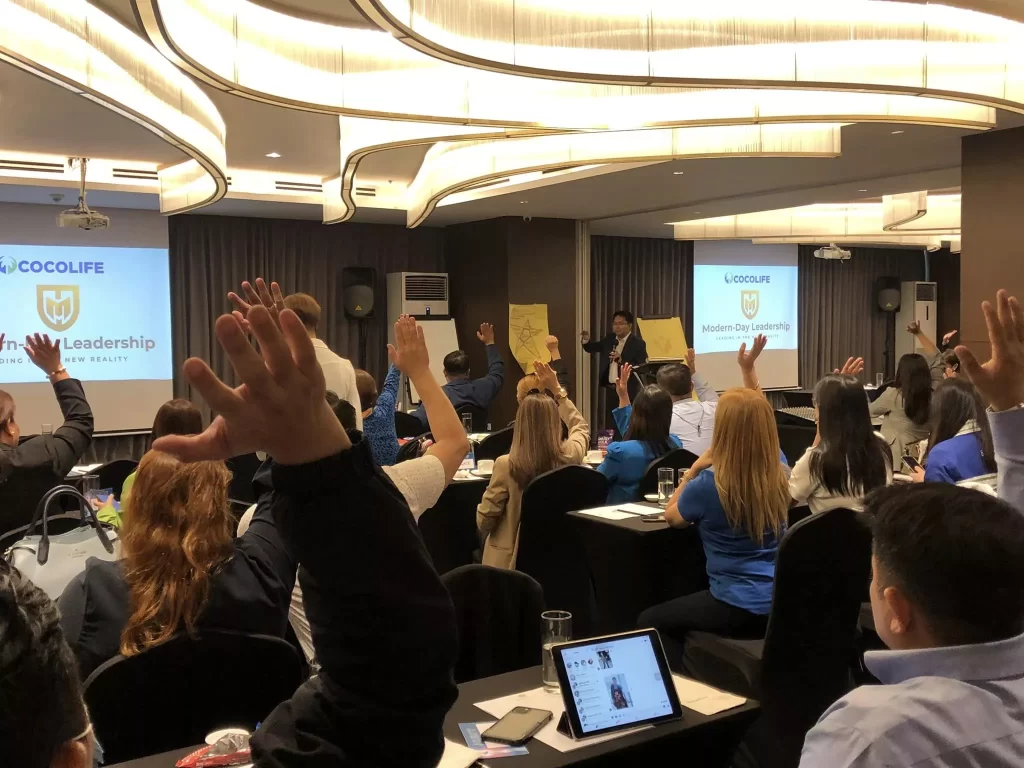
Recent clients who brought this program in-house: Ordermo.ph, Ibarra Events and Catering, Cocolife, Lingaro, Emmronn, Maroon Studios, and SM Leisure Resorts. These brands hired me (Venchito) to conduct a comprehensive leadership training program for their leaders at different levels in their organizations. Across the wider Rainmakers practice, our learning partners include Lingaro Group, MUFG Bank, Shimano Philippines, Shell, and The Lind Hotels — local SMEs and multinationals alike, from distribution to financial services.
 The Five Pillars of Modern-Day Leadership®
By focusing on these five pillars, we help you develop a leadership style centered on values — one that can guide your team toward getting results for your company or organization.
- Modeling – Lead by Example
- Connecting – Lead by Heart
- Visioneering – Lead with Direction
- Empowering – Lead in Trust
- Multiplying – Lead through Collaboration
The pillars aren't a poster on a wall. Each one carries its own diagnostic, a practice activity, and a habit commitment — so a participant walks out with five specific things to do differently, not five things to nod along to.
What Makes the Modern-Day Leadership® Program Different?
1. It is centered on values.
Other leadership programs may be focused on developing skills, which is greatly important in today's changing business landscape. However, I still believe in building the proper foundation of character for leaders.
If leaders operate on their personal values, aligning them hopefully with the values of their organization, they can be more effective in handling people in such a way that they do more than what is required of them. They cater to the needs of their people instead of only trying to satisfy their desires and needs.
2. It contains relevant information.
I loved books, but some leadership books may not be relevant to today's leadership culture. Leadership trainers must continually upgrade their materials to be more relevant in how organizations develop their leaders.
With the rise of technology and automation, how can leaders adapt to employees' ever-changing needs and a changing business landscape?
You can see the relevance factor in corporate training materials when the Filipino corporate trainer provides real-life examples and case studies from the workplace. All these give insights that training participants can take home to their own teams. We build in the topics that actually come up in Philippine workplaces right now — multi-generational communication, leading hybrid teams, emotional intelligence, resilience, and managing Gen Z without either indulging them or alienating them.
3. It guides participants to develop leadership habits.
Modern-Day Leadership® gives you a framework for the habits you have to build as leaders, plus tools and strategies you can utilize in different leadership situations.
There are different principles for someone six weeks into their first supervisory role and someone eight years into managing managers, and the program treats those as different problems. Habits are what teach discipline in your leadership life — and with this program, participants experience how to build the healthy ones that support the everyday role.
The Frameworks and Assessments We Use
Participants don't just get theory. We integrate practical frameworks — YOUnique DISC, GROW, CLEAR, and SEED — alongside structured reflection, peer learning, and live coaching conversations, so principles connect to practice inside the session rather than months later.
For teams that need a sharper starting point, we also run Genos Emotional Intelligence assessments as a pre-program diagnostic. That turns "our managers need to communicate better" into something specific enough to actually design around.
The Rest of the Rainmakers Leadership Suite
Modern-Day Leadership® is usually the entry point. Where a client needs a fuller development track, it's paired with:
- Growth Mindset & Accountability: From Belief to Ownership — resilience, adaptability, and genuine ownership rather than compliance.
- Growth Conversations: Coaching and Mentoring Essentials — feedback, mentoring, and coaching conversations that address real performance issues instead of avoiding them.
- Choose to Win® – 7C's of Champions — personal effectiveness, a winning mindset, and values applied to work and to life outside it.
What Happens After the Training
This is where most leadership training in the Philippines quietly fails, so let me be specific. Every Rainmakers leadership program includes guided reflection, case studies, and individual action planning, with optional one-on-one or small-group coaching sessions afterward to reinforce what was covered.
Every engagement also starts with a training needs analysis, not a catalogue. We interview or survey before we design, so the case studies and role-plays use your scenarios and your vocabulary — which is exactly the difference between a program people enjoyed and a program people applied.
Who Leads It

I'm a Certified Executive Coach (Symbiosis Coaching, ICF-accredited) and a Genos Emotional Intelligence Practitioner. I've trained and spoken at over 250 conventions, seminars, and workshops across the Philippines and internationally, including Singapore, Slovakia, and Australia.
I also currently run three businesses — SharpRocket, Hills & Valleys Cafe®, and Rainmakers Training®. That matters more than it sounds: the pressure of leading real teams and making real payroll decisions is the material.
Bring Modern-Day Leadership® To Your Company
Invite Venchito Tampon and his team to conduct a Modern-Day Leadership® Training program so you can upgrade the leadership skills of your supervisors, managers, and executives. Contact us to set an initial meeting and get a free quotation.
2. Level Up Leadership by Francis Kong
Attended: Yes — 2019
Considered the top-ranked speaker, trainer, and business consultant in the country, Francis Kong's best-selling program has helped thousands of leaders across industries. I personally attended Level Up Leadership in 2019, and I'm a genuine recipient of the lessons in it.
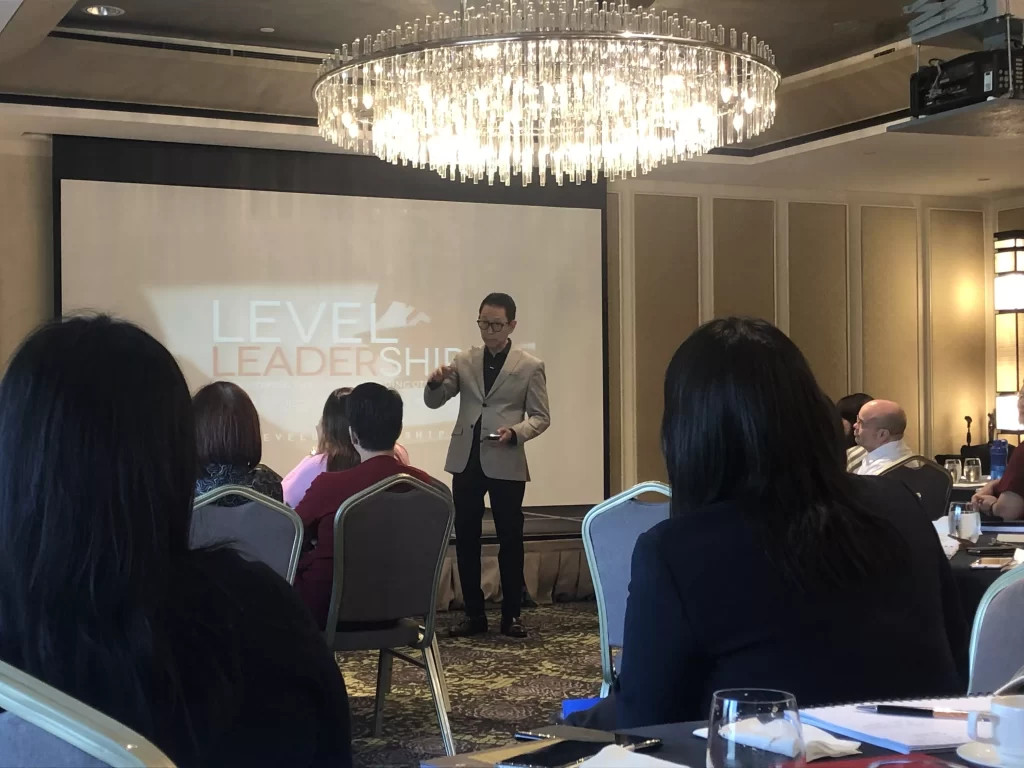
What stood out: he traces how leadership has evolved over fifty years, from how Baby Boomers used it to run a business to what's required with a Gen Z workforce. It's values-centered as well as skills-centered, and his treatment of servant leadership — drawing on how Jesus led his twelve disciples — was the most impactful part of the day for me. Group discussion is heavily encouraged, so there's real networking value with leaders from other industries.
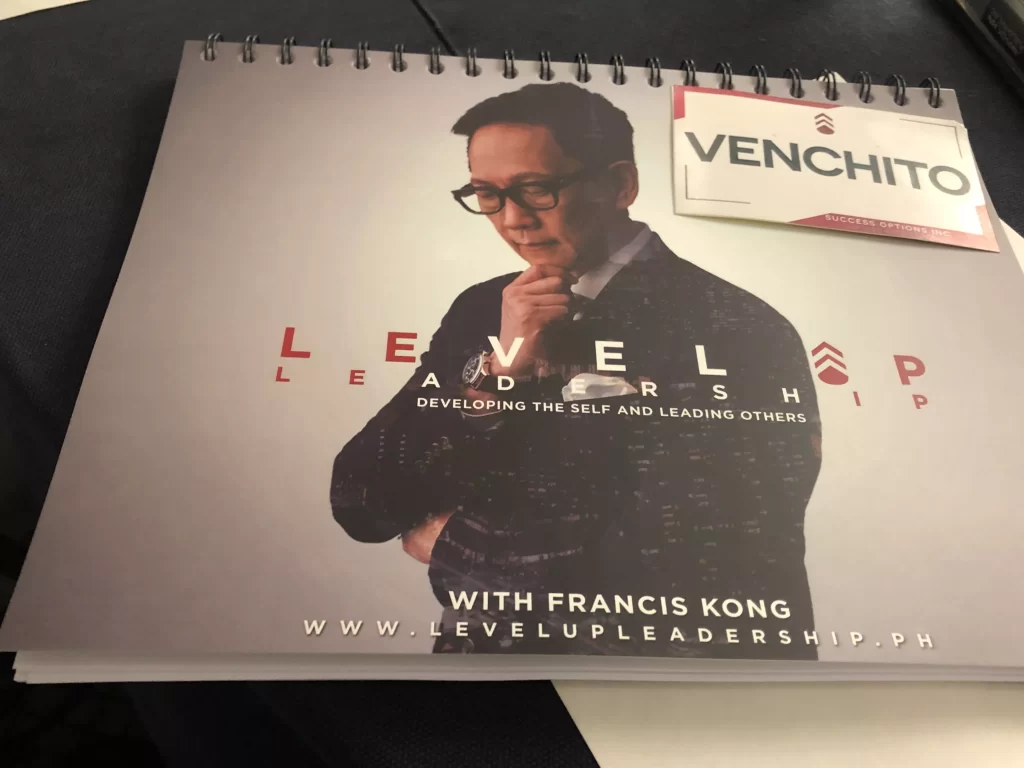
Where it fits: intermediate to advanced leaders. The content is pitched high. Newer leaders will still get value from it, but they won't extract all of it.
3. Moving into Management by Boris Joaquin
Attended: Yes — 2019
Boris Joaquin is one of the premier leadership corporate trainers in the country. Having been sought by top-1000 corporations and SME leaders alike, he knows how to pitch a room.
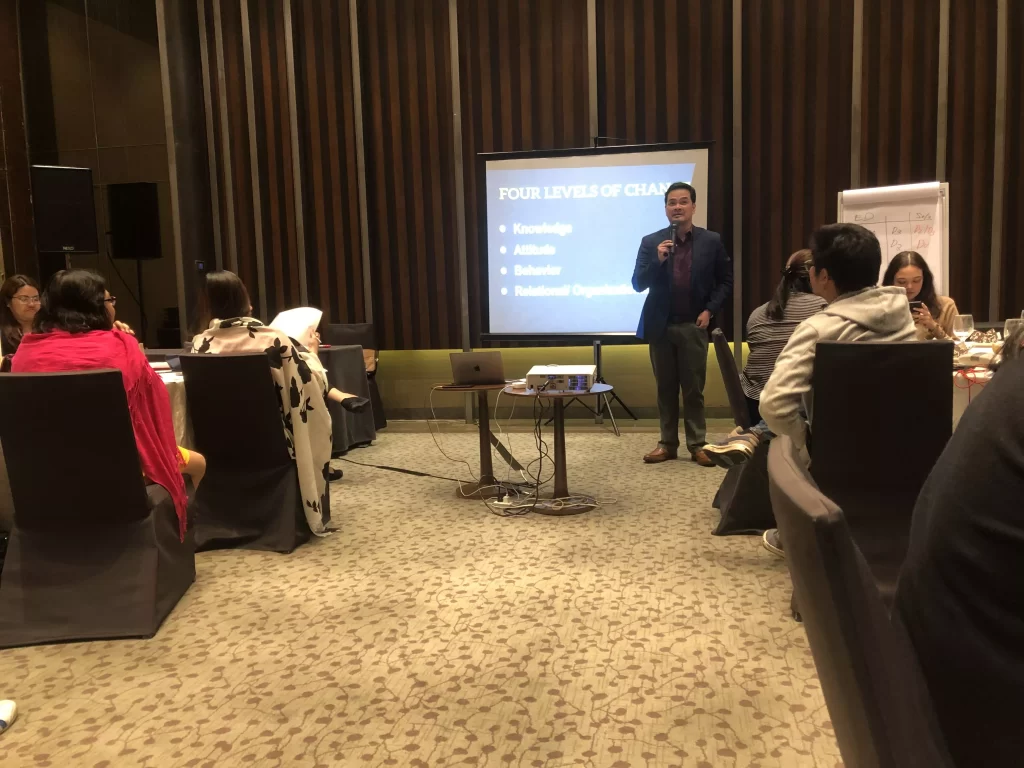
What stood out: the fundamentals are made genuinely easy to understand, especially the difference between managing and leading. Good self-awareness activities, a fun and light environment, plenty of time to network with other corporate leaders, and an excellent workbook I still take insights from.
Where it fits: it's preparatory. If your participants are already running teams, this will feel foundational. If they're about to start, it's close to ideal.
4. Step Back Leadership by Lloyd Luna
Attended: No — reviewed from published material and participant feedback
Let me be straight with you: I haven't sat in this one. What follows comes from Lloyd Luna's published talks and videos and from what attendees have told me, so weigh it accordingly.
What appears to work: Step Back Leadership is rooted in how leaders historically led their people and handled succession planning. It's also deliberately local — it draws out the real differences between how Filipino organizations are led and how their Western counterparts are, which is a gap most licensed Western curricula don't address at all. And it's pitched simply enough to run across every level in a company, from rank-and-file to executives.
5. John Maxwell Leadership Trainings
Attended: No — reviewed from the curriculum and Maxwell's published work
Certified John Maxwell Trainers in the Philippines include Ardy Abello, Anthony Pangilinan, and Mondo Castro. Dr. Maxwell is the world's most widely read leadership author, and the licensing model means you know exactly what curriculum you're getting.
What works: the principles are timeless and framed as laws, so they travel across context, industry, organization, country, and age. They're simple without being simplistic, and the material is genuinely inspirational — people leave motivated to act.
The trade-off: it's a licensed global curriculum, so how well it lands in a Philippine workplace depends entirely on which certified trainer you book, not on the program itself.
Which Leadership Program Fits Your Leaders?
| Program | Best For | Customized To Your Company |
|---|---|---|
| Modern-Day Leadership® Rainmakers |
Supervisors, new and mid-level managers | Yes — after a training needs analysis |
| Level Up Leadership Francis Kong |
Executives, directors, senior officials | Public program format |
| Moving into Management Boris Joaquin |
Rank-and-file, first-time supervisors | Public and in-house |
| Step Back Leadership Lloyd Luna |
Mixed-level audiences | Varies |
| John Maxwell Programs Certified trainers |
Any level, licensed curriculum | Depends on the certified trainer |
How To Choose Between Them
Four questions will settle this faster than any list will.
- What level are you actually developing? A program built for executives will lose your new supervisors, and a preparatory program will bore your directors. This is the single most common mistake in Philippine L&D bookings.
- Do you need it customized? If your challenge is specific — attrition on one floor, a merger, a shift to hybrid — a public seminar won't touch it. You need an in-house program designed after a training needs analysis.
- Has the facilitator actually led anyone? Plenty of leadership speakers in the Philippines have never run a team or carried a payroll. Ask directly.
- How will you know it worked? Agree the measure before you sign — pre- and post-assessment, action plans with follow-up, or a business metric you already track.
Our full vetting checklist, including accreditation and procurement questions, is in our guide to the best leadership training providers in the Philippines.
Frequently Asked Questions
How much does leadership training cost in the Philippines?
It depends on format. Public seminars are priced per participant. In-house programs are priced per training day and scale with customization depth, group size, and whether post-training coaching is included. See our breakdown of corporate training prices in the Philippines for indicative ranges, or request a quote for your specific headcount.
How long is a leadership training program?
Most in-house leadership programs in the Philippines run one to three days. Multi-module tracks spread across several weeks or months produce better behavioral change, because participants get to try things between sessions and come back with real problems.
Is in-house or public leadership training better?
Public seminars are better for one or two individuals and for networking. In-house is better for anything above roughly eight participants, and it's the only real option if you need the content mapped to your own workplace challenges.
Does virtual leadership training actually work?
Yes, when it's designed for the format — breakout practice, smaller groups, shorter sessions. It fails when a face-to-face deck is simply screen-shared for eight hours.
What's the minimum number of participants for in-house training?
Rainmakers typically runs in-house leadership programs from around 10 participants. Talk to us if your group is smaller — small-group coaching is often the better fit.
Key Takeaways
Those are five of the best leadership training programs in the Philippines — three I attended personally, and two I've reviewed from the outside and labelled as such, so you know exactly what you're weighing.
Match the program to the level you're developing. Insist on customization if your problem is specific. And agree on how you'll measure it before you book anything.
If you're looking for a corporate trainer to level up your leaders, contact us for a free quote on our Modern-Day Leadership® Program.

What Kind Of Training Would You Provide To New Sales Managers?
If one set of employees has been overlooked for corporate training, it’s the team of sales managers.
One of the main reasons is that VPs and Senior Executives think these sales managers already have the competencies they need to succeed. Truthfully, like any employee, they need to ramp up their skills over time.
In this guide, I’ll share what kind of training you would provide new sales managers and share some of my personal insights as a corporate trainer and resource speaker.
Transitioning into a sales management role requires an arsenal of skills, from leading a team to managing processes and inspiring your sales agents to continuously invest in themselves so they can produce the company's desired output.
You may be confused about which one to start with, but below is a solid list of sales training programs you should start using to train your sales managers.
What Kind Of Training Would You Provide To New Sales Managers?
1. Consultative Selling
Gone are the days when you sold products one-time off, like a transactional type of selling when you went to groceries, malls, or brick-and-mortar shops.
New sales managers should understand that selling is more than just closing deals; it is purely solving customers’ problems. The better you solve, the higher the chances of achieving their sales goals.
I have an entire guide on consultative selling and B2B sales - so be sure to check it out.
Essentially, consultative selling involves understanding and assessing clients’ needs so that you can solve their problems with customized solutions from your offer.
It’s that simple. If sales managers can start selling the right way by wearing a consultant hat, they’ll be better able to attract qualified clients—people who need help and truly want to solve their problems.
Here’s a good idea to start training your team. Practice role-playing scenarios where managers must assess clients’ needs and recommend solutions. You can do so with a facilitator or an outsourced corporate training provider. Let Rainamakers help you if you want to be done right.
2. Negotiation Skills
Another training need for sales managers is negotiation skills.
In our experience as corporate trainers, we’ve seen this lacking with sales managers despite their years of experience in the industry. They’ve been doing the same thing repeatedly, expecting results, but they don’t see much to be satisfied with the outcome.
Train your sales managers to identify common ground and find win-win solutions for both parties (the client and you/your company as the solution provider).
They must know how to answer or handle objections and address clients’ concerns without compromising value. By using these sales techniques, your sales managers will be more equipped to close deals themselves instead of delegating these tasks without prior knowledge to their sales agents.
Remember: they can only share what they already have with their team. If they don’t have the skills they need, they can’t share them with others.
One exercise activity you can have with sales managers is stimulating high-stakes negotiations, during which they can work on their negotiation skills and evaluate strategies for reaching agreements.
You need an external perspective who knows how negotiations work. If you need negotiation skills training, contact our team, and we will provide it.
3. Effective Communication
Sales require the ability to communicate the results that you want your clients to get. This includes not only demonstrating features and benefits—which most salespeople focus on—but also strongly communicating your brand with finesse.
Effective communication training is essential for sales managers to ensure the team understands goals, targets, and strategies. This way, they can align their team toward having the same vision, mission, and action plans, better addressing issues and challenges, and ultimately getting to where they want to be at the end of the year.
Effective communication also helps them train themselves to provide construction feedback to their sales agents. One word makes a difference. If they miss out on providing guidance, they won’t see any improvement in sales results. That’s why having a strong communication skill set for sales managers can bring their team to the next level.
A good practice for this is conducting team meetings where managers can practice presenting objectives and delivering feedback. It is best to create an environment where it is good to learn, unlearn, and relearn new things—set some rules before doing the exercise.
If you need help, contact Rainmakers for effective communication training for your sales managers.
4. Virtual Engagement
In a hybrid world, virtual engagement is indispensable. Many salespeople now have systems for virtual engagement, as they can reach more sales prospects while having less stress to physically meet them (given the hassle of traffic we have here in the Philippines).
Managers must learn how to lead virtual meetings and use tools like Zoom, MS Teams, or Slack for effective remote communication. Thanks to 2020 happenings, Filipinos were pushed to learn technologies in the comfort of their homes to better market and sell their products or services.
Another upside of learning to engage in virtual activities is the ability to build rapport virtually through personalized approaches. Learning how to look at the camera every time you speak and using non-verbal languages to better communicate your message is a plus skill any salesperson, including sales managers, should practice and master.
One good workshop idea for this training area is hosting a mock virtual meeting where sales managers refine their online communication techniques. It is best to use the product or service you’re offering itself as an example.
5. Lead Generation (Prospecting)
New sales managers should know how to identify and nurture potential clients. If they just hand this critical component of selling to their sales agents, they won’t have a chance to improve processes for their sales teams.
Key skills in lead generation must include building a prospecting pipeline, which means learning how to use CRM systems to organize leads (there are many web tools - one, in particular, is Hubspot).
Another skill is lead qualification, which is learning to identify high-potential prospects among leads you collect or gather. From there, you should train your managers with follow-up strategies to maintain consistent communication without overwhelming prospects.
These can help your sales managers develop the mastery needed to attract a large number of prospects to their sales pipeline.
Real-World Task: Assign managers to create a lead generation plan targeting specific demographics or industries. In our sales training, we have an ICP (Ideal Customer Profile) worksheet activity asking our participants to create their ICP based on their preferred product or product category.
6. Sales Management and Leadership
Of course, given that we’re talking about sales managers, they should excel at sales management and leadership. They should have the mindset of both a leader and manager and transition from individual contributors to ones worthy of influencing others.
Sales management includes inspiring the team through appreciation, recognition, and goal setting. It also includes performance monitoring and training salespeople to identify KPIs to measure individual and team success.
Another key area is conflict resolution, which equips them to mediate disputes within the team (as they arise).
One perfect activity for sales management and leadership is role-play scenarios in which managers address underperformance or team conflicts. Although this activity may be too serious to conduct, it would really help them deal with it in actual work.
7. Personality Development Using the DISC Framework
Knowing your personality type helps you understand and accept your strengths and weaknesses. You can adapt to different situations by gaining strengths from other personality types and using them to your own advantage.
You can use the DISC framework to help your sales managers recognize the personality types of their team members and clients. This will also enhance their selling ability, as they will know how to adjust communication and sales strategies based on personality traits.
Hire a certified DISC facilitator to conduct DISC assessment training with your team and provide personalized coaching for better practical application.
Sales Managers Can Always Go To The Next Level
Beyond position, sales managers can invest time and resources to improve their skills and lead their sales associates in achieving results. With specific areas of sales training for managers listed above, they’ll be better equipped to overcome challenges in selling and create sustainable growth for their teams.

Strategic Thinking and Intuitive Thinking
Strategic thinking and intuitive thinking are two essential cognitive skills any leader must possess and master in problem-solving, decision-making, and leadership.
While they operate on opposite ends of the spectrum, understanding them to leverage their strengths can lead to better outcomes in your professional line of work.
In this guide, we’ll explore the differences between strategic thinking and intuitive thinking, the factors that shape them, and actionable tips to improve both. Let’s begin.
The Difference Between Strategic Thinking and Intuitive Thinking
Strategic thinking is a structured and systematic approach to analyzing complex situations, considering long-term goals, and planning the most effective path to achieve them.
Conversely, intuitive thinking is an instinctive, gut-felling approach to decision-making. It is spontaneous and relies on experience, emotions, and immediate recognition of patterns without extensive analysis.
Two famous experts describe strategic thinking and intuitive thinking. Dr. Jeanne Liedtka, a University of Virginia’s Darden School of Business professor, describes strategic thinking as discovering key insights that shape your future choices and actions.
In his book Thinking Fast and Slow, Daniel Kahneman, a Nobel Prize-winning psychologist, describes intuitive thinking as "fast thinking” that is automatic and effortless.
Key Characteristics of Strategic Thinking:
- Analytical and methodical
- Involves careful planning and forecasting
- Focuses on long-term goals
- Considers risks, opportunities, and external factors
Key Characteristics of Intuitive Thinking:
- Spontaneous and quick
- Relies on experience and past patterns
- Emotion-driven
- Lacks formal analysis
Factors That Shape Strategic and Intuitive Thinking
Many factors shape one’s strategic and intuitive thinking. Over time, these skills are developed as people mature and their environment nurtures them. A few vital factors that influence both of these thinking models include:
A. Experience and Expertise
Experience is one of the most significant factors shaping intuitive thinking. On the other hand, exposure shapes strategic thinking when exposed to complex problem-solving situations and deliberate practice.
As a trainer and speaker, I’ve seen this happen in my career. The more I step into the next level of challenges, training new groups of professionals, the more it develops my strategic thinking. Seeing through the lens of their needs and challenges, aligning it with the programs I was tasked to deliver.
Exposure to different levels of environment, audiences, and challenges is necessary to practice our strategic thinking skills more.
For leaders and managers like me, strategic thinking gets its honing phase when we make decisions for the team. As teams become more complex as they go through the different levels of team development—which I shared in my team training guide—you’ll find yourself applying strategic thinking skills in handling teams at their different stages—managing conflicts to allocating resources to increase work performance.
B. Cognitive Style
Cognitive style refers to an individual’s preferred way of processing information. People with an analytical cognitive style tend to favor strategic thinking, while those with a holistic cognitive style are more inclined to use intuitive thinking.
C. Emotional Intelligence (EQ)
Emotional intelligence plays a critical role in both strategic and intuitive thinking. People with high EQ are better at sensing emotions, which helps improve their intuitive thinking. Conversely, emotional intelligence aids strategic thinking by allowing individuals to assess situations objectively and control impulsive reactions.
I’ve seen leaders with high EQ who realistically assess situations not based on how they feel but on what they think is right. Emotional intelligence translates to better decision-making and problem-solving skills based on facts and data, not just gut feelings.
D. Environment and Context
Based on context, the environment can dictate which thinking style is more effective. High-pressure situations with limited time for analysis often favor intuitive thinking, while complex scenarios requiring a detailed plan benefit from strategic thinking.
I observed this during our corporate training sessions: the moment we change the vibe or environment style of the training, it enables them to change their thinking style, which translates to better behavior and skill enhancement.
How to Improve Strategic Thinking and Intuitive Thinking
Given that strategic thinking and intuition are critical cognitive skills that require deliberate practice, self-awareness, and proper utilization of the right tools. Here’s how to improve both skills:
1. Engage in Long-Term Planning Exercises
Be involved in as many strategic thinking or planning exercises as possible. Whether you’re an employee participating in a strategic planning exercise for managers and directors or running your own business strategies and scenario analysis, all these exercises can help strengthen your ability to think systematically.
2. Practice Critical Thinking
Critical thinking is the foundation of strategic thinking. Consider different root cause analysis tools, such as “5 Whys” techniques, “RCA,” “Fishbone Diagram,” and 5Ms of Management frameworks—all these have their own advantages that can help you get to the root cause of the problem.
3. Use Strategic Frameworks
If you’re engaging heavily in strategic planning, strategic management, and critical thinking exercises to find opportunities, both internal and external, in your organization, familiarize yourself with strategic frameworks. These include SWOT Analysis (Strengths, Weaknesses, Opportunities, Threats), PESTLE Analysis (Political, Economic, Social, Technological, Legal, and Environmental), or the Balanced Scorecard to guide your strategic thinking.
Utilizing strategic frameworks is best because it helps you improve your strategic thinking skills, along with other colleagues, during thinking exercises.
4. Seek Diverse Perspectives
Strategic thinkers broaden their viewpoints by engaging with people from different industries, contexts, cultures, or backgrounds. This kind of exposure to diverse perspectives provides fresh insights and helps anticipate challenges from various angles.
There are many trainings that help teams instill collaboration and diversity. Here in the Philippines, we have diversity and inclusion training and team collaboration training, both of which include exercises on gaining diverse perspectives from others.
5. Reflect on Past Experiences
Reflect regularly on your past decisions and experiences to identify patterns, construct new lessons, and develop yourself both personally and professionally. This habit strengthens your ability to draw on intuition when faced with similar situations in the future.
6. Trust Your Gut Feelings
Intuition is often underrated by many. While it’s true that you cannot base all your decisions on gut feelings alone. If the situation has low-risk and isn’t major enough that it will dictate the trajectory in one area of your life, it is best to refine your intuitive thinking based on intuition. You’ll then find yourself improving your confidence in your instincts.
7. Develop Mindfulness Practices
Another way to get the most out of your thinking exercises is through mindfulness meditation. It can enhance intuitive thinking by improving awareness of thoughts and emotions.
A study published in Psychological Science found that mindfulness practices increase the ability to recognize intuitive insights.
8. Embrace New Experiences
Expose yourself to new situations and challenges to increase the range, depth, and width of your experiences stored in your memory. This diversity provides more reference points that can help you make better decisions in the future.
Balancing Strategic and Intuitive Thinking
While strategic and intuitive thinking have distinct differences, they are not mutually exclusive.
The most influential decision-makers leverage both skills, depending on the situation. A Harvard Business Review study suggests that blending strategic and intuitive thinking leads to better outcomes, especially in dynamic environments.
Cultivate the right balance between strategic and intuitive thinking to ensure a well-rounded approach, which will allow you to navigate challenges confidently and clearly.

Benefits of Strategic Management
In today’s VUCA and BANI (Brittle, Anxious, Non-Linear, and Incomprehensible) environments, strategic management has emerged as a critical skill and function for organizations striving for long-term success.
Founded on the five management functions (and the five Ms of management), strategic management hinges on a systematic approach to planning, decision-making, resource allocation, and the ability of every team and business to navigate challenges and capitalize on opportunities focused on their core vision.
All of these are critical to sustaining the growth of any organization.
In this guide, we will explore the key benefits of strategic management and my own takeaway as CEO of three companies: an SEO agency, a coffee shop franchising company, and a corporate training company.
The benefits of strategic management are broadly categorized into financial and non-financial, both of which are indispensable for sustaining a company’s success.
1. Financial Benefits of Strategic Management
A. Improved Profitability and Revenue Growth
One of the primary financial benefits of strategic management is its positive impact on profitability. Companies with well-defined strategic plans are better equipped to identify and capitalize on revenue-generating opportunities.
Directors and managers ensure that they pinpoint necessary opportunities (becoming purposeful and opportunistic) as part of their directing in management. This proactive approach to market trends and consumer demands leads to consistent revenue growth, mainly when proper execution occurs.
One study published in the Strategic Management Journal found that companies engaged in strategic planning experienced a 12% higher profitability than those that didn’t.
Strategic management helps businesses set financial goals, monitor performance, and execute against those goals while implementing corrective measures, if necessary, when deviations occur—all these ensure sustained profitability.
Apple Inc. has consistently used strategic management to innovate and enter new markets, now driving higher profitability year over year. They maintained high net income growth from $48 billion in 2018 to over $55 billion in 2020.
B. Efficient Resource Allocation
Strategic management allows organizations to optimize resources by identifying the most profitable ventures and prioritizing investments accordingly. In leadership training, we teach that we must utilize and maximize five resources daily. Failure to do so will result in disorder and inefficiency.
These five resources include:
- Treasure (Money)
- Attention
- Energy
- Time
- Talent
Efficient resource allocation helps minimize waste and ensures that capital, human talent, and all allocated resources toward initiatives can achieve the highest potential for returns.
According to a report by McKinsey & Company, firms that implemented strategic management practices achieved a 25% increase in resource productivity, leading to significant cost savings and improved financial performance.
It is through leaders starting to see things from a top-down perspective —we call this “big-picture thinking” or “strategic thinking”—that the team must focus on, whether it is a high-return project or daily task. Companies must avoid unnecessary expenditures to free up resources for other critical business areas.
Procter & Gamble (P&G) strategically focuses on high-growth categories like beauty and personal care, allowing it to allocate resources more effectively. It has focused on a market where it knows it can, which has resulted in improving its operating margins and steady financial growth, as reported in its annual financial statements.
C. Enhanced Risk Management
Strategic management involves identifying potential risks and developing plans to mitigate them. This proactive approach helps businesses avoid costly financial setbacks and ensures that they can withstand market fluctuations. According to a PwC survey, 73% of CEOs actively engaged in strategic risk management reported fewer financial losses than those who did not.
Risk management constitutes solid training for mid-line managers and directors. It is a critical skill in today’s rapidly changing market, as each organization and individual faces different types of risks in leading their teams.
For instance, we managed to take calculated risks when we opened our coffee shop in Bulacan and our franchise in Lower Bicutan. Given the product-market fit, we saw every pattern and readability in operations to ensure it would catch a good market share once we launched our products.
Another example is companies like Zoom, which, with strategic risk management plans in place, were able to quickly adapt to the surge in demand for virtual communication tools. As a result, Zoom’s revenue increased by over 300% in 2020, demonstrating how strategic planning can lead to significant financial gains even during uncertain times.
D. Improved Financial Planning and Budgeting
Strategic management enables businesses to create more accurate financial projections and budgets by aligning them with long-term goals. This alignment ensures that economic resources are allocated to support strategic objectives, leading to better financial outcomes.
A recent study by Deloitte revealed that organizations with strategic management frameworks experienced a 15% increase in financial planning accuracy, leading to more efficient budgeting and cost control.
Financial planning is directly related to strategic goals. Businesses can avoid overspending by focusing on critical projects that require significant available funds.
2. Non-Financial Benefits
Beyond monetary gains, strategic management offers a plethora of non-financial advantages that any leader can overlook without thinking. These benefits contribute to the organization’s overall success, sustainability, and competitiveness.
A. Clear Organizational Direction and Vision
Having a clear sense of direction and vision is part of the directing stage of the PLOC framework in management, which determines the destination of any organization. Strengthening strategic management initiatives ensures that all stakeholders understand the organization’s goals and the action steps needed to achieve them.
According to research conducted by Bain & Company, 90% of high-performing organizations attribute their success to having a clear strategic vision that guides their specific actions and decisions. This sense of purpose assists them in aligning efforts and ensures that every department and employee works toward the same goals.
For instance, Tesla, Inc. has a clear vision to “accelerate the world’s transition to sustainable energy.” This strategic focus enables them to develop more products and marketing strategies while inspiring employees and stakeholders to contribute to the same vision within the electric vehicle market.
We covered how to create vision statements in our Visioneering module in our team training and management training programs.
B. Improved Decision-Making
Strategic management provides a structured framework for decision-making by analyzing internal and external factors that impact the business. This systematic approach ensures that decisions are made based on data, market trends, organizational changes, and capabilities, reducing the risks of costly mistakes.
A study conducted by Harvard Business Review found that organizations with strategic management processes are 60% more likely to make decisions that lead to positive outcomes. Different strategic management initiatives, such as data analytics, scenario planning, and forecasting, can further result in informed and effective choices.
Johnson & Johnson, a global leader in healthcare, employs strategic management to make informed decisions regarding product development and market expansion. They use data-driven insights to launch new products that align with market demands.
C. Adaptability and Resilience
Without adaptability, you can’t contribute to your organization's success. Strategic management equips organizations with the tools to anticipate changes and respond to any market disruption so they can adjust their strategies accordingly.
A report by the Boston Consulting Group found that organizations with robust strategic management practices are 50% more likely to adapt to market changes, ensuring long-term sustainability.
Netflix is a prime example of adaptability through strategic management. Initially a DVD rental service, Netflix anticipated the shift toward digital streaming and strategically pivoted its business model. This adaptability approach has positioned Netflix as a market leader in the streaming industry, with over 200 million subscribers worldwide.
D. Enhanced Employee Engagement and Motivation
Involving employees in the strategic planning process fosters a sense of ownership and commitment, leading to increased engagement and productivity. Employees who understand their role in achieving the organization's goals are more likely to be motivated and perform at their best.
A Gallup study found that organizations with high employee engagement experience 21% higher productivity and 22% greater profitability than those with low engagement. Strategic management helps create a culture where employees feel valued and connected to the company's mission, which in turn drives better performance.
Example: Google employs strategic management practices that encourage employee involvement in decision-making, leading to high levels of engagement and innovation. This approach has contributed to Google’s reputation as one of the best places to work while driving its success as a global tech giant.
E. Strengthened Organizational Culture and Values
Strategic management helps to establish a strong organizational culture by aligning the company’s values, beliefs, and behaviors with its strategic objectives. A strong culture fosters unity, collaboration, and a shared sense of purpose, vital for achieving long-term success.
Research from the Journal of Organizational Behavior indicates that companies with a well-defined culture aligned with their strategy outperform their competitors by up to 30%.
One of the best examples is Southwest Airlines' strategic management approach, which emphasizes employee empowerment and customer service. This culture has led to high employee satisfaction, low turnover rates, and a loyal customer base, making it one of the most profitable airlines in the industry.
Incorporating strategic management is not just an option but necessary for organizations aiming to thrive in today's dynamic and competitive business landscape.

Directing in Management: Key Elements and Importance for Success
Directing falls under the leading component of the PLOC framework of management. In this management function, a manager or supervisor is focused on guiding, inspiring, and leading employees towards achieving both their individual goals and organizational goals.
Directing bridges the planning and execution phases. It ensures that all strategies are transformed into concrete actions through continuous guidance, feedback, and combined efforts in motivation and inspiration.
The lack of it as a component in managing processes will lead to plans remaining flat on paper and needing fulfillment in results.
Importance of Directing
Directing is essential for several reasons, including:
Implements The Vision
Directing provides more concrete steps to the vision. When the founders and/or management team have set the organization's vision and mission, directing helps break down plans into manageable actions. Vision, therefore, becomes a reality for the organization.
Enhances Motivation and Morale
When team morale is high, it inspires employees to achieve peak performance in their work, increasing productivity and organizational growth. Conversely, when team morale is low, the drive to perform at its best is not visible.
Through their directing functions, managers establish clear communication channels by increasing the frequency of communication and ensuring that information flows freely between different levels of the organization.
Ensures Coordination
Directing brings together the efforts of all employees, aligning their individual objections with the company’s overall goals. This type of alignment ensures a smooth transition and operations for projects to be completed by teams.
Key Elements in Directing
Directing may seem like a sole component, but it has various parts underneath. Let’s review some of the key elements of directing.
Supervision
Supervisors are called such because they are responsible for maintaining accountability. This involves closely monitoring employee performance and guiding them through their tasks.
Adequate supervision enables employees to remain on track and align their current actions with the organizational goals.
Supervisors must provide clarity and support to ensure tasks are understood, well-planned, and executed correctly. Feedback giving becomes an essential element for team training, as it helps employees improve their individual
Supervision also covers accountability, as it maintains oversight by giving leaders a bigger picture of what’s happening on their teams. Leaders must know how to foster a disciplined yet healthy work environment that addresses pressing issues and challenges their subordinates face.
Identifying areas where employees need to grow is part of the core of supervision. Leaders here become mentors as they help their direct reports meet their daily job demands. Continuous use of appropriate learning and intervention, such as corporate training programs and leadership development, unleashes the mentorship potential of managers and supervisors.
All these we teach in our basic supervisory training.
Motivation
Motivation is pivotal in driving employee performance and aligning with management's direction. Motivating one of the five pillars of management (5 M’s of Management)—manpower—lays the foundation for sound business operations.
People aren’t just the best assets - they are the inputs for every other Ms of management - money, machines, materials, and methods, putting all these together in
Motivation involves looking at both intrinsic and extrinsic “motivators” of people in giving their best efforts for the company. Here are the top science-based motivational techniques:
- Recognitions and rewards - whether through monetary incentives or verbal acknowledgment of efforts, can significantly boost morale and productivity.
- Determining One’s Personality Styles - in our DISC personality training, we let our participants assess themselves based on the four unique personalities: Dominant, Influential, Steady, and Corrective. All these have significant strengths and weaknesses that every professional manifests at work. Knowing the personality styles of your direct reports can help you motivate them based on what makes them tick.
- Creating a Positive Work Environment—This may involve promoting psychological safety among your teams, where you empower others to share their pressing concerns, ideas, and challenges so you can address them as a leader. A consultative leader who asks questions is more likely to become proactive in solving problems within their scope of influence.
- Aligning Personal Goals with Organizational Goals—Employees become effective when they clearly see a connection between work and their personal aspirations. As more organizations are leading towards holistic growth for their employees, tapping this motivator or alignment of work with their personal life elevates their performance and how they bring value to the organization.
- Leadership
The leadership component within directing is about influencing, guiding, and inspiring employees to achieve organizational objectives. It may be similar to motivation, but it deals with influencing others through various methods.
In our leadership training, we teach the three Hs of Leadership: Heart, Hand, and Head. Every manager or supervisor must develop and grow in these three areas of leadership. They must grow in their head—intellect, knowledge, and know-how of their people. They should acquire skills (“Hands”) and master them as they lead their people. Lastly, they must lead from the Heart—integrity.
All these encompass a strong, characterized, competent leader any direct report would want to follow their ways.
Here are more useful resources I’ve written in the past to help you grow in leadership:
- How to Be a Passionate Leader
- How to Be a Good Leader
- Leadership in Virtual Teams
- Leadership and Employee Engagement
To dig deeper, let me share with you actionable tips to grow in your leadership based on my over a decade of experience leading people and organizations:
- Know your vision. Vision brings you into places you never thought possible as you take action to make it a reality. Communicate this vision to your teams so you can achieve objectives.
- Adjust your leadership style based on your people’s motivation and behaviors.
- Recognize your emotions and develop your emotional intelligence. Increase awareness of your feelings and emotions, as well as be sensitive to others’ emotions—all these will guide you in interactions.
Communication
Effective communication is central to directing. Every workday, you communicate messages and tasks to your colleagues and direct reports, so developing strong communication skills ensures you’re bringing your team to the vision.
Here are some useful tips to improve communication:
- Be true to yourself to enhance intrapersonal communication. Authenticity unleashes the power and truth in yourself, helping build more trust with your team members.
- Communicate clearly and transparently. Clear communication helps prevent misunderstandings and ensures your direct reports know precisely what is expected.
- Foster an environment where employees feel comfortable providing feedback and concerns, as I mentioned earlier about psychological safety.
- Be consistent in your messaging. This will help align your team members' efforts toward one goal: expecting the ideal output.
- Increase the frequency of meetings and one-on-one sessions with your direct reports, especially for virtual teams, as you need to emphasize as a leader the key messages and goals of the company.
Coordination
Coordination refers to aligning and integrating the efforts of individuals and departments to achieve common organizational goals. This is where the need to allocate resources effectively for smoother operations.
Here are some valuable tips to better coordinate with your team members:
- Avoid redundancies in processes. Determine minor details that overlap in tasks and roles so you can ensure resources are used efficiently and promptly.
- Integrate the efforts of different departments by conducting regular, sequential meetings to align all action plans set during strategic planning and goal-setting activities.
- Facilitate smooth interactions and transitions when changes are happening in the organization.
- Learn to manage change internally from top management down to frontline employees. See every possible result of change and communicate them across your teams.
The Essential Role of Directing in Organizational Success
Directing is a core management function that bridges the gap between planning and execution.
By integrating supervision, leadership, motivation, communication, and coordination, managers and supervisors can ensure that organizational goals are translated into vacation plans.
If you want to conduct training programs in your organization on management, succession planning, business development, communication, and culture building, contact us, and we’ll schedule a training needs analysis session with your learning and development team.
POLC Framework in Management: Planning, Organizing, Leading, Controlling
POLC framework is a long-held effective management framework that has evolved over time. Companies, especially those in the L&D department, practice it to develop their current and succeeding leaders.
While it’s been popular for decades in the talent development industry, many beginning trainers, speakers, consultants, and company leaders still struggle to grasp its true importance.
Today, we’ll examine the fundamentals of the POLC framework and how you and your leaders can apply them to effectively lead your team to the next level of growth and significance.
Let’s get started.
POLC As A Framework
POLC stands for Planning, Organizing, Leading, and Controlling, and it is often attributed to the work of Henri Fayol, a French mining engineer and management theorist who is widely recognized for his contributions to modern management theories.
Henri laid the groundwork for the classical management theory, presenting 14 management principles (including the 5Ms of management) and introducing the four primary functions of management—we now know them as POLC.
Let’s dive into each of these management functions.
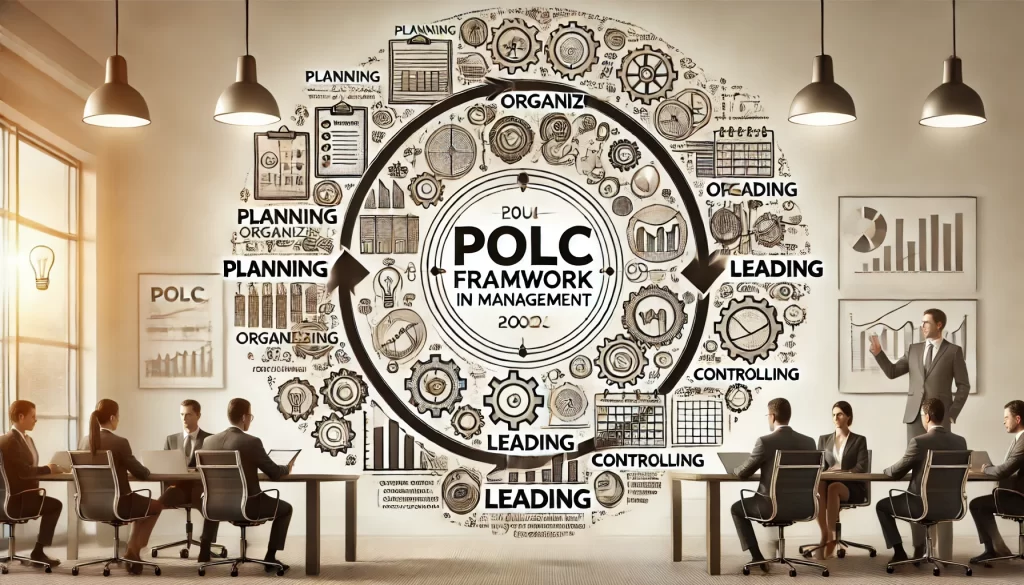
Planning: Setting Clear Objectives
Planning is the cornerstone of the POLC framework. In the initial phase, team leaders set clear objectives, develop strategies, and allocate resources to achieve individual and organizational goals.
One best practice when planning is having a good grasp of your organization’s MVV (Mission, Vision, and Values). Without these three organizational core elements, any leader would have difficulty aligning and adjusting their plans to impact the organization’s objectives.
Actionable Tips To Apply Planning as Managers:
- Consider planning as part of the manager’s job. Most do not include it as their weekly tasks, given it’s not explicitly included in their job roles and responsibilities. By letting it become part of your duties, you’ll manage processes and lead your team more effectively than before.
- Schedule plans in your calendar. As scheduled, you plan with your team (or whoever must be included in the planning sessions).
- If you’re at the top of management, revisit your mission and values and ensure you align the plans of your business units and departments to pursue your mission.
- Involve key stakeholders to ensure plans are comprehensive.
Planning should always be considered. The better you plan as a manager, the more you’ll be ahead of your competitors and become more relevant to the industry and community you’re engaging with.
Organizing: Executing Plans Effectively
Once plans are set, the next step is organizing and structuring resources as needed to execute them effectively.
Now, organizing involves assigning key roles and responsibilities, prioritizing major tasks from minor tasks, delegating authority, and coordinating all efforts across teams or departments you’re involved with.
Execution isn’t easy and may require abilities to manage tasks effectively.
Actionable Tips To Apply Organizing as Managers:
- Create a well-structured environment as supervisors, where staff members know what is expected of them.
- Foster collaboration in your culture to get feedback from people so you can improve specific processes and systems.
- Streamline processes and remove inefficiencies that only consume time and waste resources.
- Revisit your plans when things go wrong and your actions don’t align with what you want to accomplish as a team.
- Break down any big projects into meaningful, small tasks. Let small wins build momentum, inspire your team to improve, and accomplish more significant goals and objectives.
- Practice decision-making skills to become a great leader. In most situations, be ready to make major decisions on tasks and projects.
- Use project management tools to help organize resources, workflow, and team initiatives. By seeing it from a tool, you’ll be able to track every phase of your project.
Leading: Inspiring and Motivating
Leading is the heart of the POLC framework and one of the five functions of management, which involves inspiring and influencing teams to achieve extraordinary results.
Given that management requires people to work on processes, it is essential for managers to learn how to handle people to the best of their abilities.
Over a decade of entrepreneurial experience handling teams and being a consultant and trainer for many local companies in the Philippines, I’ve had the privilege of learning (and still developing) lists of actionable tips for anyone to improve as a leaders. Here are some tips you can adapt to your style:
- Build your credibility as a leader. Staff members want to follow someone who talks their talk. If you’re doing what you’re already telling or instructing them to do, you need a few words to get them into action. Otherwise, your example won’t easily inspire staff if your character doesn’t speak of your promises.
- Invest in your personal leadership by discovering your own leadership training objectives. The key is to aspire to be better leaders every day. As the world is changing so fast, so does the new generation of workforce we’re currently leading.
- Develop business acumen as leaders. Know the industry trends and changes and perhaps predict what's to come based on historical data and observation. You’ll become better managers if you can teach your team to adapt to the ever-changing needs of the market and the industry.
- Do not let your ego consume you; you need feedback from peers, superiors, and associates. This will increase your self-awareness of areas where you need to improve more—knowledge, skills, and attitude (core elements of competence).
- Improve emotional intelligence. As you manage your emotions, you’ll be more sensitive to the feelings of other people, which creates a warm and inclusive work environment for your teams.
- Be founded on your values. Demonstrate the values and behaviors you expect from others.
Controlling: Monitoring and Adjusting
The fourth pillar of the POlC framework is controlling. This is where monitoring and evaluating performance management comes in.
You’ll have better chances of achieving your goals by making necessary adjustments.
Effective control isn’t about the people you lead but about the work itself, as you need to identify potential issues or deviations from the plan early on.
Here are a couple of tactics you can apply as leaders in the controlling phase of management:
- Establish clear performance metrics - this is where you’ll measure performance as you achieve your goals.
- Implement corrective actions when necessary if you see any changes or are behind-the-scenes in projects.
- Keep a close eye on key performance indicators and regularly communicate them with your team.
- Use immediate feedback instead of waiting for the annual feedback so you can help your associates or staff members perform better at work by addressing their latest concerns and challenges.
- Utilize resources efficiently by continuously monitoring performance. The goal isn’t just to save resources, but to maximize them so you can achieve your goals.
Mastering POLC Framework Never Ends
Mastering the POLC framework is a continuous journey for leaders. The business landscape has changed, so leaders must constantly adapt and refine their approach to meet the changing demands of our time.
Embrace these four pillars of the POLC framework as one of your functions as managers to achieve your goals through performance management and inspire people through better collaboration and healthy work culture.