
Best Sales Training Providers in the Philippines [2026]
With dozens of training options in the market, choosing the best sales training provider in the Philippines gets overwhelming fast. Most lists give you names. This one gives you the details you actually need to shortlist: what each provider is known for, who they train, how they deliver, and what it costs.
We reviewed the sales training providers operating in the Philippine market and ranked the ones that combine sales-specific expertise, customisation, and proof of results. Below you will find a side-by-side comparison, full provider profiles, indicative pricing, and a vetting checklist you can use in your next supplier call.
Quick Comparison: Best Sales Training Providers in the Philippines
Sorted by overall fit for Philippine sales teams. Scroll sideways on mobile to see every column.
| Provider | Best For | Core Strengths | Delivery | Based In |
|---|---|---|---|---|
| 1Rainmakers Training and Consultancy | Customised in-house sales programs for B2B, retail, and hybrid teams | Digital selling, consultative selling, sales mindset, TNA-led design | In-person, virtual, hybrid | Quezon City |
| 2Guthrie-Jensen Consultants | Large enterprises wanting a long-established, full-catalogue partner | High-impact selling, sales management, BPO programs | Classroom, virtual, in-house nationwide | Makati City |
| 3SOCO Sales Training | Regional sales teams needing one standard across APAC | SOCO Selling methodology, prospecting, e-learning reinforcement | In-person, VILT, on-demand | Singapore, serves PH |
| 4Inspire Leadership Consultancy | Sales leaders and managers who need coaching capability | Sales leadership, strategic selling, licensed global programs | Onsite, virtual | Makati City |
| 5Dale Carnegie Philippines | Teams that want a globally recognised brand and public course dates | Relationship selling, presentation confidence, people skills | Public seminars, in-house, live online | Metro Manila |
| 6Salt & Light Ventures | SMEs and values-driven organisations | Negotiation, account management, relationship building | Workshops, seminars, online | Makati City |
| 7The Sales Coaching Institute | Individual reps and small teams wanting one-on-one coaching | Sales coaching, sales skills development, performance selling | One-on-one, virtual, onsite | US-based, Manila coverage |
| 8The Knowledge Academy Philippines | Individuals booking scheduled, certificate-based courses | Sales management, negotiation, outbound and online sales | Scheduled public courses, online | Global, PH schedules |
Provider details reflect publicly available information at the time of writing. Program scope, pricing, and delivery options change, so confirm directly with each provider before you commit.
How We Selected These Providers
A "best of" list is only useful if you know what it was measured against. Every provider here was assessed on six things a Philippine L&D buyer can verify independently.
Sales-specific depth
Sales is a distinct discipline. Generalist corporate trainers running a sales module do not count.
Practitioner credibility
Facilitators who have actually carried a quota, not academics presenting theory.
Customisation capability
Can they rebuild scenarios, objections, and roleplays around your product and buyers?
Delivery flexibility
In-person, virtual, and hybrid options, plus reach beyond Metro Manila.
Post-training support
Follow-up sessions, coaching frameworks, job aids, and progress tracking after day one.
Evidence of results
Named clients, case studies, and metrics tied to win rates or conversion, not smile sheets.
The 8 Best Sales Training Providers in the Philippines
1. Rainmakers Training and Consultancy
- Best for
- Customised in-house sales programs
- Headquartered in
- Quezon City, Metro Manila
- Founded by
- Venchito Tampon
- Flagship program
- High-Impact Selling
- Methodology
- SEED framework, consultative selling
- Delivery
- In-person, virtual, hybrid
- Industries served
- B2B, retail, BPO, real estate, professional services
- Pricing
- Custom, quoted per program scope
Rainmakers Training and Consultancy is one of the leading sales training providers in the Philippines. Founded by Filipino sales expert and PSTD-certified trainer Venchito Tampon, the company builds programs for how selling actually works now: longer buying committees, hybrid meetings, and buyers who research before they ever take a call.
Every engagement starts with a Training Needs Analysis rather than a course catalogue, so the roleplays, objections, and pitch structures come from your own sales floor. The flagship program, High-Impact Selling, covers sales engagement, customer connection, and objection handling for both field and hybrid teams, built on the SEED framework for ethical, value-led selling.
What separates Rainmakers is the facilitator model. Sessions are led by people who still sell for their own businesses, which is why skeptical sales floors stay in the room. Programs close with post-training check-ins and coaching tools for managers, so the behaviour change gets reinforced after the workshop ends.
2. Guthrie-Jensen Consultants
- Best for
- Large enterprises and BPO organisations
- Headquartered in
- Legaspi Village, Makati City
- Operating since
- 1979
- Known programs
- High Impact Selling, sales management, 5-Day MBA
- Methodology
- Structured consultative selling
- Delivery
- Public seminars, in-house nationwide, virtual
- Industries served
- Manufacturing, FMCG, logistics, banking, BPO
- Pricing
- Public seminar and in-house rates on request
Guthrie-Jensen is the longest-running corporate training firm in the country and carries one of the widest program catalogues in the local market, spanning sales and marketing, management, operational excellence, and customer service. For organisations that want a single accredited supplier across several departments, it is the safest institutional choice.
The trade-off is breadth over specialisation. If sales is your only gap and you want deep, sales-floor-specific customisation, a sales-focused firm will usually go further.
3. SOCO Sales Training
- Best for
- Regional teams needing one selling standard
- Headquartered in
- Singapore, delivers across the Philippines
- Founded by
- Tom Abbott
- Flagship program
- SOCO Selling, built on seven pillars
- Methodology
- SOCO Selling, full-funnel
- Delivery
- In-person, virtual instructor-led, e-learning
- Industries served
- Banking, telco, FMCG, hospitality, technology
- Pricing
- Quoted per team size and format
SOCO runs a productised system rather than a bespoke one: pre-training assessments, a seven-pillar curriculum covering mindset, prospecting, presentation, sustainable selling, differentiation, sales management, and social selling, then an e-learning library for reinforcement. That structure is a real advantage when you need Manila, Cebu, and offshore teams working from the same playbook.
The methodology is regional rather than Philippine-first, so expect less local market nuance than a homegrown provider gives you.
4. Inspire Leadership Consultancy
- Best for
- Sales leaders, managers, and coaching capability
- Headquartered in
- Makati City, Metro Manila
- Known for
- Licensed global leadership programs
- Flagship program
- Art and Science of Selling
- Methodology
- Human-centred, values-led selling
- Delivery
- Onsite, virtual
- Industries served
- Banking, telco, insurance, retail
- Pricing
- Premium tier, quoted per engagement
Inspire equips sales professionals and the leaders above them with the mindset and methods to sell in a competitive market. Their sales work blends proven techniques with a human-centred approach, so teams sell with purpose, integrity, and strategy rather than pressure tactics.
They are strongest where the gap sits with the sales manager rather than the rep, particularly when you need front-line leaders who can coach a pipeline review properly.
5. Dale Carnegie Philippines
- Best for
- Brand-recognised training with scheduled dates
- Headquartered in
- Metro Manila
- Operating since
- Global since 1912, long-standing PH presence
- Known programs
- Winning with Relationship Selling
- Methodology
- Relationship-based selling
- Delivery
- Public seminars, in-house, live online
- Industries served
- Cross-industry
- Pricing
- Per-seat public rates, in-house on request
Dale Carnegie is the default answer when a program needs to clear an international HR sign-off. The sales curriculum leans on relationship building, confidence, and communication, which suits teams where the block is people skills rather than sales process.
If your gap is technical, such as qualification discipline, discovery, or complex deal strategy, look at a sales-specialist provider instead.
6. Salt & Light Ventures
- Best for
- SMEs and values-driven organisations
- Headquartered in
- Makati City, Metro Manila
- Known for
- Seminars and workshops across leadership and sales
- Program focus
- Acquisition, negotiation, account management
- Methodology
- Values-based selling and relationship building
- Delivery
- Workshops, seminars, online programs
- Industries served
- SME, professional services, non-profit
- Pricing
- Seminar seat rates and in-house options
Salt & Light runs a workshop-driven model covering client acquisition, negotiation, account management, and relationship building, with online options for distributed sales teams. It is an accessible entry point for growing companies that are not ready for a full custom build.
7. The Sales Coaching Institute
- Best for
- Individual reps and small teams
- Headquartered in
- US-based, serves Manila clients
- Known for
- One-on-one sales coaching
- Program focus
- Sales skills, presentations, product knowledge
- Methodology
- Performance-based, consultative selling
- Delivery
- One-on-one, virtual, onsite
- Industries served
- Cross-industry
- Pricing
- Coaching packages, quoted per engagement
The Sales Coaching Institute delivers performance-based sales training grounded in real selling scenarios, with a focus on closing rates, confidence, and the consultative sales process. Their strength is the one-on-one coaching format, which suits a handful of underperforming reps better than a full team rollout.
Worth knowing before you shortlist: this is a US firm serving the Manila market rather than a locally headquartered provider, so confirm facilitator availability in your timezone.
8. The Knowledge Academy Philippines
- Best for
- Individuals booking scheduled courses
- Headquartered in
- Global provider with PH course schedules
- Known for
- Published course calendars and certificates
- Program focus
- Sales management, negotiation, outbound and online sales
- Methodology
- Standardised courseware
- Delivery
- Online and scheduled classroom sessions
- Industries served
- Cross-industry
- Pricing
- Published per-seat course fees
If you need one person trained next month with a certificate at the end, a scheduled course provider is the fastest route. The content is standardised rather than tailored, so treat it as foundational upskilling rather than a fix for a specific revenue problem.
Not sure which provider fits your sales gap?
Rainmakers designs sales training around your actual pipeline problem, not a course catalogue. Tell us where deals are stalling and we will map a program to it.
- A training needs analysis of your real performance gaps
- Roleplays and objection scripts built from your own sales calls
- Program design mapped to win rate, cycle time, and deal size
- Post-training coaching so the behaviour actually sticks
Explore our training services
Free consultation. No obligation. We reply personally.
How Much Does Sales Training Cost in the Philippines?
Pricing is the question every provider dodges on their website, so here are the indicative bands you can budget against. Actual quotes move with participant count, session length, customisation depth, and whether the facilitator travels.
| Format | Indicative Range | Best Suited To | What Drives the Price |
|---|---|---|---|
| Public seminar seat | PHP 2,000 to 8,000 per participant | 1 to 3 people, foundational skills | Venue, materials, trainer seniority |
| Live online course seat | PHP 1,500 to 6,000 per participant | Distributed or remote reps | Session length, platform, certification |
| In-house program, per day | PHP 60,000 to 250,000+ per session day | Whole teams, 15 to 30 participants | Customisation, TNA, facilitator profile |
| Multi-module rollout | Quoted per scope | Enterprise, multi-site sales orgs | Number of batches, follow-through, reporting |
Ranges are indicative market estimates for budgeting purposes only. See our full breakdown of sales training prices in the Philippines for a detailed look.
Budgeting tip: compare cost per participant, not headline price. A PHP 150,000 in-house day for 25 people works out to PHP 6,000 per head, usually cheaper than sending the same team to public seminars, and the content is built around your product.
Sales Training Methodologies, Explained
When a provider says they teach a "proven framework," ask which one. Here is what the major methodologies actually do, so you can tell whether the answer fits your sales cycle.
| Methodology | What It Does | Fits Best When |
|---|---|---|
| SPIN Selling | Structures discovery through situation, problem, implication, and need-payoff questions | Reps talk more than they ask, and discovery calls are shallow |
| Consultative Selling | Positions the rep as an adviser who diagnoses before prescribing | Considered purchases with multiple stakeholders |
| Challenger Sale | Teaches reps to reframe the buyer's thinking rather than agree with it | Commoditised markets where you must create differentiation |
| Solution Selling | Maps product capability to a defined business pain | Technical or complex products with unclear value stories |
| MEDDPICC | Qualification discipline: metrics, buyer, criteria, process, champion, competition | Forecasts keep slipping and deals stall late |
| FABER | Features, advantages, benefits, emotions, results, useful for pitch structure | Reps pitch specs instead of business impact |
Whichever framework a provider uses, hold it to three tests. Simplicity: a new hire should be able to learn it. Structure: it should cover every major sales stage, not just closing. Scalability: it should hold up face to face, virtually, and in hybrid selling.
Best Sales Training by Industry
Selling medical devices is not selling software. The right provider is usually the one that can rebuild the case studies and objections around your category.
| Industry | What the Training Needs to Cover | Look For |
|---|---|---|
| B2B and SaaS | Discovery, qualification, multi-stakeholder deals, demo-to-close | MEDDPICC or consultative frameworks, CRM alignment |
| Banking and insurance | Needs-based selling, compliance-safe language, referrals | Regulated-industry experience, branch-level roleplays |
| Pharma and medical | Clinical detailing, gatekeeper access, ethical persuasion | Territory-based scenarios, product knowledge integration |
| Retail and FMCG | Floor selling, upselling, trade negotiation, distributor management | Short-cycle selling modules, store-level practice |
| Real estate | Lead follow-up, objection handling on price, closing discipline | High-emotion selling, long follow-up cadences |
| BPO and shared services | Phone and chat selling, script flexibility, quality alignment | Contact-centre delivery experience, batch scalability |
Accreditations That Actually Matter
Not every badge is relevant to you. Match the accreditation to your sector before you use it as a filter.
- TESDA registration: matters for vocational and skills-based qualifications. Also the route to Training for Work Scholarship funding.
- CSC accreditation: required if you are a government agency procuring training.
- PhilGEPS registration: needed for public sector procurement.
- PRC CPD accreditation: relevant if your sales team holds professional licences that need CPD units.
- Industry memberships such as PSTD: a credibility signal for talent development practice, not a licence.
For most private sector sales teams, none of these are dealbreakers. Facilitator track record and client references carry more weight than a certificate on a wall.
The 9-Point Sales Training Provider Checklist
Choosing a sales training provider is a business decision that lands directly on team performance and revenue. Use these nine questions in your first supplier call.
1. Check for industry relevance
The best sales training program is customised to your training needs. A good provider has real selling experience that helps them understand your customers' mindset, sales cycle, and buying triggers. Industry-specific training means your team learns from relevant case studies, real customer scenarios, and the objections they actually hear in the field. Sales teams learn faster when there is no need to translate generic lessons into their own context.
2. Ask about their sales framework
A sales framework is the backbone of any effective program. It is the structured process that guides reps from prospecting to closing. Without it, training becomes a random collection of tips, leaving salespeople guessing what to do when they hit objections, slow leads, or stalled deals. Ask which model they teach, whether it is SPIN, Challenger, consultative, MEDDPICC, or a proprietary system such as FABER, and how they adapt it to your buying journey.
3. Clarify customisation options
Generic sales training produces generic results. Ask specifically what can be tailored:
- Objection-handling scripts based on real buyer hesitations
- Pitch structures matched to your product and positioning
- Activities built around your actual customer personas
- Sales simulations reflecting your buyer journey, whether B2B, B2C, or hybrid
- Metrics tracking based on your sales funnel or CRM data
- Content levelled for beginner, intermediate, or advanced reps
4. Observe the facilitator style
The facilitator can make or break the program. Salespeople are naturally skeptical. If the trainer has never sold, delivers content like a lecture, or cannot handle live questions, your team will tune out. A credible facilitator is fast-paced, direct, practical, and still active in selling. Ask to sit in on a session or watch a recorded segment before you sign.
5. Verify post-training support and check-ins
Real behaviour change happens after the workshop, when reps apply lessons in live deals. Look for:
- Follow-up sessions, virtual or live, to refresh key concepts
- Job aids or cheat sheets for daily sales conversations
- Access to recorded modules or digital toolkits
- Coaching frameworks so leaders can review deals and pipelines
- Progress tracking against KPIs such as close rate, conversion time, and average deal size
6. Prioritise outcome-driven metrics
Too many programs rely on participant feedback forms and skip business impact. A results-driven provider should show how training improves win rates or lead conversion. Ask for client case studies with real numbers, success metrics matched to your sales goals, and a system for measuring impact at 30, 60, and 90 days.
7. Align with your sales tech stack
If your reps live in Salesforce or HubSpot, or use Gong, ZoomInfo, or LinkedIn Sales Navigator, the training should work inside those systems. Look for CRM-compatible techniques such as call tagging and pipeline reviews, content that supports your cadence tools, and alignment with how managers track progress.
8. Choose a provider who trains the mindset too
Many reps know what to do but hesitate to act. Confidence, resilience, and ownership separate top performers from average ones. Because reps face rejection, slow pipelines, and pressure targets, techniques alone do not stick. Check that the program includes mindset tools such as focus planners and reflection prompts, modules on growth mindset and grit, and language that frames reps as value creators rather than order takers.
9. Ask how they handle hybrid or remote teams
Remote reps are harder to engage. Providers need to use breakout rooms, annotation tools, and polls to create real interaction and accountability. Confirm they offer breakout sessions for practice, facilitators skilled in digital engagement rather than speakers with a webcam, and optional recordings for review or onboarding later.
Red Flags That Should End the Conversation
- They send a course outline before asking a single question about your team. No diagnosis, no customisation.
- The proposal sells engagement, not outcomes. "Highly interactive" is not a result.
- They cannot name a single client in your industry. Or any client at all.
- The facilitator is unnamed until after you sign. You are buying the trainer, not the brand.
- Post-training support is an upsell. Reinforcement should be part of the design.
- Success is measured only by feedback scores. Ask what happens to win rates.
- They quote a price before scoping. A flat rate usually means a flat, off-the-shelf program.
How to Measure Sales Training ROI
Agree the measurement plan before the program runs, not after. Capture a baseline, then track the same numbers on a fixed schedule.
| Timeline | What to Measure | Who Reports It |
|---|---|---|
| Before training | Baseline win rate, average deal size, sales cycle length, activity volume | Sales ops or CRM owner |
| Day of training | Skill demonstration in roleplay, not just satisfaction scores | Facilitator |
| 30 days | Adoption: are reps using the framework in live calls? | Sales managers via call reviews |
| 60 days | Leading indicators: qualified opportunities, discovery quality, stage progression | Sales ops |
| 90 days | Lagging indicators: win rate, cycle time, revenue per rep against baseline | Sales leadership |
What Makes Selling in the Philippines Different
Most global sales methodologies were written for direct-communication markets. Dropped into a Filipino sales floor without adaptation, parts of them backfire. A provider worth hiring locally should be able to talk about these dynamics without prompting.
- Pakikisama and relationship weight. Rapport is not a warm-up phase here, it is part of the qualification. Rushing to the pitch reads as disrespect and costs you the deal quietly.
- The indirect no. Filipino buyers rarely refuse outright. "We will study it" and "let me check with the team" often mean no. Reps need to be trained to test for real commitment without pushing.
- Hierarchy in the buying committee. The person in the room is frequently not the decision maker. Access strategy matters as much as pitch quality.
- Assertiveness without aggression. Challenger-style reframing has to be softened for local dynamics or reps will simply refuse to use it.
- Regional differences. Selling in Metro Manila, Cebu, and Davao is not identical in pace or relationship expectation.
Where AI Sales Tools Fit In
AI roleplay platforms and sales enablement software now sit alongside instructor-led training in most L&D budgets. They are complements, not replacements.
Use AI tools for unlimited practice reps, objection drills between sessions, onboarding new hires at their own pace, and consistent scoring across large teams. Use live training for diagnosing the real gap, shifting mindset, handling nuanced local dynamics, and getting a skeptical sales floor to buy in. The strongest programs use both: a live workshop to install the framework, then AI practice or e-learning to keep it sharp.
Frequently Asked Questions
How much does sales training cost in the Philippines?
Public seminar seats typically run PHP 2,000 to 8,000 per participant, while customised in-house programs are usually quoted per session day, commonly from PHP 60,000 upward depending on customisation, participant count, and facilitator seniority. Always compare cost per participant rather than headline price.
How long should a sales training program run?
A single workshop typically runs one to two days. Programs that change behaviour usually run as a series: a core workshop, then follow-up sessions at 30 and 60 days with manager coaching in between. One-off sessions build awareness. Reinforced programs build habits.
Is in-house or public sales training better?
In-house wins when you are training a whole team, because content, roleplays, and objections can be built around your product and buyers. Public seminars make sense for one to three individuals or when you want exposure to other industries. Cost per head usually favours in-house past roughly ten participants.
Can providers deliver training outside Metro Manila?
Most established providers deliver in-house sessions nationwide, including Cebu, Davao, Clark, and regional sites, either by flying facilitators in or running live virtual sessions. Confirm whether travel and accommodation are billed separately.
How do I know if the sales training actually worked?
Set a baseline before the program for win rate, deal size, and cycle length, then measure adoption at 30 days, leading indicators at 60 days, and business results at 90 days. If a provider cannot help you build that measurement plan, that is a signal in itself.
Does the trainer need TESDA or CSC accreditation?
Only if your context requires it. CSC and PhilGEPS matter for government procurement, TESDA for vocational qualifications and scholarship funding, and PRC CPD for licensed professionals. For most private sector sales teams, facilitator track record and client references matter more.
What is the best sales training provider in the Philippines?
It depends on your gap. For customised in-house programs built around your own pipeline, Rainmakers Training and Consultancy is the strongest fit. For a long-established full-catalogue supplier, Guthrie-Jensen. For one regional standard across APAC teams, SOCO. For sales leadership and coaching capability, Inspire Leadership.
» Ready to fix the specific gap in your sales team? Explore our Sales Training in the Philippines or talk to us about a customised program built around your pipeline.


How Much Does Sales Training Cost in the Philippines in 2026?
How Much Does Sales Training Cost in the Philippines in 2026?
Sales training prices Philippines can range from ₱2,500 to ₱10,000 per participant, per day for public or open-enrollment programs. For in-house or company-exclusive training, rates start from ₱65,000 and can go up to ₱350,000 per session, depending on the program’s depth, duration, and customization level.
Key Factors That Affect Sales Training Costs
The cost of sales training in the Philippines is not fixed. It depends on six major factors, including:
- Types of sales training (field VS inside sales)
- Industry-specific sales examples
- Sales metrics and target integration
- Digital selling and hybrid sales skills
- Commission-based mindset training
- Sales funnel alignment
Understanding these factors will help you plan your training accordingly and avoid unexpected costs. Below is a clear breakdown of how these factors affect the pricing of sales training programs in the Philippines.

1. Type of Sales Training (Field vs. Inside Sales)
The format of sales training (how it is conducted) affects the cost. The content, delivery style, and level of customization will depend on whether you're training field sales reps or inside sales teams.
Field Sales Training (B2B, FMCG, Industrial)
Field sales training is often used for salespeople who meet clients face-to-face, including teams in B2B selling, fast-moving consumer goods (FMCG), real estate, pharmaceutical sales, or industrial product sales.
These field-sales training programs are more advanced and expensive, as you need to involve real-world selling scenarios, buyer objections, and negotiation techniques during the training. Given that field selling involves high-stakes deals and complex client needs, sales training facilitators must bring deeper industry knowledge, which raises the cost of delivery.
So, the program must incorporate territory planning, in-person relationship building, and face-to-face selling simulations. Customer role-plays should be designed to include the organization's product, region, or buyer personas so participants can gain insights from observing others selling the same product or service. Having an external view (or a view of a customer) will significantly help them change their outlook on selling.
Conversely, inside sales training focuses on remote sales teams, including call-center agents, appointment setters, online product consultants, and tele-sales teams.
The training here is more structured, focused on scripts, response frameworks, email writing, and handling objections over the phone or via chat. It is also easier and faster to deliver, often through online sessions or half-day workshops. As a result, the cost is lower, and there is less need for heavy customization.
Match your training to your company's sales model.
Companies that operate in the field with client visits and deal closures will benefit more from in-depth, scenario-based training. Meanwhile, companies that sell remotely or use structured sales scripts can manage with affordable, high-frequency training that builds consistency in sales efforts and communication skills.
2. Industry-Specific Sales Examples
Sales training becomes more expensive when it is designed specifically for your industry. As with today's standard in corporate training programs, customization becomes a norm (and a requirement for any sales training provider).
Industry-specific programs include real examples, objections, customer types, and selling situations familiar to your team. The level of relevance makes the training more effective and realistic, which increases the sales training cost.
For example, sales teams in industries like pharmaceuticals, insurance, banking, real estate, and tech often deal with regulatory requirements, longer buying cycles, or high-value client concerns. These all require deeper training content preparation, as the trainer may need to study your company's products, competitive positioning, and market challenges.
Roleplays and scenarios are then tailored to real client conversations, specific sales objections, or industry pain points. This extra work adds to both preparation and sales facilitator fees while increasing the impact of the training, as the examples are more relevant and useful to your team.
Industry-specific training is a smart investment if your team is in a highly regulated, technical, or competitive industry. However, if you're training new hires or building basic sales habits, a standard program may be more cost-efficient and still effective.
3. Sales Metrics and Target Integration
Sales training becomes more valuable and expensive when designed around your company's actual sales targets and performance metrics.
Instead of teaching general techniques, these programs focus on improving specific outcomes, such as conversion rates, closing ratios, upsell numbers, average deal size, or lead response times. The level of alignment like this adds planning time. It requires closer collaboration and engagement between the sales trainer and your sales leadership team (usually your sales manager to get to know these numbers.
During the training needs analysis and pre-training sessions, the sales trainer may have to review sales dashboards, call recordings, or pipeline reports to identify real learning gaps in performance. The content is then adjusted to help teams improve in targeted areas.
For example, if conversion rates are low after client demos, the sales training may focus on value articulation and buyer urgency. The session may emphasize pipeline discipline and CRM usage if sales reps miss follow-up opportunities.
The best sales training programs that integrate performance metrics often include post-training tracking as well. Teams may receive action plans, scorecards, or KPI checklists to reinforce learning. While this adds to the total cost, it ensures that the training goes beyond inspiration, as it ties directly to measurable results.
4. Digital Selling and Hybrid Sales Skills
The shift to digital and hybrid selling has changed what sales teams need to learn and act on, as well as the cost structure of sales training programs.
Traditional sales training focused on face-to-face selling, but many buyers today prefer to engage online. So, this means that salespeople must know how to build relationships, present solutions (virtual selling), and close deals using digital tools and virtual platforms.
Sales training programs that include these skills are more complex and usually cost more to deliver.
Digital selling programs often cover skills like using LinkedIn for prospecting, creating video messages, engaging via email sequences, and conducting effective Zoom sales calls. These sales training topics will require the trainer to demonstrate workflows, show best practices on-screen, and use live tools like CRM platforms (e.g., Salesforce, HubSpot), proposal software, or screen-sharing tools.
Sales trainers must have actual experience and be updated with platform changes and current digital communication trends.
Hybrid sales training programs in the Philippines go a step further by teaching sales teams how to switch between in-person and online selling, depending on the buyer's preferences.
The Filipino sales training program must include modules on adjusting sales pitches across channels, using follow-up automation tools (if any), and tracking engagement across digital touchpoints.
Preparing training design and delivering this type of sales training takes more time, tools, and a tech-savvy trainer, which increases the sales training program cost.
In highly customized and more expensive sales training, participants receive digital selling playbooks, video scripts, or editable templates for outreach. Others get access to online learning platforms developed by the best sales training providers and custom elearning development services for post-session reinforcement. These valuable resources will improve training impact but also add licensing and development costs.
5. Commission-Based Mindset Training
Sales training in the Philippines becomes more specialized and expensive when it includes modules focused on mindset, motivation, and behavior change.
These are sessions that go beyond product knowledge or types of selling techniques. They focus deeply on how a salesperson thinks, acts, and responds to pressure in a commission-based environment.
Sales training programs include topics like rejection recovery, discipline, self-limiting beliefs, money mindset, and the habits of consistent top performers. Sessions in the program may involve journaling, reflective activities, or guided discussions designed to help salespeople build a strong mental foundation.
Sales training facilitators often have both sales experience and coaching backgrounds, and some specialize in neuroscience, behavioral coaching, or NLP (Neuro-Linguistic Programming).
Neuro-linguistic programming (NLP) is a method for understanding and re-framing thought, language, and behavior patterns. NLP techniques can be applied in training to help salespeople recognize mental blocks, shift negative self-talk, and anchor positive behaviors in real-world selling situations.
For instance, an NLP technique such as anchoring may help sales reps recall a confident state during difficult calls. Reframing exercises may help shift how they interpret objections or rejection. While these strategies have a positive impact on participants' attitudes and skills, they require a highly skilled trainer and personalized delivery, which increases the cost of the sales training program.
6. Sales Funnel Alignment
Sales training becomes more highly customized when aligned with specific stages of your sales funnel. Instead of simultaneously covering the entire sales process, these sales training programs are designed to strengthen performance in key areas, such as lead generation, discovery, follow-up, closing, or post-sales account management.
This type of sales training in the Philippines requires the provider to understand your current sales workflow, team structure, and pipeline metrics. The content is then focused on fixing fundamental performance gaps.
For example, converting more leads into discovery calls, improving handoff from marketing, adding more sales channels to close more deals, or shortening the sales cycle.
Filipino sales trainers may also use company CRM data, actual pipeline reports, or customer journey maps ("empathy mapping") to align each session with the team's responsibilities at different stages of the funnel. The deeper the alignment, the more relevant the training is, and the more time it takes to plan and deliver.
Some sales training programs break training into modules, each tied to a specific funnel stage. For instance, week 1 may focus on prospecting, week 2 on qualifying, and week 3 on closing. These training formats and module arrangements are ideal for B2B sales teams, account executives, or managers who want to isolate weak points and improve step-by-step.
While funnel-aligned training is more strategic and data-driven, it's not always needed. General or templated sales training may be more suitable for new teams, fast-growth (or fast-pacing) sales environments, or product launches where broader coverage is more efficient.
Pro Tip: Use funnel-aligned training when your team is underperforming in one process stage.
Do you want to train your team with the best sales training program in the Philippines? Send us your training needs and we'll design a customized sales training for your employees.
3 Best Sales Training Programs in the Philippines (2026)
Finding the right sales training program can be a game-changer for HR people or learning and development practitioners looking to level up their employees by increasing competencies.
Below are three of the best sales training programs in the Philippines, each designed to equip participants with essential skills and strategies to thrive in the dynamic world of sales.
3 Best Sales Training Programs in the Philippines (2026)
1. High-Impact Selling Training
By: Rainmakers
Best For: Sales professionals seeking advanced strategies for hybrid and virtual engagement.
Headquartered In: Metro Manila, Philippines
Industries: Retail, B2B Sales, E-commerce, and Professional Services
Strengths: Focus on modern sales techniques for hybrid work environments.
Pricing: Customizable based on company needs (Contact for details).
Recognizable Clients: Leading corporations across various industries.
Program Highlights:
This program focuses on equipping participants with cutting-edge sales strategies for both face-to-face and virtual selling. Participants learn the nuances of building a personal brand, managing client relationships, and leveraging tools to create a high-impact sales experience. Delivered by expert trainers from Rainmakers, the course is ideal for professionals looking to excel in a hybrid world.
Learn more about High-Impact Selling Training.
2. Art and Science of Selling
By: Jeff Manhilot, Inspire Leadership Consultancy, Inc.
Best For: Professionals and leaders from diverse fields looking to unlock the universal selling skill.
Headquartered In: Quezon City, Philippines
Industries: Leadership, Consultancy, and Corporate Training
Strengths: Unique integration of leadership principles and selling techniques.
Pricing: Available upon request.
Recognizable Clients: Executives and high-potential leaders from multinational companies.
Program Highlights:
This program, led by Jeff Manhilot, emphasizes the life skill of selling and its application beyond traditional sales roles. Participants discover practical steps to market themselves effectively, confidently navigate conversations, and achieve professional growth.
Jeff’s extensive background in leadership and sales ensures that this program combines theoretical insights and real-world strategies for success.
3. Essential Selling
By: Jerome Tuason
Best For: Aspiring and experienced sales professionals looking to build a strong foundation.
Headquartered In: Makati, Philippines
Industries: FMCG, Pharmaceuticals, and Corporate Sales
Strengths: Comprehensive approach to sales fundamentals and practical applications.
Pricing: Offered as a one-day workshop (Contact for details).
Recognizable Clients: Entrepreneurs, executives, and corporate teams.
Program Highlights:
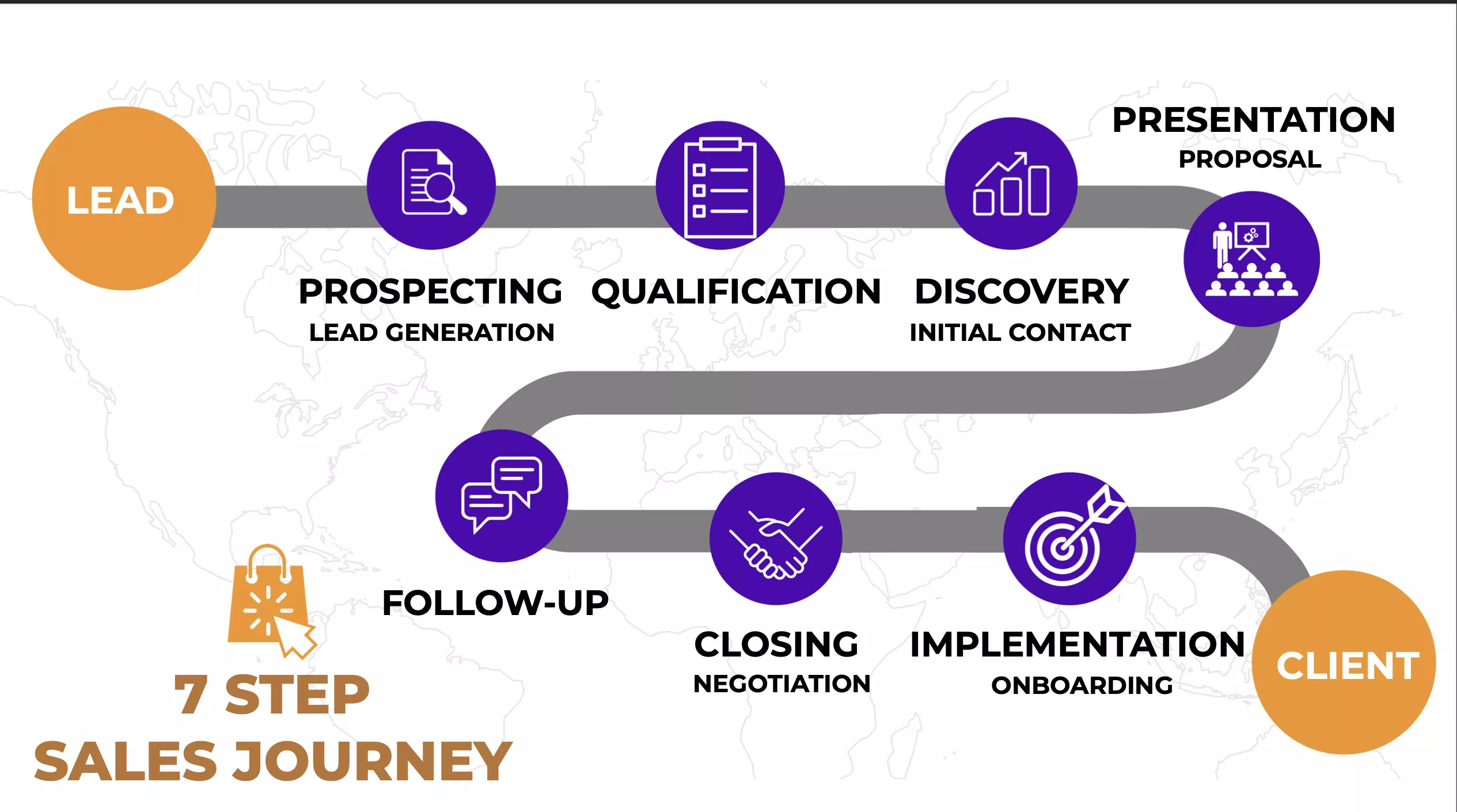
This eight-hour workshop strengthens participants’ understanding of the 7-stage sales process. The program is facilitated by Jerome Tuason, a seasoned sales expert, and offers actionable techniques in prospecting, communication, and closing deals. It also emphasizes creating lasting customer relationships to ensure sustained success in sales.
Each of these programs is tailored to different needs, ensuring that sales professionals at all levels can find the right fit for their goals.
Whether you’re a beginner looking to build a solid foundation or a leader refining your sales strategies, these programs stand out as top choices in the Philippines.
How to Choose a Sales Training Program?
Choosing the right sales training program is a critical step in maximizing the return on investment for your learning and development needs, or it can be an additional expense that is wasted.
A well-suited sales training program provides tools and strategies that directly impact your performance and results.
Below are detailed guidelines to help you make an informed decision:
1. Assess Your Training Needs
Start by identifying the specific sales skills you want your sales team to improve. Ask yourself questions such as:
- Do I need to strengthen foundational skills like prospecting or lead qualification?
- Am I looking to improve specific techniques, like closing deals or handling objections?
- Do I want to adapt to modern sales environments like hybrid or virtual selling?
- Does each of my salesmen need to improve their presentation of our company’s products or offerings? Can they be more confident after the training?
- What advanced skills do my tenured salespeople need to level up with?
Having a clear understanding of your sales training needs helps you narrow down certain areas for improvement. It can help customize the sales training program, whether you want it to be in-house or outsource it to a training provider.
This would help you later in the training evaluation to assess whether the sales training itself has both individual effect on the participants and business impact to the organization.
2. Check the Trainer’s Expertise
The trainer’s background can significantly influence the quality of the program.
Some of our high-end clients look for trainers who:
- Have hands-on experience in sales across various industries. Insights by seeing common patterns in training different verticals can help educate participants with the best practices they can contextualize in their respective industries.
- Hold certifications or have recognition in sales coaching or training. In 90’s, two popular sales training certifications are Zig Ziglar and Brian Tracy. They’re both known for being the top sales trainer for global organizations.
- Demonstrate a proven track record of success in leadership roles or sales strategy development.
For instance, programs led by professionals with extensive experience in B2B, corporate sales, or specific industries offer actionable insights that align with your real-world challenges.
Given they get insights from experiences and expertise of their participants of different organizations, they can share real-world case studies and scenarios your audience can relate to.
3. Evaluate the Sales Training Program
The program’s content and outline should align with your learning objectives. Examine if the content:
- Covers essential topics like negotiation, relationship-building, and objection handling. There may be more to it, depending on the current context, such as how to do virtual presentations, especially for hybrid teams - overall, the essential topics must be covered in the sales training.
- Provides advanced modules for specific sales contexts, such as consultative selling or customer-centric approaches.
- Incorporates modern sales trends, including using CRM tools or virtual engagement strategies.
A comprehensive sales training program ensures you gain foundational and advanced skills contributing to long-term growth. It should balance both theories (i.e. principles) and practical application to create a holistic learning experience for participants..
4. Consider Industry Focus
Some programs specialize in addressing the nuances of particular industries. Whether you are in B2B, FMCG, retail, or healthcare, a program tailored to your industry:
- Reflect on the unique challenges and opportunities in your field.
- Use case studies and examples relevant to your work environment.
- Enhances your ability to apply learned techniques directly to your role.
Choosing an industry-specific program ensures relevance and applicability to your day-to-day tasks.
It’s not that easy to find a corporate training provider who can customize a sales training program to fit to your current context. Today, the best corporate trainers are the ones who can both customize their training programs based on the organizational’s training needs as well as individual learning needs of participants.
The latter is hard to find, as you would normally just observe it during the training delivery and training evaluation.
5. Look for Hands-On Training
Theoretical knowledge is essential, but practice solidifies learning. Opt for programs that include:
- Role-playing exercises to simulate real-world sales scenarios.
- Practical activities like drafting proposals or conducting mock sales presentations.
- Peer-to-peer feedback and coaching from trainers.
Hands-on training allows you to refine your approach, receive constructive feedback, and build confidence in applying new skills.
Any corporate training program, including sales training program must include activities, role-play and workshops to immediately apply principles and tips shared by the sales trainer.
6. Verify Flexibility
Sales professionals often juggle busy schedules, so flexibility is critical. Check if the program offers:
- Modular sessions that allow you to learn at your own pace.
- Options for in-person, online, or hybrid learning formats.
- Customizable programs tailored to your organization’s specific needs.
Flexibility ensures that training fits seamlessly into your professional and personal commitments.
In many organizations, sales people are very busy professionals, so having a 1-day schedule to train them, can be challenging. Find a corporate training agency who can adjust to your schedule, if it’s possible.
7. Read Reviews and Testimonials
Past participants’ feedback provides valuable insight into a program’s effectiveness. When reviewing testimonials, focus on:
- Specific outcomes achieved by previous attendees, such as improved sales performance or client acquisition.
- Experiences shared about the trainer’s teaching style, course content, and overall engagement.
- Ratings on the program’s relevance, applicability, and ROI.
Authentic reviews can help you gauge whether a program delivers on its promises.
At Rainmakers, we have a couple of testimonials from our past and current clients, giving you the preview of how our actual sales training look like, and how it benefits our training participants.
8. Examine Post-Training Support
Practical training doesn’t end when the program concludes. Look for programs that provide:
- Post-training materials, such as guides, templates, or toolkits.
- Access to trainers for follow-up questions or advice.
- Networking opportunities with other participants to share experiences and strategies.
Post-training support enhances retention and helps you implement what you’ve learned effectively.
In 5 levels of training evaluation, two of which, learning reaction and retention can be both applied after every training delivery. We typically provide our training participants an evaluation form they have to fill up, for us to see their main takeaways and how they could apply learnings to their day-to-day work.
9. Compare Costs and ROI
While pricing is an essential factor, focus on the value you will receive. Consider:
- The program’s cost is relative to the skills and certifications it offers.
- Long-term benefits include increased sales, better client retention, and improved confidence.
- Additional perks, like access to exclusive resources or future discounts.
Investing in a high-quality program can yield significant returns in your career and business outcomes.
In fact, budget must be one of the top considerations before searching for potential training providers. As this would also play crucial when picking high-quality sales trainers (as most will charge premium given their extensive experience and expertise).
Set Non-Negotiables and Negotiables When Choosing a Sales Training Program
Choosing the right sales training program requires careful consideration of your goals, the trainer’s expertise, and the curriculum’s relevance.
By following these guidelines, you can select a program that empowers you to succeed in sales, whether through closing more deals, building stronger client relationships, or adapting to new selling environments.
A thoughtful decision ensures your training investment translates into measurable career success.
B2B Sales: Everything You Need to Know
B2B sales is the process of one business selling products or services to another business.
Most people are familiar with B2C (Business-to-Consumer) sales because they target regular people. However, in most of the sales training we did for companies, we always encountered B2B selling.
One example of B2B selling is my SEO services at SharpRocket, which cater to tech and SEO agencies outsourcing their link building work. The company website hosts this blog, Rainmakers, as we sell corporate training programs to HR people.
Why Salespeople Struggle with B2B Selling?
Selling in the B2B space is often challenging for salespeople. It’s much easier to sell a skincare product to tens of people than a software solution to a healthcare company.
A typical salesperson can quickly develop the skills to sell B2C products, as only basic product knowledge and a specific repertoire of selling skills and selling types are needed to achieve a sales quota.
However, in B2B selling, it is not only knowing the product features but truly understanding different measures of success—i.e., understanding the multiple stakeholders of your target companies.
The sales cycle for B2B takes longer, given that companies need 2 to more approval steps before making a final decision to choose you as their solution provider.
Over the years, I’ve observed that many salespeople who master B2C selling struggle with B2B selling, given that they rely heavily on generic pitches and scripts.
Below are some of the best B2B sales techniques we practice at Rainmakers, Hills & Valleys Franchising, and SharpRocket.
B2B Sales Techniques
Success in B2B sales requires a structured and systematic approach. Here are vital techniques to help you close more deals and build long-term client relationships.
1. Defining Your Target Persona
The first step in effective B2B sales is identifying your target persona. Based on data and insights, a target persona represents the ideal customer, helping salespeople focus their efforts on the right prospects.
By identifying your target persona, you focus resources on selling to specific target consumers who will likely have a more profound need to purchase your solutions.
In my sales training, I teach that there are three categories to defining your target persona, these include:
- Demographics - age, location, income level, gender, marital status, etc.
- Psychographics - interests, attitudes, beliefs, pain points, etc.
- Firmographics - technology adoption, decision makers, company size, revenue level, etc..
In B2B selling, we mainly focus on firmographics to see if the target business is ready to purchase our solutions. For instance, you could sell a desirable high-income ticket to the market. Still, in a later discussion stage, you find out they’re not ready to utilize it due to a lack of technological resources to adapt to the solution.
In addition to the factors mentioned above, here are more questions to ask in firmographics:
- What industries or sectors are you targeting?
- What are the key characteristics of companies that need your product? Consider factors like company size, revenue, and geographical location.
- Who are the primary stakeholders within these companies? Identify their job titles, roles, and responsibilities.
As you discuss it with your team, you become more aware of the right persona to target with your sales strategy.
For example, if you sell software solutions, your target persona might include IT managers or CIOs at mid-sized companies in the healthcare industry. Knowing this allows you to craft messaging and outreach strategies that resonate with their needs.
2. Identify Key Roles in the Decision-Making Process
B2B sales involve multiple roles in the decision-making process. To close deals effectively, you must understand these roles and tailor your approach accordingly. Here are the three leading roles to consider:
Decision-Maker
This person has the authority to approve or reject a purchase. They often hold senior positions like CEOs, department heads, or procurement managers.
Decision Messenger
This person gathers information and communicates it to the decision-maker. They could be mid-level managers, or team leads tasked with evaluating solutions.
Decision Influencer
This person influences the decision by providing recommendations or sharing insights. They may be end-users or subject-matter experts.
To identify these roles:
- Ask questions during conversations to understand the company's buying process.
- Research the company’s structure on LinkedIn or its website.
- Observe how stakeholders interact during meetings or calls.
For example, suppose you’re selling a marketing automation tool. In that case, the decision-maker might be the Marketing Director, the messenger a Marketing Manager, and the influencer a Digital Marketing Specialist.
Learning about the critical roles in your target business to present with your product sales presentations helps you customize your pitches to resonate well with the clients you’re dealing with.
After your product presentation, you would only have a sense of how long it will take them to decide. If you’re talking to the decision messenger and influencers, expect you to schedule another meeting with their decision-makers. All these factors can assist you well in preparing your B2B sales presentations.
3. Consultative Selling (Solution Selling)
Consultative selling focuses on solving the customer’s problems rather than pushing a product. It involves understanding the customer’s needs, challenges, and goals and offering value propositions.
In B2B selling, consultative selling works well because it addresses every challenge, concern, and pain point as potential clients go through the sales cycle. It may take time for the sales hustlers, but it remains vital and lucrative for the patient sales teams.
Today, salespeople must act like consultants. Consultants ask questions and provide valuable and customized recommendations that address their clients' gaps and problems. This skill is much more needed, given that more and more decision-makers are becoming skeptical about purchasing a solution that fits them.
Steps to implement consultative selling:
- Ask Open-Ended Questions: Start by understanding the customer’s pain points. For example, “What challenges are you facing with your current system?”.
- Listen Actively: Respond to the customer’s answers and dig deeper if needed. This helps build trust and uncover additional needs.
- Provide Customized Solutions: Based on the information gathered, explain how your product addresses their specific challenges.
- Focus on Benefits, Results, and Experiences: Highlight the outcomes they can achieve with your solution, such as increased efficiency, reduced costs, or higher revenue.
One sample statement you could say, instead of “Our software automates tasks”, a consultative salesperson might say, “Our software can save your team 10 hours a week, allowing them to focus on strategic projects.”
4. Improve Product Presentations
A strong product presentation is essential for converting leads into customers.
Given that you’ll have several meetings before closing a sale in B2B, knowing how to craft presentations and deliver them effectively can make or break your sales success.
Here’s how to improve your product presentations:
Structure Product Presentations Systematically
In my presentation skills training, I teach the 4Cs in structuring presentations. These include:
- Core Idea - what’s your one big message?
- Compelling Reason - why should the person you’re talking to should care about your presentation?
- Content - What are the three main points that support your core idea? You can have many points to say, but drill them down into three points.
- Call-to-action - what are one or two things you want your audience to take away from your presentation?
End with a Clear Call to Action
Always end your presentation by guiding the customer on the next steps. Examples of effective calls to action include:
- “Let’s schedule a demo to show you how this works in real time.”
- “I’ll send you a proposal, and we can discuss it further next week.”
A clear call to action helps the decision maker, influencer, or messenger think about your product presentation, assisting them better in their decision-making process. You can check out my guide on advanced presentation skills.
Add Stories to Demonstrate Experience and Results
Stories help customers visualize how your product can work for them. Share case studies, testimonials, or success stories to make your presentation more engaging.
For instance, you can provide case studies related to the product you’re offering, such as, “A client in the retail industry faced similar inventory management issues. After using our software, they reduced stockouts by 30% in just three months.”
More Practical Tips for B2B Sales Success
To further improve your B2B sales approach, keep these practical tips in mind:
Build Relationships
B2B sales are relationship-driven. Focus on building trust by staying consistent, following up promptly, and delivering on promises.
Be more relational than transactional. Clients would feel that you’re just in it for the money and not for providing value to the relationship.
Leverage Data
Use data to support your claims and show the value of your solution. For example, share metrics, graphs, or performance reports demonstrating how your product can improve outcomes.
Include key insights in every piece of data you share so your clients can easily grasp what you want to emphasize.
Personalize Communication
Tailor your emails, calls, and presentations to each customer. Avoid generic messaging and focus on addressing their specific needs.
Be a more effective communicator by using words to match user intent and drive potential clients to the later stage of the decision-making process.
Invest in Training
Continuous learning is critical in B2B sales. Attend workshops, read books, and practice your skills regularly.
Start investing in B2B sales training to equip your salespeople with the tools and strategies to navigate the complexities of selling to businesses.
All the tips mentioned above will be part of the course outline we send our prospective clients during sales training.
B2B Sales Require Patience and Persistence
You can close more deals and build lasting client relationships by defining your target persona, understanding decision-making roles, adopting consultative selling, and improving product presentations.
Start implementing these techniques today to see measurable improvements in your sales performance.
4 Types of Selling Techniques
Understanding the various selling techniques is crucial for any salesperson aiming to succeed in the competitive market.
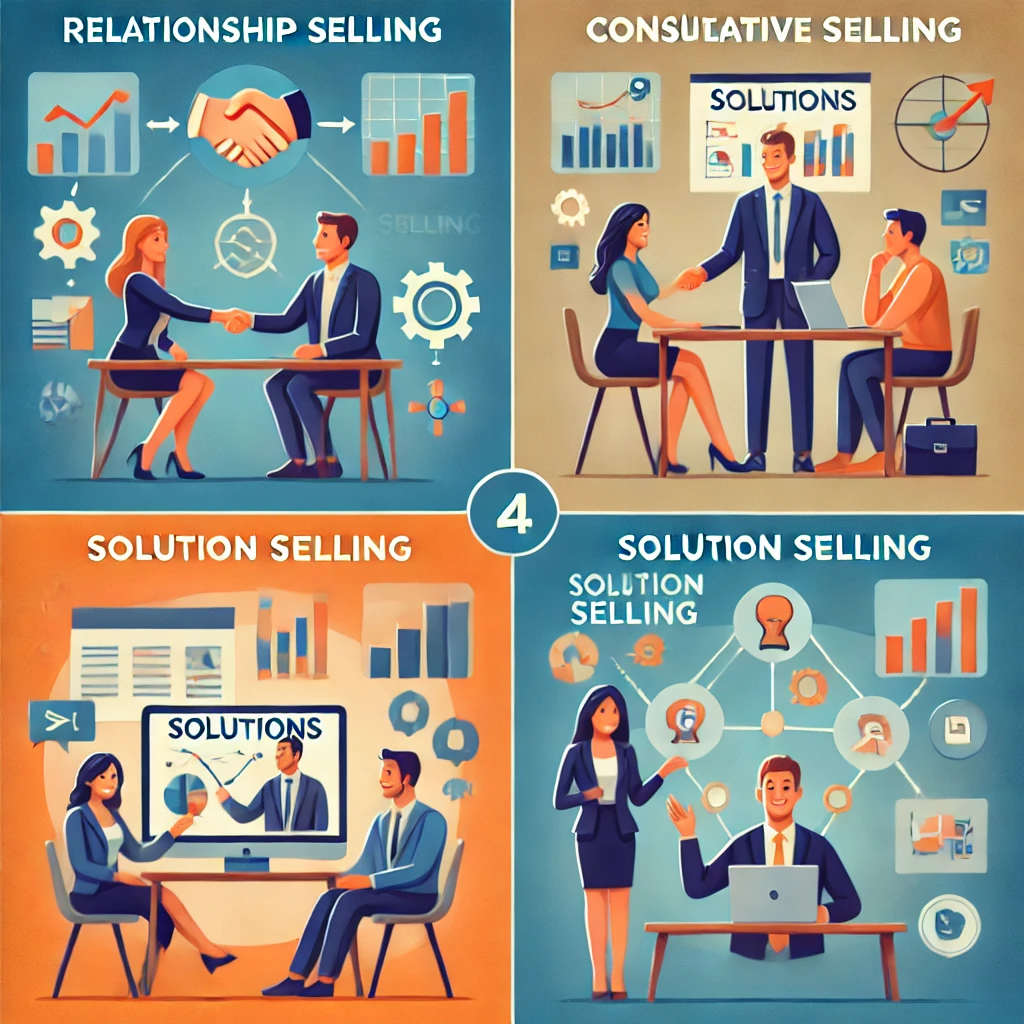
In this article, I’ll explore the four primary types of selling techniques: Transactional Selling, Solution Selling, Consultative Selling, and Provocative Selling.
Each method has distinct characteristics and is best suited for specific situations and customer needs.
By mastering these techniques, sales professionals can tailor their approaches to meet their client's expectations better and improve their sales outcomes. I’ll also share my own actionable takeaways for applying these selling techniques.
4 Types of Selling Techniques
1. Transactional Selling
Transactional selling focuses on quick, one-time sales without considering or emphasizing long-term relationships. This selling technique is ideal for low-ticket items with short sales cycles and is often used in retail or eCommerce.
If your sales organization has an environment that involves setting short-term targets and sales quotes, transactional selling might be the best selling technique.
While the majority of salespeople utilize this selling technique, I believe that if you want to stay long-term, you shouldn’t do things just for transaction sake.
I teach this in my sales training: a sale is a sale if it is repeated. In other words, you’ll grow and achieve your sales targets if your recent sale produces another sale through referral, word-of-mouth marketing, or digital marketing.
Actionable tips:
- You shouldn’t just do transactional selling for money's sake. Think of ways to add value to your customers.
- Forecast and act on volume sales while assessing your sales operations and allowing improvements to hit your next sales targets.
- Turn transactions into relationships. Establish connections by adding more value to the services. For instance, we add post-training reports and follow-up sessions to our services with corporate training clients after we’ve conducted their in-house face-to-face training. This approach enables us to assess the impact of our training on their employees' achievement of their business objectives.
- Develop customer service excellence through customer service training or additional resources you can find and invest in online.
2. Solution Selling
Solution selling concentrates on identifying and solving the customer's specific problems.
The approach moves beyond selling a product to offering a comprehensive solution. The goal is to transform from problem seeker to problem solver.
One consideration in solution selling is that prospects must know exactly their problems so you can immediately provide solutions to them.
This selling technique is best suited for markets with complex products or services that require detailed explanations and demonstrations.
Actionable tips:
- Be discerning in identifying customers’ pain points and challenges. Solutions can only be provided once problems are identified.
- Include unique value proposition, features, benefits, and results (even case studies of clients you’ve worked with) in your marketing collaterals and website. This would help your target clients see and perceive the value of your offers - products or services.
- Let prospective clients schedule a meeting with you to discuss their needs. From there, you can offer the best solution.
- If you’re starting a business, you can create packages with different solutions that suit various clients. For example, if you’re in the B2B space, you can have packages suited for startups, established businesses, or enterprises. This way, you can capture a more significant market share with your offers and not just piggybank on one market segment (unless you’re into niching down your services early on). For those aiming to enhance their ability to identify and address customer challenges effectively, enrolling in a digital marketing course can provide valuable insights into modern tools and strategies.
3. Consultative Selling
Consultative selling is a technique that focuses on identifying customers’ needs and engaging them with proper solutions to solve their problems or challenges.
This is my go-to selling technique in my SEO agency, coffee franchising, and corporate training services.
Given that consultative selling emphasizes the value of the service during the consultation (initial meeting), it has an advantage over other salespeople chasing out clients with mere sales presentations.
Actionable tips:
- Pitch to schedule a call or initial meeting. You can’t quickly assess customers’ needs without talking to them. The best analysis of customers’ needs is done during physical or online meetings, where you can ask certain questions about their desires, goals, challenges, and needs.
- Do not start your sales presentations with your company profile. Be interested in your client’s needs by asking questions about their background, current context, situation, and why they’re looking for a product or service.
- Assess your sales meetings if most of the talking is done on your end. Be mindful of every sales conversation and always end it with a call to action (either you’ll craft the proposal or ask them if they have any questions about your company).
- Ask follow-up questions to go deeper into the core needs of your clients. The reason is that you want to address it in your client’s proposals. Your proposal will show their exact needs and customized solutions.
- Customize your solutions based on the client’s needs. Do not provide too generic solutions, as this won’t serve them well (and will not be appealing when they see your proposals).
- Act like a business consultant. Make suggestions that will best improve your clients' business operations. Be more suggestive, not pushy. Allow your clients to make decisions. Avoid being too aggressive in your sales meetings.
4. Provocative Selling
As its title says, provocative selling challenges customers’ current thinking, highlighting problems they may not recognize and making it urgent to adopt new solutions.
Prospects in provocative selling often must be made aware of their problems or their severity. This sales approach leverages data and insights to provoke thought and demonstrate the need for change, requiring salespeople to have a deep understanding of the market and the ability to present compelling arguments.
This technique is best suited for markets facing significant changes or disruptions where innovative solutions are necessary and when customers are complacent or resistant to change.
It is particularly effective in technology and innovation-driven sectors, markets undergoing digital transformation, and during economic downturns where businesses need to rethink their strategies.
Provocative selling is more like a consultative approach to provoke someone to rethink strategies and invest in new technologies and innovation.
This selling technique fits the higher end of the selling process. Target markets include C-suite level and upper management of accounts looking for new ways to get more significant market share in their industries.
Actionable tips:
- Assess your customers’ needs if provocative selling is applicable. Avoid being too aggressive in your asking when the client is in the awareness stage, which means that they still don’t know about their problems or the solution to their problems.
- Start educating your customers by publishing informative content assets on your website or other publications. This wouldn’t just increase your brand awareness and gain new potential customers through referral visits and conversions.
Each selling technique has strengths and ideal applications. By matching the right approach to the customer's needs and market conditions, sales professionals can enhance their effectiveness and achieve their sales goals more efficiently.
Apply Selling Techniques Based on Customers’ Needs
Mastering these four selling techniques—Transactional Selling, Solution Selling, Consultative Selling, and Provocative Selling—equips sales professionals with a versatile toolkit to address various customer needs and market conditions.
By understanding each method's unique characteristics and best-use scenarios, salespeople can more effectively engage with prospects, tailor their sales strategies, and ultimately drive better sales outcomes.
Whether the focus is on quick, volume-based transactions or long-term, relationship-driven consultative sales, the key lies in selecting the right approach for the right situation.