
How to Conduct Leadership Training: Step-by-Step Guide For Effective Design and Delivery
Leadership training is a cornerstone of talent development in many organizations. The more equipped leaders are, the better the organization's future and ability to sustain success.
Many organizations' leadership training programs are attractive to younger workforce generations, especially Gen Z, who prioritize career growth and skill development (based on Deloitte Global 2024 Gen Z and Millennial Survey).
Truthfully, leadership training is essential for talent recruitment and retention, so every L&D and HR practitioner must know how to implement the programs effectively.
In this guide, I’ll walk you through how to conduct leadership training and even share some of my experiences as a corporate trainer facilitating results-oriented leadership training programs.
How to Conduct Leadership Training?
1. Secure Top Management and Stakeholder Support
Any success of leadership training programs begins with buy-in from top management and key stakeholders.
While this shouldn’t be at the top of the conservative list when conducting leadership training, I find it a bottleneck for many HR practitioners as they move to the next phase of training—delivery. They could design the training program well enough, but they would find it difficult to ask participants to attend the training if it is not fully supported by key stakeholders right at the start.
Before anything else, create a business case or proposal and present it to top management and key stakeholders. Share your plans and clearly communicate the benefits of the leadership program, including its potential impact on employee work, performance, retention rates, and organizational growth.
You may include case studies and data reports to build the credibility of your proposal. It is best if you can find available data that’s locally contextualized here in the Philippines.
If you are a learning and development manager, you can establish a steering committee to oversee the training initiative, from requests for training budgets to the evaluation of the leadership training program.
2. Conduct a Training Needs Analysis
By identifying gaps in leadership competencies, you’ll have a solid benchmark of where to start your leadership training. This will also be the basis of your training evaluation if you can close any leadership competency gaps.
Competency gaps could be either problem-focused or growth-focused. Problem-focused competency gaps refer to any problems in the knowledge, skills, and attitude of your leaders that need to be addressed; otherwise, they would be detrimental and, worse, could affect the culture of the team and organization.
Conversely, growth-based gaps refer to potential improvement in the competencies—including specific KSA (knowledge, skills, and attitude of your leaders)—that you want your participants to level up with.
You can check out this guide on how to do training needs analysis.
Here are a few TNA gathering methods:
- Focus group discussions (FGD)
- Interviews with key beneficiaries
- Job materials and work documents
- Surveys and questionnaires
- Feedback systems
- Incident reports and problem logs
These are just a few, but they can help you start gathering more information about your leadership training needs.
3. Prepare a Proposal and Budget
Prepare a TNA plan and proposal after conducting a training needs analysis. The document should outline the program’s objectives, expected outcomes, and financial requirements.
Not only will it help you secure funding, but it will also provide a guide for management and stakeholders to understand the process of your leadership training.
Here’s what to include in the proposal:
- Training objectives and alignment with business goals.
- Target audience and selection criteria.
- Detailed cost estimates (e.g., trainer fees, materials, venue, food, etc..).
- A timeline for development and delivery.
Budgeting is critical—factor in all possible expenses and present a cost-benefit analysis to demonstrate ROI. This is where you need to research the available options for conducting a leadership training program: doing it in-house with your trainer or hiring a corporate training provider to facilitate and deliver the program.
You may want to check out this guide on how much leadership training costs in the Philippines.
Now, this goes to our next step:
4. Decide Between In-house or Outsourced Training
There are many upsides and drawbacks to conducting leadership training programs or outsourcing to a corporate training provider.
Doing it in-house is less costly and can foster and develop an internal learning culture, as participants are challenged to learn from each session conducted by internal trainers.
I find this effective for multinational companies with more than 100 employees. In this particular case, they simply hire in-house trainers who specialize in competencies such as leadership and are accredited in many local and global certifications to be credible enough to do facilitation in-house. It is a different story if you’re working in a startup or SME, as it doesn’t have this type of leverage.
Outsourced training is ideal for accessing expert trainers who can deliver leadership training at the highest level. Given that these trainers have conducted the same program multiple times and can customize it based on the context of the organization and its participants, you’ll see a much better outcome from their training.
Another overlooked advantage of outsourcing leadership training is getting fresh perspectives outside your organization. Typically, when learning revolves around each company employee, there is a tendency for limited learning. If you hire an external leadership trainer, you can acquire new insights and best practices on specific leadership competencies that could elevate the skills of your target participants.
These insights may include patterns that the corporate trainer assesses in his career of training different sets of clients—thus allowing him to see which strategy, tool, or tip actually works for a certain industry.
Another thing: the best upside for getting outside trainers is the training content itself—you wouldn’t simply access it if you conducted leadership training in-house. Either you attend public seminars offered by the preferred corporate training provider or hire them exclusively—both options can give you access to the trainer's premium content.
Assuming you’re doing it in-house as you want the leadership training program to be cost-effective, here are some actionable tips for effective leadership training program design:
- Incorporate interactive elements like real-time surveys (e.g., Mentimeter), simulations, role-playing, and case studies contextualized to your industry or organization.
- Add modules on relevant topics such as leadership communication, diversity and inclusion, culture building, and digital transformation.
- Tailor content to different leadership levels, from emerging leaders to senior managers. It could be a series of leadership courses or coupled with individual coaching sessions for each participant.
5. Implement the Leadership Training Program
If you outsource leadership training, the corporate trainer will 70 to 90% implement the leadership training program.
But of course, there are a few things you should do to assist them in ensuring they’ll perfectly implement the training program. Not considering these can likely cause leadership training to fail.
Things you should assist corporate trainers with include:
- Preparing the training venue beforehand (ensure you book it if it’s outside your office vicinities, e.g., hotel function room).
- Ask the corporate trainer if any materials are needed (e.g., Manila paper, flipcharts, whiteboard, etc.).
- Be hospitable to your corporate training company. Make them feel you want to partner for a successful leadership training event.
For internal (no outsourced) leadership training, you can use various teaching methods to cater to the different learning styles of your target participants. Effective methods are:
- Workshops: Encourage active participation and group discussions.
- Role-Playing: Help participants practice real-world scenarios in a safe environment.
- Case Studies: Analyze real-life challenges to develop problem-solving skills.
- Blended Learning: Combine in-person sessions with online modules for flexibility.
Your implementation phase of the training program highly depends on the availability and level of your participants. So be sure to identify them even during the TNA process.
6. Evaluate the Effectiveness of Leadership Training
The only way to measure whether the leadership training impacts your target beneficiaries and the organization is to have it evaluated. Training evaluation is crucial for identifying areas for improvement.
Here’s a structured approach based on Kirkpatrick’s Four Levels of Evaluation to help assess your leadership training program. It covers:
- Reaction: Collect participant feedback on the training experience. You can use post-training feedback or evaluation forms.
- Learning: Test knowledge acquisition through quizzes or assessments.
- Behavior: Observe changes in workplace performance (e.g. performance reviews).
- Results: Measure the training’s impact on business metrics like employee engagement and productivity (i.e. ROI analysis to assess financial benefits versus costs).
Based on evaluation results, refine the program for future iterations to ensure continuous improvement. This can also help you strategize whether to retain the outsourced corporate training provider or hire a different one to customize your team's programs better.
Invest In Your Future Leaders
Leadership training is a strategic investment in your workforce and organization. By following these structured steps—securing management support, analyzing needs, preparing a solid proposal, choosing the right program, implementing effectively, and evaluating outcomes—you can create a training initiative that fosters strong leaders, drives engagement, and aligns with business objectives.
This approach meets the demands of today’s workforce and positions your organization for long-term success.

Best Leadership Training Programs in the Philippines in 2026 (Reviewed)
The best leadership training program in the Philippines for 2026 depends on the level you're developing. For supervisors, newly promoted managers, and mid-level people leaders who need behaviour to actually change back at work, our pick is Modern-Day Leadership® by Rainmakers Training & Consultancy. For senior executives and directors, Level Up Leadership by Francis Kong. For rank-and-file staff being prepared for their first management role, Moving into Management by Boris Joaquin.
Below are five programs. Three I attended personally. The two I didn't, I've labelled as such.
You're probably an HR practitioner, event organizer, or in-house learning and development officer looking for a leadership course that won't be forgotten by the following Monday.
Let me give you five of the best leadership training programs in the Philippines. I attended three of these myself (Venchito speaking), and I'll tell you plainly which ones I haven't — because a review you can't verify isn't worth much to you.
If you're comparing companies rather than programs — deciding who to send an RFP to, checking accreditation, comparing delivery models — read our companion guide to the best leadership training providers in the Philippines instead. This page is about the programs themselves.
How I Reviewed These Leadership Programs
Three things, and nothing else:
- Did I sit in the room? First-hand beats a brochure. Where I haven't attended, I say so.
- Who is it actually for? Most leadership programs in the Philippines are marketed to "leaders at all levels," which is not a real answer. Every entry below names a level.
- Does anything survive the session? A workbook, a framework, an action plan, a follow-through. Inspiration on its own evaporates by Wednesday.
Best Leadership Training Programs in the Philippines
1. Modern-Day Leadership® Training Program By Rainmakers
Attended: Yes — I design and deliver it
Format: Face-to-face, virtual, or hybrid · in-house and customized
I know it's weird to put our own program on top of the list of leadership training programs in the Philippines. But I highly believe in our own leadership training course, and I'd rather defend that choice openly than bury it at number four and pretend to be neutral.
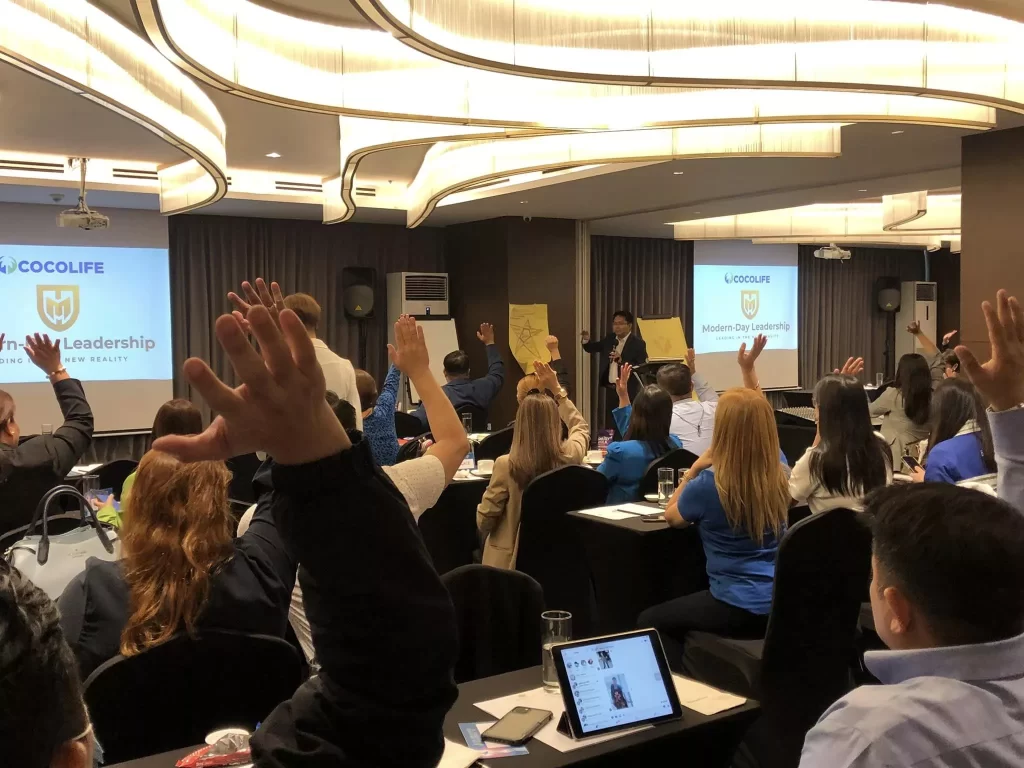
Modern-Day Leadership® is designed for managers, supervisors, soon-to-be-promoted leaders, and executives to upgrade both the skills and the attitude they bring to leading their people.
With the new workforce (Gen Zs) and with most teams now hybrid, this leadership program gives you upgraded and relevant material on the challenges leaders face today, including multi-generational communication issues.
Recent clients who brought this program in-house: Ordermo.ph, Ibarra Events and Catering, Cocolife, Lingaro, Emmronn, Maroon Studios, and SM Leisure Resorts. These brands hired me (Venchito) to conduct a comprehensive leadership training program for their leaders at different levels in their organizations. Across the wider Rainmakers practice, our learning partners include Lingaro Group, MUFG Bank, Shimano Philippines, Shell, and The Lind Hotels — local SMEs and multinationals alike, from distribution to financial services.
 The Five Pillars of Modern-Day Leadership®
By focusing on these five pillars, we help you develop a leadership style centered on values — one that can guide your team toward getting results for your company or organization.
- Modeling – Lead by Example
- Connecting – Lead by Heart
- Visioneering – Lead with Direction
- Empowering – Lead in Trust
- Multiplying – Lead through Collaboration
The pillars aren't a poster on a wall. Each one carries its own diagnostic, a practice activity, and a habit commitment — so a participant walks out with five specific things to do differently, not five things to nod along to.
What Makes the Modern-Day Leadership® Program Different?
1. It is centered on values.
Other leadership programs may be focused on developing skills, which is greatly important in today's changing business landscape. However, I still believe in building the proper foundation of character for leaders.
If leaders operate on their personal values, aligning them hopefully with the values of their organization, they can be more effective in handling people in such a way that they do more than what is required of them. They cater to the needs of their people instead of only trying to satisfy their desires and needs.
2. It contains relevant information.
I loved books, but some leadership books may not be relevant to today's leadership culture. Leadership trainers must continually upgrade their materials to be more relevant in how organizations develop their leaders.
With the rise of technology and automation, how can leaders adapt to employees' ever-changing needs and a changing business landscape?
You can see the relevance factor in corporate training materials when the Filipino corporate trainer provides real-life examples and case studies from the workplace. All these give insights that training participants can take home to their own teams. We build in the topics that actually come up in Philippine workplaces right now — multi-generational communication, leading hybrid teams, emotional intelligence, resilience, and managing Gen Z without either indulging them or alienating them.
3. It guides participants to develop leadership habits.
Modern-Day Leadership® gives you a framework for the habits you have to build as leaders, plus tools and strategies you can utilize in different leadership situations.
There are different principles for someone six weeks into their first supervisory role and someone eight years into managing managers, and the program treats those as different problems. Habits are what teach discipline in your leadership life — and with this program, participants experience how to build the healthy ones that support the everyday role.
The Frameworks and Assessments We Use
Participants don't just get theory. We integrate practical frameworks — YOUnique DISC, GROW, CLEAR, and SEED — alongside structured reflection, peer learning, and live coaching conversations, so principles connect to practice inside the session rather than months later.
For teams that need a sharper starting point, we also run Genos Emotional Intelligence assessments as a pre-program diagnostic. That turns "our managers need to communicate better" into something specific enough to actually design around.
The Rest of the Rainmakers Leadership Suite
Modern-Day Leadership® is usually the entry point. Where a client needs a fuller development track, it's paired with:
- Growth Mindset & Accountability: From Belief to Ownership — resilience, adaptability, and genuine ownership rather than compliance.
- Growth Conversations: Coaching and Mentoring Essentials — feedback, mentoring, and coaching conversations that address real performance issues instead of avoiding them.
- Choose to Win® – 7C's of Champions — personal effectiveness, a winning mindset, and values applied to work and to life outside it.
What Happens After the Training
This is where most leadership training in the Philippines quietly fails, so let me be specific. Every Rainmakers leadership program includes guided reflection, case studies, and individual action planning, with optional one-on-one or small-group coaching sessions afterward to reinforce what was covered.
Every engagement also starts with a training needs analysis, not a catalogue. We interview or survey before we design, so the case studies and role-plays use your scenarios and your vocabulary — which is exactly the difference between a program people enjoyed and a program people applied.
Who Leads It

I'm a Certified Executive Coach (Symbiosis Coaching, ICF-accredited) and a Genos Emotional Intelligence Practitioner. I've trained and spoken at over 250 conventions, seminars, and workshops across the Philippines and internationally, including Singapore, Slovakia, and Australia.
I also currently run three businesses — SharpRocket, Hills & Valleys Cafe®, and Rainmakers Training®. That matters more than it sounds: the pressure of leading real teams and making real payroll decisions is the material.
Bring Modern-Day Leadership® To Your Company
Invite Venchito Tampon and his team to conduct a Modern-Day Leadership® Training program so you can upgrade the leadership skills of your supervisors, managers, and executives. Contact us to set an initial meeting and get a free quotation.
2. Level Up Leadership by Francis Kong
Attended: Yes — 2019
Considered the top-ranked speaker, trainer, and business consultant in the country, Francis Kong's best-selling program has helped thousands of leaders across industries. I personally attended Level Up Leadership in 2019, and I'm a genuine recipient of the lessons in it.
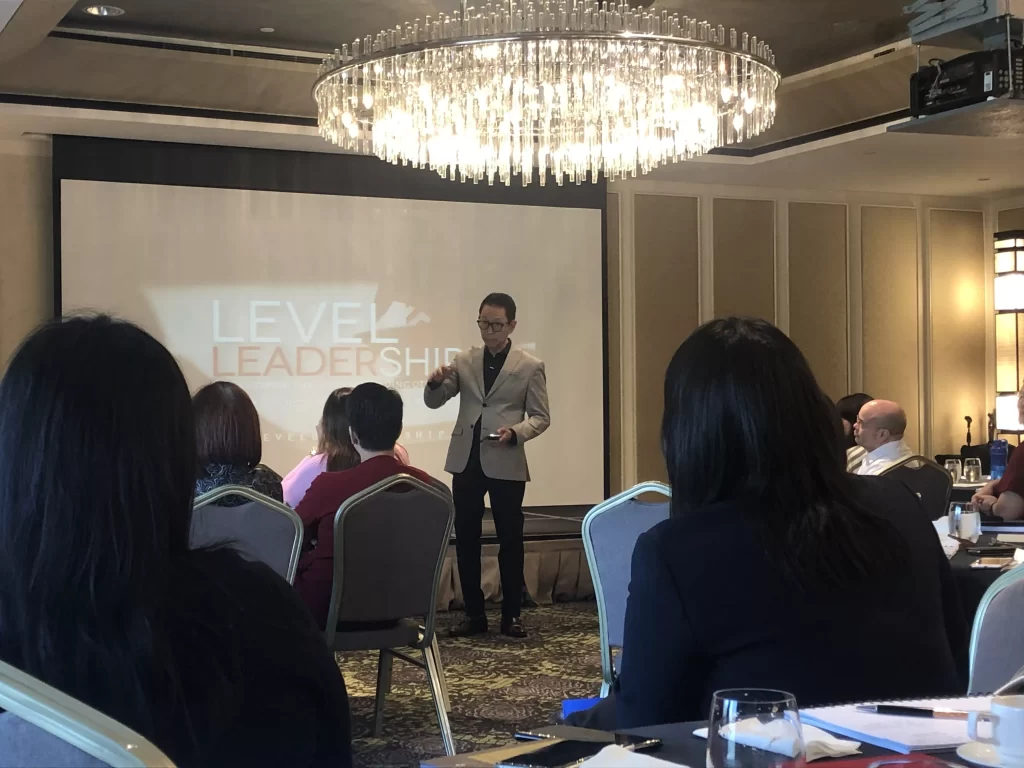
What stood out: he traces how leadership has evolved over fifty years, from how Baby Boomers used it to run a business to what's required with a Gen Z workforce. It's values-centered as well as skills-centered, and his treatment of servant leadership — drawing on how Jesus led his twelve disciples — was the most impactful part of the day for me. Group discussion is heavily encouraged, so there's real networking value with leaders from other industries.

Where it fits: intermediate to advanced leaders. The content is pitched high. Newer leaders will still get value from it, but they won't extract all of it.
3. Moving into Management by Boris Joaquin
Attended: Yes — 2019
Boris Joaquin is one of the premier leadership corporate trainers in the country. Having been sought by top-1000 corporations and SME leaders alike, he knows how to pitch a room.
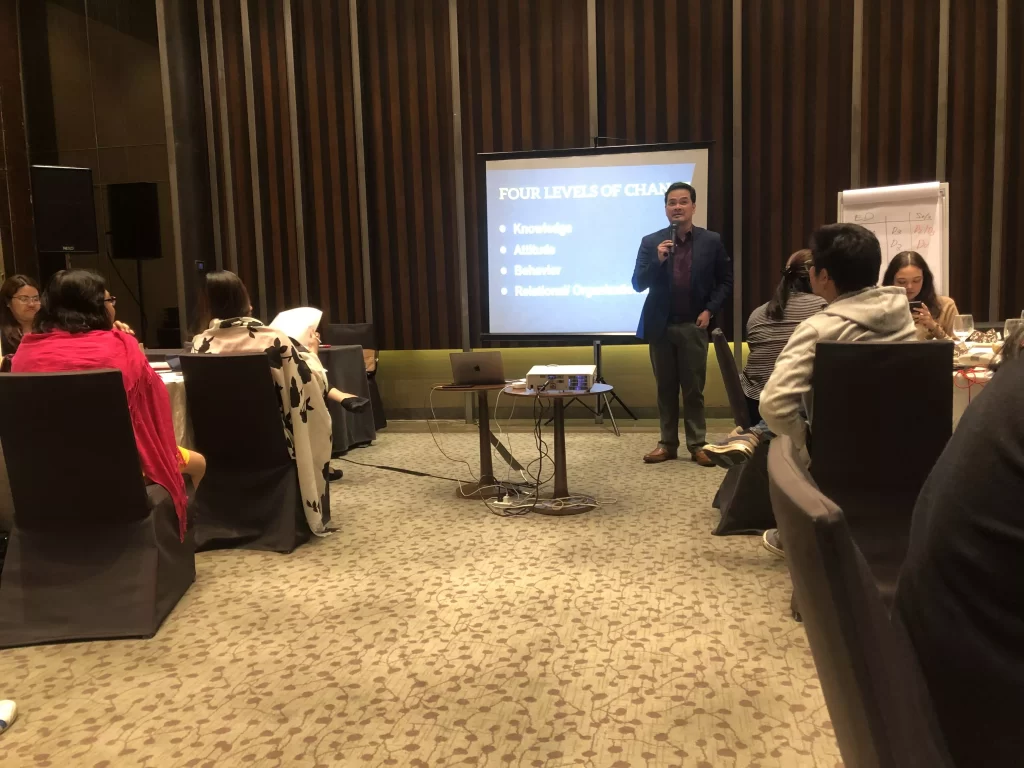
What stood out: the fundamentals are made genuinely easy to understand, especially the difference between managing and leading. Good self-awareness activities, a fun and light environment, plenty of time to network with other corporate leaders, and an excellent workbook I still take insights from.
Where it fits: it's preparatory. If your participants are already running teams, this will feel foundational. If they're about to start, it's close to ideal.
4. Step Back Leadership by Lloyd Luna
Attended: No — reviewed from published material and participant feedback
Let me be straight with you: I haven't sat in this one. What follows comes from Lloyd Luna's published talks and videos and from what attendees have told me, so weigh it accordingly.
What appears to work: Step Back Leadership is rooted in how leaders historically led their people and handled succession planning. It's also deliberately local — it draws out the real differences between how Filipino organizations are led and how their Western counterparts are, which is a gap most licensed Western curricula don't address at all. And it's pitched simply enough to run across every level in a company, from rank-and-file to executives.
5. John Maxwell Leadership Trainings
Attended: No — reviewed from the curriculum and Maxwell's published work
Certified John Maxwell Trainers in the Philippines include Ardy Abello, Anthony Pangilinan, and Mondo Castro. Dr. Maxwell is the world's most widely read leadership author, and the licensing model means you know exactly what curriculum you're getting.
What works: the principles are timeless and framed as laws, so they travel across context, industry, organization, country, and age. They're simple without being simplistic, and the material is genuinely inspirational — people leave motivated to act.
The trade-off: it's a licensed global curriculum, so how well it lands in a Philippine workplace depends entirely on which certified trainer you book, not on the program itself.
Which Leadership Program Fits Your Leaders?
| Program | Best For | Customized To Your Company |
|---|---|---|
| Modern-Day Leadership® Rainmakers |
Supervisors, new and mid-level managers | Yes — after a training needs analysis |
| Level Up Leadership Francis Kong |
Executives, directors, senior officials | Public program format |
| Moving into Management Boris Joaquin |
Rank-and-file, first-time supervisors | Public and in-house |
| Step Back Leadership Lloyd Luna |
Mixed-level audiences | Varies |
| John Maxwell Programs Certified trainers |
Any level, licensed curriculum | Depends on the certified trainer |
How To Choose Between Them
Four questions will settle this faster than any list will.
- What level are you actually developing? A program built for executives will lose your new supervisors, and a preparatory program will bore your directors. This is the single most common mistake in Philippine L&D bookings.
- Do you need it customized? If your challenge is specific — attrition on one floor, a merger, a shift to hybrid — a public seminar won't touch it. You need an in-house program designed after a training needs analysis.
- Has the facilitator actually led anyone? Plenty of leadership speakers in the Philippines have never run a team or carried a payroll. Ask directly.
- How will you know it worked? Agree the measure before you sign — pre- and post-assessment, action plans with follow-up, or a business metric you already track.
Our full vetting checklist, including accreditation and procurement questions, is in our guide to the best leadership training providers in the Philippines.
Frequently Asked Questions
How much does leadership training cost in the Philippines?
It depends on format. Public seminars are priced per participant. In-house programs are priced per training day and scale with customization depth, group size, and whether post-training coaching is included. See our breakdown of corporate training prices in the Philippines for indicative ranges, or request a quote for your specific headcount.
How long is a leadership training program?
Most in-house leadership programs in the Philippines run one to three days. Multi-module tracks spread across several weeks or months produce better behavioral change, because participants get to try things between sessions and come back with real problems.
Is in-house or public leadership training better?
Public seminars are better for one or two individuals and for networking. In-house is better for anything above roughly eight participants, and it's the only real option if you need the content mapped to your own workplace challenges.
Does virtual leadership training actually work?
Yes, when it's designed for the format — breakout practice, smaller groups, shorter sessions. It fails when a face-to-face deck is simply screen-shared for eight hours.
What's the minimum number of participants for in-house training?
Rainmakers typically runs in-house leadership programs from around 10 participants. Talk to us if your group is smaller — small-group coaching is often the better fit.
Key Takeaways
Those are five of the best leadership training programs in the Philippines — three I attended personally, and two I've reviewed from the outside and labelled as such, so you know exactly what you're weighing.
Match the program to the level you're developing. Insist on customization if your problem is specific. And agree on how you'll measure it before you book anything.
If you're looking for a corporate trainer to level up your leaders, contact us for a free quote on our Modern-Day Leadership® Program.

How Much Does Leadership Training Cost in the Philippines in 2026?
How Much Does Leadership Training Cost in the Philippines in 2026?
Leadership training prices Philippines can range from ₱10,000 to ₱1,500,000 per program. Entry-level sessions may cost as low as ₱10,000, while multi-day, highly customized programs for senior leaders can go up to ₱700,000. Costs vary based on program scope, duration, group size, and the level of customization required.
Factors That Affect the Cost of Leadership Training
The answer, “it depends,” to the question, how much does leadership training cost? may surprise you, but it is the reality when you hire a corporate training provider to conduct leadership training programs or when you want to do it in-house with your L&D practitioners.
Professional Expertise
The expertise and reputation of the trainer significantly affect pricing. A trainer with in-depth experience or popularity in their field will command higher rates. Corporate training providers like Success Options Inc., Inspire Leadership, all founded by Francis Kong, and LJMB (Learning Just Made Better) by Louie Banta are known for offering high-quality programs, which may come at a premium price.
In this regard, you should do some research and ask for proposals and quotations to determine the cost of each leadership training program.
Duration of Training
Another factor impacting the cost of leadership training is its duration. How long or short it is depends entirely on the training needs of your leaders and managers.
For instance, leadership training can change from a two-day session to a series of modules covering 10 key areas such as:
- Leadership Communication
- Coaching and Mentoring
- Decision-Making and Problem-Solving
- The POLC Framework (Planning, Organizing, Leading, and Controlling)
The longer the duration, the more costly the training, as it covers each leadership area in detail. This is much better for facilitating a great learning experience for your participants.
Beware of training providers who’d like to conduct one-hour leadership training. Leadership training usually lasts half a day to weeks.
Number of Participants
The standard participant size for training is 25 to 30 individuals. Larger groups might be split into batches, increasing overall costs. For instance, a company needing to train 100 employees might run four sessions, each with a unique price. So paying P70,000 for 1 batch of 25 pax for your 100 employees will cost you P280,000.
Mode of Training
Given that today's workforce consists of hybrid teams, leadership trainers adapt to this changing learning need. There are usually two types of training modes today: on-site training and virtual training (another is a combination of two—hybrid training).
On-Site Training: In-person training costs more due to venue fees, travel expenses, and logistical requirements. And if it’s outside the metro, like the venue to be held is somewhere in Subic or Boracay, the leadership training costs adjust to that.
Virtual Training: This is typically less expensive but may limit hands-on engagement. Hybrid options can also be explored to balance cost and effectiveness. In our leadership training, we experienced all three training modes, which highly depend on what the clients want and how the participants could better adapt to the program.
Company Budget and Resources
Another significant factor in leadership training cost, of course, is the company budget and resources. If you’re part of the HR team of a startup company, it may not have a big budget compared to multinationals (assuming the startup company isn’t funded by any investor—in this case, it is a bootstrapped company).
That’s not to say startups don’t invest in leadership training. In fact, we’ve seen many startups today encouraging their leaders to be trained with us—it’s a matter of the decision of the top management.

Leadership Training Pricing Models
There’s no one-size-fits-all price point for leadership training programs. Differences in training needs, target participants, and training goals produce a sizable number of pricing scenarios.
To give you a hint, leadership training programs can fall either any of these (or a combination) of these pricing models:
Course Model
You’ll see a course model option for multi-national companies' leadership development programs. Leadership training comprises three or ten modules, or even more, each focused on a specific area, such as emotional intelligence, leadership conversations, or management essentials.
The course model usually works for companies with different management levels (top management, middle management, and lower management). Given that each management level requires a different leadership training curriculum, a particular corporate trainer would create customized and personalized training modules for each of these levels.
Hourly Model
Trainers who charge on an hourly basis usually want to work on short-term projects with clients. These projects could last an hour or up to one whole day, and they would include coaching sessions for each participant for an immersive learning experience.
This is very rare for corporate trainers, given that they usually charge for a day's training, which goes to the last pricing model.
Daily Model
Training costs are calculated per day. Depending on the factors mentioned earlier, a two-day leadership session may cost Php100,000 to Php500,000. At Rainmakers, for example, we conduct 1 day to 2 days for our Modern-Day Leadership Training. This ensures we covered all essential topics and that activities and workshops were adequately included in the training.
How to Get Buy-In for Leadership Training Programs
If you’re an L&D or HR professional, convincing top management to invest in leadership training is crucial. It could be a make-or-break scenario, as this is where the leadership training program will depend. If you can persuade them to invest (if they’re still not into it), hiring a corporate training provider to conduct leadership training programs is much easier.
Here’s how to get more buy-in support for your leadership training:
Influence Key Stakeholders
Present a strong case for leadership development. Don’t just mention you’ll conduct one at a particular quarter or month.
Highlight its benefits for improving productivity, employee engagement, and business outcomes. Today, we’ve seen several case studies in which L&D practitioners can now justify training spent as long as it helps the company achieve its goals and objectives.
Your ability to influence your higher-ups is also a good indication of how much you truly want leadership training in your organization.
Emphasize ROI
The language of business is numbers. Emphasizing the potential return the organization can make once training has been implemented could strengthen your case when you present it to top management.
Of course, realistically speaking, you can’t quantify learning, but at least in the grand scheme of things, you can help improve the KSA of your leaders, knowledge, skills, and attitudes—which can all correspond to certain quantifiable outputs for your organization.
One way to support you with this is to use case studies or data from companies within your level and industry. This would help management better understand the investment and impact of leadership training programs.
Start Small
Begin with a two-day training for a select group of leaders. If you have over a hundred managers and supervisors, start with a few to help the management see its impact weeks and months after the training.
This pilot program for a few leaders can help demonstrate the value of leadership training to decision-makers. And the more you see results (assuming you get the best corporate trainer in the Philippines), the more opportunities you’ll have to conduct the same training for your other leaders.
Partner with Experts
Work with trusted providers like Rainmakers, who bring experience and expertise. It may sound self-promotion, but a well-known provider increases credibility and ensures high-quality training.
The typical process for conducting leadership training programs starts by proposing three or more service providers. Management will decide which one best fits the company based on context, industry experience, facilitators’ level of expertise, and other related factors.
Plan and Budget Strategically
Allocate a portion of the annual budget for leadership training during strategic planning sessions. If you’re not part of the top management, you have to influence them to set aside a budget for corporate training.
It is easier said than done, but the only way to fully implement training for your leaders is to have it approved by the top.
Realistically, it is not easy to get a seat on the board and relay your case as to how training can impact the company's bottom-line goals. Most organizations are still reluctant to do this and would rather invest in technology and other business functions except human capital.
In this case, your abilities and skills to influence them are much more required.
Sample Cost Breakdown
| Training Type | Cost (Php) | Details |
|---|---|---|
| Basic 2-Day Training | 50,000 – 200,000 | Includes core leadership skills |
| Advanced 5-Day Program | 300,000 – 800,000 | Covers leadership strategies and coaching |
| Modular Program (10 Modules) | 500,000 – 1,500,000 | Comprehensive leadership development |
| Virtual Training | 10,000 – 50,000 | Per session, fewer logistics required |
Develop Future-Ready Leaders
Leadership training is an investment in building future-ready leaders.
Organizations can maximize the benefits of these programs by understanding the factors affecting costs and aligning them with company goals.
Whether opting for a basic session or a multi-module program, choosing the right provider ensures a meaningful impact on employee performance and organizational growth.
With the tips mentioned above on how to get more buy-in and support from top management, you’re likely to start having the confidence, trust, and courage to execute leadership training for your company this year.

What Kind Of Training Would You Provide To New Sales Managers?
If one set of employees has been overlooked for corporate training, it’s the team of sales managers.
One of the main reasons is that VPs and Senior Executives think these sales managers already have the competencies they need to succeed. Truthfully, like any employee, they need to ramp up their skills over time.
In this guide, I’ll share what kind of training you would provide new sales managers and share some of my personal insights as a corporate trainer and resource speaker.
Transitioning into a sales management role requires an arsenal of skills, from leading a team to managing processes and inspiring your sales agents to continuously invest in themselves so they can produce the company's desired output.
You may be confused about which one to start with, but below is a solid list of sales training programs you should start using to train your sales managers.
What Kind Of Training Would You Provide To New Sales Managers?
1. Consultative Selling
Gone are the days when you sold products one-time off, like a transactional type of selling when you went to groceries, malls, or brick-and-mortar shops.
New sales managers should understand that selling is more than just closing deals; it is purely solving customers’ problems. The better you solve, the higher the chances of achieving their sales goals.
I have an entire guide on consultative selling and B2B sales - so be sure to check it out.
Essentially, consultative selling involves understanding and assessing clients’ needs so that you can solve their problems with customized solutions from your offer.
It’s that simple. If sales managers can start selling the right way by wearing a consultant hat, they’ll be better able to attract qualified clients—people who need help and truly want to solve their problems.
Here’s a good idea to start training your team. Practice role-playing scenarios where managers must assess clients’ needs and recommend solutions. You can do so with a facilitator or an outsourced corporate training provider. Let Rainamakers help you if you want to be done right.
2. Negotiation Skills
Another training need for sales managers is negotiation skills.
In our experience as corporate trainers, we’ve seen this lacking with sales managers despite their years of experience in the industry. They’ve been doing the same thing repeatedly, expecting results, but they don’t see much to be satisfied with the outcome.
Train your sales managers to identify common ground and find win-win solutions for both parties (the client and you/your company as the solution provider).
They must know how to answer or handle objections and address clients’ concerns without compromising value. By using these sales techniques, your sales managers will be more equipped to close deals themselves instead of delegating these tasks without prior knowledge to their sales agents.
Remember: they can only share what they already have with their team. If they don’t have the skills they need, they can’t share them with others.
One exercise activity you can have with sales managers is stimulating high-stakes negotiations, during which they can work on their negotiation skills and evaluate strategies for reaching agreements.
You need an external perspective who knows how negotiations work. If you need negotiation skills training, contact our team, and we will provide it.
3. Effective Communication
Sales require the ability to communicate the results that you want your clients to get. This includes not only demonstrating features and benefits—which most salespeople focus on—but also strongly communicating your brand with finesse.
Effective communication training is essential for sales managers to ensure the team understands goals, targets, and strategies. This way, they can align their team toward having the same vision, mission, and action plans, better addressing issues and challenges, and ultimately getting to where they want to be at the end of the year.
Effective communication also helps them train themselves to provide construction feedback to their sales agents. One word makes a difference. If they miss out on providing guidance, they won’t see any improvement in sales results. That’s why having a strong communication skill set for sales managers can bring their team to the next level.
A good practice for this is conducting team meetings where managers can practice presenting objectives and delivering feedback. It is best to create an environment where it is good to learn, unlearn, and relearn new things—set some rules before doing the exercise.
If you need help, contact Rainmakers for effective communication training for your sales managers.
4. Virtual Engagement
In a hybrid world, virtual engagement is indispensable. Many salespeople now have systems for virtual engagement, as they can reach more sales prospects while having less stress to physically meet them (given the hassle of traffic we have here in the Philippines).
Managers must learn how to lead virtual meetings and use tools like Zoom, MS Teams, or Slack for effective remote communication. Thanks to 2020 happenings, Filipinos were pushed to learn technologies in the comfort of their homes to better market and sell their products or services.
Another upside of learning to engage in virtual activities is the ability to build rapport virtually through personalized approaches. Learning how to look at the camera every time you speak and using non-verbal languages to better communicate your message is a plus skill any salesperson, including sales managers, should practice and master.
One good workshop idea for this training area is hosting a mock virtual meeting where sales managers refine their online communication techniques. It is best to use the product or service you’re offering itself as an example.
5. Lead Generation (Prospecting)
New sales managers should know how to identify and nurture potential clients. If they just hand this critical component of selling to their sales agents, they won’t have a chance to improve processes for their sales teams.
Key skills in lead generation must include building a prospecting pipeline, which means learning how to use CRM systems to organize leads (there are many web tools - one, in particular, is Hubspot).
Another skill is lead qualification, which is learning to identify high-potential prospects among leads you collect or gather. From there, you should train your managers with follow-up strategies to maintain consistent communication without overwhelming prospects.
These can help your sales managers develop the mastery needed to attract a large number of prospects to their sales pipeline.
Real-World Task: Assign managers to create a lead generation plan targeting specific demographics or industries. In our sales training, we have an ICP (Ideal Customer Profile) worksheet activity asking our participants to create their ICP based on their preferred product or product category.
6. Sales Management and Leadership
Of course, given that we’re talking about sales managers, they should excel at sales management and leadership. They should have the mindset of both a leader and manager and transition from individual contributors to ones worthy of influencing others.
Sales management includes inspiring the team through appreciation, recognition, and goal setting. It also includes performance monitoring and training salespeople to identify KPIs to measure individual and team success.
Another key area is conflict resolution, which equips them to mediate disputes within the team (as they arise).
One perfect activity for sales management and leadership is role-play scenarios in which managers address underperformance or team conflicts. Although this activity may be too serious to conduct, it would really help them deal with it in actual work.
7. Personality Development Using the DISC Framework
Knowing your personality type helps you understand and accept your strengths and weaknesses. You can adapt to different situations by gaining strengths from other personality types and using them to your own advantage.
You can use the DISC framework to help your sales managers recognize the personality types of their team members and clients. This will also enhance their selling ability, as they will know how to adjust communication and sales strategies based on personality traits.
Hire a certified DISC facilitator to conduct DISC assessment training with your team and provide personalized coaching for better practical application.
Sales Managers Can Always Go To The Next Level
Beyond position, sales managers can invest time and resources to improve their skills and lead their sales associates in achieving results. With specific areas of sales training for managers listed above, they’ll be better equipped to overcome challenges in selling and create sustainable growth for their teams.
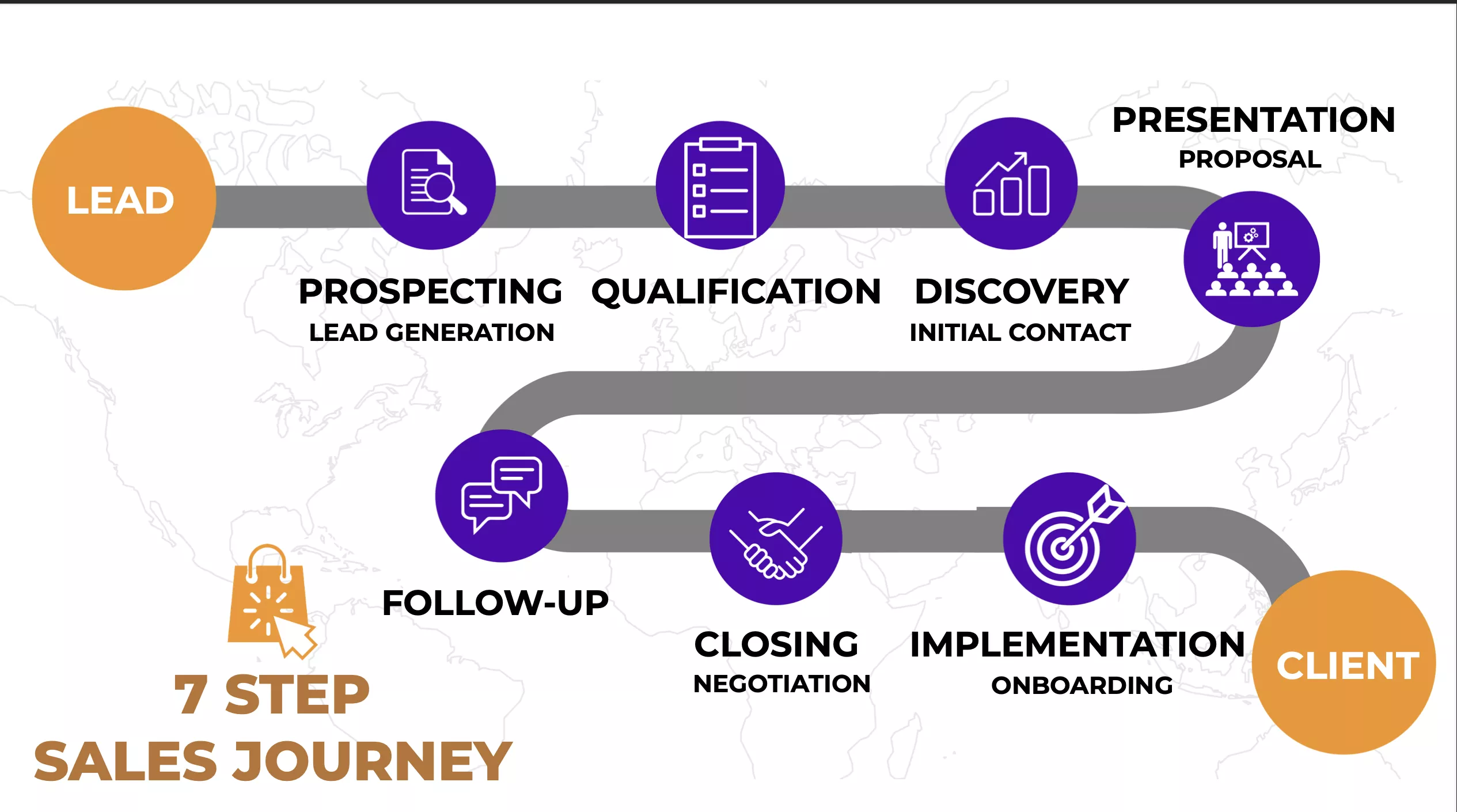
B2B Sales: Everything You Need to Know
B2B sales is the process of one business selling products or services to another business.
Most people are familiar with B2C (Business-to-Consumer) sales because they target regular people. However, in most of the sales training we did for companies, we always encountered B2B selling.
One example of B2B selling is my SEO services at SharpRocket, which cater to tech and SEO agencies outsourcing their link building work. The company website hosts this blog, Rainmakers, as we sell corporate training programs to HR people.
Why Salespeople Struggle with B2B Selling?
Selling in the B2B space is often challenging for salespeople. It’s much easier to sell a skincare product to tens of people than a software solution to a healthcare company.
A typical salesperson can quickly develop the skills to sell B2C products, as only basic product knowledge and a specific repertoire of selling skills and selling types are needed to achieve a sales quota.
However, in B2B selling, it is not only knowing the product features but truly understanding different measures of success—i.e., understanding the multiple stakeholders of your target companies.
The sales cycle for B2B takes longer, given that companies need 2 to more approval steps before making a final decision to choose you as their solution provider.
Over the years, I’ve observed that many salespeople who master B2C selling struggle with B2B selling, given that they rely heavily on generic pitches and scripts.
Below are some of the best B2B sales techniques we practice at Rainmakers, Hills & Valleys Franchising, and SharpRocket.
B2B Sales Techniques
Success in B2B sales requires a structured and systematic approach. Here are vital techniques to help you close more deals and build long-term client relationships.
1. Defining Your Target Persona
The first step in effective B2B sales is identifying your target persona. Based on data and insights, a target persona represents the ideal customer, helping salespeople focus their efforts on the right prospects.
By identifying your target persona, you focus resources on selling to specific target consumers who will likely have a more profound need to purchase your solutions.
In my sales training, I teach that there are three categories to defining your target persona, these include:
- Demographics - age, location, income level, gender, marital status, etc.
- Psychographics - interests, attitudes, beliefs, pain points, etc.
- Firmographics - technology adoption, decision makers, company size, revenue level, etc..
In B2B selling, we mainly focus on firmographics to see if the target business is ready to purchase our solutions. For instance, you could sell a desirable high-income ticket to the market. Still, in a later discussion stage, you find out they’re not ready to utilize it due to a lack of technological resources to adapt to the solution.
In addition to the factors mentioned above, here are more questions to ask in firmographics:
- What industries or sectors are you targeting?
- What are the key characteristics of companies that need your product? Consider factors like company size, revenue, and geographical location.
- Who are the primary stakeholders within these companies? Identify their job titles, roles, and responsibilities.
As you discuss it with your team, you become more aware of the right persona to target with your sales strategy.
For example, if you sell software solutions, your target persona might include IT managers or CIOs at mid-sized companies in the healthcare industry. Knowing this allows you to craft messaging and outreach strategies that resonate with their needs.
2. Identify Key Roles in the Decision-Making Process
B2B sales involve multiple roles in the decision-making process. To close deals effectively, you must understand these roles and tailor your approach accordingly. Here are the three leading roles to consider:
Decision-Maker
This person has the authority to approve or reject a purchase. They often hold senior positions like CEOs, department heads, or procurement managers.
Decision Messenger
This person gathers information and communicates it to the decision-maker. They could be mid-level managers, or team leads tasked with evaluating solutions.
Decision Influencer
This person influences the decision by providing recommendations or sharing insights. They may be end-users or subject-matter experts.
To identify these roles:
- Ask questions during conversations to understand the company's buying process.
- Research the company’s structure on LinkedIn or its website.
- Observe how stakeholders interact during meetings or calls.
For example, suppose you’re selling a marketing automation tool. In that case, the decision-maker might be the Marketing Director, the messenger a Marketing Manager, and the influencer a Digital Marketing Specialist.
Learning about the critical roles in your target business to present with your product sales presentations helps you customize your pitches to resonate well with the clients you’re dealing with.
After your product presentation, you would only have a sense of how long it will take them to decide. If you’re talking to the decision messenger and influencers, expect you to schedule another meeting with their decision-makers. All these factors can assist you well in preparing your B2B sales presentations.
3. Consultative Selling (Solution Selling)
Consultative selling focuses on solving the customer’s problems rather than pushing a product. It involves understanding the customer’s needs, challenges, and goals and offering value propositions.
In B2B selling, consultative selling works well because it addresses every challenge, concern, and pain point as potential clients go through the sales cycle. It may take time for the sales hustlers, but it remains vital and lucrative for the patient sales teams.
Today, salespeople must act like consultants. Consultants ask questions and provide valuable and customized recommendations that address their clients' gaps and problems. This skill is much more needed, given that more and more decision-makers are becoming skeptical about purchasing a solution that fits them.
Steps to implement consultative selling:
- Ask Open-Ended Questions: Start by understanding the customer’s pain points. For example, “What challenges are you facing with your current system?”.
- Listen Actively: Respond to the customer’s answers and dig deeper if needed. This helps build trust and uncover additional needs.
- Provide Customized Solutions: Based on the information gathered, explain how your product addresses their specific challenges.
- Focus on Benefits, Results, and Experiences: Highlight the outcomes they can achieve with your solution, such as increased efficiency, reduced costs, or higher revenue.
One sample statement you could say, instead of “Our software automates tasks”, a consultative salesperson might say, “Our software can save your team 10 hours a week, allowing them to focus on strategic projects.”
4. Improve Product Presentations
A strong product presentation is essential for converting leads into customers.
Given that you’ll have several meetings before closing a sale in B2B, knowing how to craft presentations and deliver them effectively can make or break your sales success.
Here’s how to improve your product presentations:
Structure Product Presentations Systematically
In my presentation skills training, I teach the 4Cs in structuring presentations. These include:
- Core Idea - what’s your one big message?
- Compelling Reason - why should the person you’re talking to should care about your presentation?
- Content - What are the three main points that support your core idea? You can have many points to say, but drill them down into three points.
- Call-to-action - what are one or two things you want your audience to take away from your presentation?
End with a Clear Call to Action
Always end your presentation by guiding the customer on the next steps. Examples of effective calls to action include:
- “Let’s schedule a demo to show you how this works in real time.”
- “I’ll send you a proposal, and we can discuss it further next week.”
A clear call to action helps the decision maker, influencer, or messenger think about your product presentation, assisting them better in their decision-making process. You can check out my guide on advanced presentation skills.
Add Stories to Demonstrate Experience and Results
Stories help customers visualize how your product can work for them. Share case studies, testimonials, or success stories to make your presentation more engaging.
For instance, you can provide case studies related to the product you’re offering, such as, “A client in the retail industry faced similar inventory management issues. After using our software, they reduced stockouts by 30% in just three months.”
More Practical Tips for B2B Sales Success
To further improve your B2B sales approach, keep these practical tips in mind:
Build Relationships
B2B sales are relationship-driven. Focus on building trust by staying consistent, following up promptly, and delivering on promises.
Be more relational than transactional. Clients would feel that you’re just in it for the money and not for providing value to the relationship.
Leverage Data
Use data to support your claims and show the value of your solution. For example, share metrics, graphs, or performance reports demonstrating how your product can improve outcomes.
Include key insights in every piece of data you share so your clients can easily grasp what you want to emphasize.
Personalize Communication
Tailor your emails, calls, and presentations to each customer. Avoid generic messaging and focus on addressing their specific needs.
Be a more effective communicator by using words to match user intent and drive potential clients to the later stage of the decision-making process.
Invest in Training
Continuous learning is critical in B2B sales. Attend workshops, read books, and practice your skills regularly.
Start investing in B2B sales training to equip your salespeople with the tools and strategies to navigate the complexities of selling to businesses.
All the tips mentioned above will be part of the course outline we send our prospective clients during sales training.
B2B Sales Require Patience and Persistence
You can close more deals and build lasting client relationships by defining your target persona, understanding decision-making roles, adopting consultative selling, and improving product presentations.
Start implementing these techniques today to see measurable improvements in your sales performance.

Problem Solving and Decision Making (PSDM): A Guide Using the SAPADAPPA Framework
Problem-solving and decision-making are crucial skills in both personal and organizational contexts. For individuals, they enable objective choices, while in organizations, especially as one advances through the ranks, they become essential to navigate increasingly complex situations.
Someone who knows how to solve problems efficiently has higher chances of getting promoted in the corporate world, as it demands more than just technical skills. PSDM is actually a thinking skill.
Effective problem-solving and decision-making (PSDM) also requires the right attitude toward challenges. If your initial reaction to problems is avoidance, the PSDM approach will likely feel ineffective. A proactive approach to challenges is essential to maximize your PSDM capabilities.
This guide will take you through the SAPADAPPA framework, a structured approach designed to help tackle problems methodically. SAPADAPPA, coined by problem-solving and management experts, stands for Situation Analysis, Problem Analysis, Decision Analysis, and Potential Problem Analysis.
Each phase offers a step-by-step breakdown of activities designed to simplify complex decision-making and problem-solving situations. Let’s explore each stage in detail.
What is SAPADAPPA Problem Solving Framework?
The SAPADAPPA framework is based on the Kepner-Tregoe Method, a systematic approach developed by Charles Kepner and Benjamin Tregoe in the 1960s. These researchers identified a need for structured problem-solving and decision-making processes to improve critical thinking in business contexts.
Their methodology introduced a sequential, analytical process to assess situations, identify problems, make decisions, and analyze potential risks—a foundation that SAPADAPPA builds upon.
While the SAPADAPPA acronym is unique, the principles it encompasses reflect the foundational ideas of Kepner-Tregoe, adapted to emphasize clarity, objectivity, and structured decision-making.
This adaptation has made it widely applicable across various industries, helping individuals and organizations manage complex problems with a strategic, disciplined approach.
Step 1: Situation Analysis (SA)
Objective: Gain a comprehensive understanding of the current situation and clarify the primary concerns.
When beginning any problem-solving process, it’s crucial to assess the situation from all angles.
Begin by listing down all concerns or issues, both large and small, that are currently causing unease. This step doesn’t involve analyzing or solving these issues; rather, it focuses on recognizing everything that’s potentially problematic. Here are some ways to make the most of this step:
Conduct a Brain Dump: Write down everything that’s causing friction, worry, or potential risk. At this point, refrain from categorizing or prioritizing—simply get all the concerns onto paper.
Don’t Limit Yourself. Input as many items that has been bugging and bothering you. The upside of this activity is it allow your brain to dump all its items and put them in the proper place -- paper.
Define the Scope: Determine what’s within your control to address and what may need higher-level intervention. This scope-setting helps allocate your focus where it will be most effective.
Key Tips
- Encourage open discussion among team members if working in a group. Diverse perspectives often highlight areas that may otherwise be overlooked.
- Use visual aids, like mind maps or lists, to organize concerns and facilitate clearer thinking.
- You can invite external experts and consultants to help you guide and put all items you need for a specific situation. The more complex the working environment is, the more inputs you need to better identify issues and concerns.
Step 2: Problem Analysis (PA)
Objective: Understand the root causes of identified problems.
Problem analysis is where you dig deeper into the specific issues identified in your situation analysis. This phase involves methods that help uncover why problems exist and how they impact the broader situation. Effective tools include:
- 5 Whys: Continuously asking “Why?” to each answer obtained helps drill down into the root cause of a problem. This method is especially useful for isolating singular issues. The best of 5 Whys is determining causes that are controllable, which means something that are within your scope and reach. For instance, don’t include traffic jam as one of the reasons of personal unproductivity.
- 7 Ms Framework: This approach categorizes causes under Man, Machine, Method, Material, Measurement, Mother Nature, and Management, allowing a structured examination of contributing factors. It is especially useful in organizational settings where multiple variables are at play. Some simply use 5 Ms of Management, whichever works for you.
- Fishbone Diagram (Ishikawa): This visual tool helps identify potential root causes by branching out possible factors under specific categories. It’s beneficial for complex issues where many factors might be contributing to the problem.
Key Tips
- Ensure objective problem analysis. Avoid jumping to conclusions or prematurely focusing on solutions.
- Include relevant stakeholders in the process to capture a holistic view of the problem.
- Gather as many data for a specific root cause. Don’t assume. Be more objective in your problem analysis approach.
- Create a problem statement. For instance, a clear problem statement would be: “As of today, 3 of Rainmakers’ loyal repeat clients have 60-day past due payables amounting to a total of Php 225,000.”
Step 3: Decision Analysis (DA)
Objective: Establish criteria and make well-informed choices.
After thoroughly analyzing the problem, it’s time to make decisions that align with both the organizational goals and the immediate needs of the situation. Decision analysis is guided by a structured approach to weighing options based on established criteria. Here’s how to proceed:
Establish Decision Criteria: Define what’s non-negotiable (must-haves) and what’s flexible or negotiables (nice-to-haves) in the decision-making process. This clarity will help you prioritize your options effectively.
Generate Possible Solutions: Brainstorm all potential solutions without dismissing any immediately. Each option may contain viable elements, even if not selected in its entirety.
Assess Each Option Against Criteria: Use your must-haves as a baseline to filter out solutions that don’t meet core needs. Once filtered, weigh each solution according to the nice-to-haves, allowing a comparative ranking based on value.
Use ECTEA criteria to evaluate solutions to problems. ECTEA stands for Effectiveness, Cost, Time, Effort, and Acceptability. Here’s a quick explanation of these five criteria:
- Effectiveness - Does the solution truly eliminate or reduce the problem?
- Cost - Will the solution require too much money? Is it within the or over budget?
- Time - Will the solution take only a short amount of time to complete?
- Effort - Will the solution be easy to implement? Do we need to learn a new skill to get this done?
- Acceptability - Will the solution earn the respect and cooperation of clients/stakeholders that you want to please?
Select the Best-Fit Solution: The option that meets all the must-haves and maximizes the nice-to-haves becomes the ideal choice. While considering the option that meets the highest rating for all ECTEA criteria.
Key Tips
- Include only relevant people to the decision making body.
- Involve key stakeholders in decision-making to gain buy-in and ensure comprehensive perspective.
- Utilize decision matrices or scoring systems to quantify how well each option meets your criteria.
Step 4: Potential Problem Analysis (PPA)
Objective: Anticipate and mitigate any problems that may arise from your chosen decision.
Once you’ve made a decision, it’s crucial to think ahead and prepare for any challenges or risks it might bring. The Potential Problem Analysis phase focuses on proactive troubleshooting to minimize negative outcomes before they occur.
- Identify Potential Problems: Consider the possible consequences or issues that might arise from your decision. Aim to identify even low-probability but high-impact risks.
- Assess the Likelihood and Impact: Rank each potential problem by how likely it is to happen and the severity of its impact on your goals. This helps prioritize which risks need the most attention.
- Develop Contingency Plans: For high-priority risks, prepare a plan that outlines steps to take if the problem does occur. Having a contingency strategy can reduce disruption and facilitate quick responses.
- Implement Preventive Actions: Where possible, take proactive measures to minimize risk exposure. This could mean adjusting aspects of the chosen solution or preparing resources in advance to address potential issues.
Key Tips
- Involve team members in risk assessment for collective brainstorming on mitigation strategies.
- Consider using tools like Failure Mode and Effects Analysis (FMEA) to systematically evaluate risks and controls.
Applying the SAPADAPPA Framework Effectively
SAPADAPPA provides a structured yet flexible approach to problem-solving and decision-making. Here are some general guidelines to keep in mind when applying this framework:
- Stay Objective: Throughout each phase, focus on maintaining an objective and analytical perspective. Personal biases or assumptions can obscure the root cause of problems and lead to suboptimal decisions.
- Collaborate: Problem-solving in an organizational context often benefits from collaboration. Different perspectives can provide invaluable insights that help uncover hidden aspects of problems and improve decision-making quality.
- Document: Keep a record of each stage of the process, including criteria for decisions, analysis of each option, and identified risks. Documentation is useful for transparency and for revisiting decisions if issues arise later.
- Review and Reflect: After implementing your decision, reflect on the outcomes and the effectiveness of the PSDM process. Continuous improvement is integral to refining your problem-solving and decision-making skills over time.
By following this SAPADAPPA guide, you’ll find that even complex problems and decisions become manageable through clear, systematic steps. Mastery of PSDM equips you to make more informed, objective, and impactful decisions both in personal and professional settings.

Steps in Problem Solving: Effective Framework for Decision-Making
Anyone can use many frameworks and tools to solve problems, but only one method works for every situation. When conducting corporate training programs on problem solving, decision-making, and critical thinking, we emphasize the need to have different tools and frameworks so that one can have multiple means of solving problems.
Given that every problem has its context, and there are different ways to solve it, it’s essential to have an arsenal of problem-solving tools.
Today’s guide will focus on one practical and structured problem-solving method: SAPADDAPA. This step-by-step process emphasizes thorough analysis, clear communication, and actionable solutions.
Steps in Problem Solving: Effective Framework for Decision-Making
1. Situation Analysis (S)
The first step in the SAPADDAPA framework is Situation Analysis, where the current circumstances are closely examined.
Pro Tip: You have to look at different situations for your problems. You need to be accountable and take ownership of things to face your current problems.
Understanding the problem's background is essential in this phase to prevent misidentifying the issue or jumping to solutions prematurely.
To conduct a situation analysis:
- Gather facts and data surrounding the issue.
- Identify who is affected and the severity of the problem.
- Determine how long the problem has been ongoing and what triggered it.
Suppose a company experiences a sudden drop in employee engagement, resulting in decreased productivity. During the situation analysis, management collects employee surveys and performance data and conducts interviews to understand the scope and root causes of the problem. Recent changes to work schedules and a lack of feedback from managers have led to disengagement.
The primary reason why data gathering is important is that there are no biases in data - these are facts and numbers that can’t lie. This is compared to opinions and gossip, where there is subjectivity from people based on their relationships with the situation and with people involved in problem-solving situations.
2. Acknowledge the Problem (A)
After analyzing the situation, the next step is to Acknowledge the Problem. This formalizes the understanding of the issue and ensures that everyone involved sees the problem from the same perspective.
Acknowledging the problem requires full accountability and ownership. By facing the problem head-on and understanding that the person involved has a level of accountability toward the issue, there is a higher likelihood of solving the problem in the later steps.
Many managers face this dilemma: if a problem isn’t solved within their jurisdiction or scope of function, it could negatively affect their job. While that’s a reality they should be facing, more than focusing on the loss, it is a better strategy to look forward to solving the problem rather than denying accountability.
This stage involves:
- Clear communication about the problem’s existence and impact.
- Align stakeholders with the urgency of resolving the problem.
- Make it a priority so all parties can focus on it.
In the case of employee disengagement, the company’s leadership must acknowledge that the issue goes beyond numbers. They should address how low engagement negatively affects company culture, innovation, and retention rates.
3. Problem Definition (P)
Next is Problem Definition—a step that transforms insights from the situation analysis into a specific, actionable statement. A well-defined problem ensures the team focuses on the proper challenge and avoids ambiguity.
Effective problem definitions are:
- Specific: Pinpoint the exact issue to address.
- Measurable: Define how success will be measured.
- Neutral: Focus on the issue, not blame.
A vague problem definition would be, “Employees are not happy.” A more precise statement is, “Employee engagement has decreased by 25% over the past six months, affecting productivity and collaboration.”
It may sound simple for many people to define a problem, but this is one of the overlooked parts of PSDM (problem solving and decision-making), so defining issues correctly is critical.
4. Alternative Solutions (A)
With the problem clearly defined, it's time to brainstorm Alternative Solutions. This stage encourages creativity and collaboration to generate as many potential solutions as possible. It’s essential not to dismiss any ideas prematurely.
Key actions include:
- Encouraging open-minded brainstorming.
- Listing a variety of solutions, from immediate fixes to long-term changes.
- Involving different departments or external experts for fresh perspectives.
For the employee engagement problem, the company might consider:
- Offering flexible working hours.
- Increasing manager feedback and support.
- Investing in professional development programs.
- Introducing team-building activities.
One of the best strategies for brainstorming alternative solutions is to consult with in-house and external experts and consultants to gain insights into the problems.
Given their experience and expertise, they can provide specific advice and possible solutions you can add to your list of options.
5. Decide on a Solution (D)
Once you have a list of potential solutions, the next step is to Decide on the Best Solution. This involves evaluating each option's feasibility, risks, and potential benefits.
Factors to consider when selecting a solution:
- Resources: Do you have the budget, time, and personnel to implement the solution?
- Impact: Which solution will have the most significant positive effect?
- Long-term vs. short-term: Some solutions might address symptoms, while others tackle the root cause.
After evaluating the options, the company might decide that increasing feedback through regular one-on-one meetings between employees and managers will have the greatest positive impact in the shortest time.
Beware of analysis paralysis when deciding and implementing the solution, as this might cause a severe problem if the respective solution hasn’t been applied.
6. Develop an Action Plan (D)
Once a solution has been selected, the next step is to Develop an Action Plan. This plan outlines the steps to implement the solution, assigns responsibilities, and sets deadlines.
A practical action plan should:
- Break the solution into actionable steps.
- Assign roles to specific individuals or teams.
- Set clear deadlines and deliverables.
The company might develop an action plan that includes:
- Training managers on how to conduct productive feedback sessions.
- Setting a weekly schedule for one-on-one meetings.
- Monitoring feedback quality through employee surveys.
7. Act on the Plan (A)
Once the action plan is developed, it’s time to Act on the Plan. Execution is crucial, and this step requires close coordination and communication to ensure the plan stays on track.
Key points in this step include:
- Providing the necessary resources to those executing the plan.
- Ensuring everyone involved understands their role.
- Keeping open lines of communication to address challenges quickly.
The HR team begins implementing the action plan by organizing manager training sessions and ensuring one-on-one meetings start within the next week.
In my opinion, the most critical step is acting on planning, where you determine if the specific decision will solve the problem. The shorter the interval between planning and action, the better, as it helps the team move forward to other issues or problems.
8. Perform Monitoring (P)
With the solution in place, Perform Monitoring to ensure the solution works as intended. This involves tracking key metrics, observing behaviors, and gathering feedback to assess whether the problem is being resolved.
In this stage, consider:
- What metrics will you use to evaluate success?
- Are there any early indicators of success or failure?
- How will you gather feedback from those affected by the solution?
The company tracks employee engagement metrics monthly, collects feedback after each one-on-one meeting, and monitors productivity data to measure the effectiveness of the new feedback system.
9. Adjust as Needed (A)
The final step is to Adjust as Needed. Even the best-laid plans may require fine-tuning. If monitoring reveals that the solution isn’t fully addressing the problem, adjustments may be necessary.
Considerations include:
- Whether the problem definition needs revisiting.
- Whether additional resources or changes to the action plan are needed.
- How small tweaks could enhance the solution’s effectiveness?
If the one-on-one meetings show some improvement but not enough to meet the company’s targets, HR might adjust the plan by incorporating anonymous employee feedback to identify further areas of improvement or expanding training for managers on effective communication techniques.
Not all solutions will come to fruition. Some need adjustments or alternatives to see which one will work. That’s the beauty of problem-solving: there is no one-size-fits-all strategy. So, it is best to learn to be flexible and test different approaches to solving actual problems and implementing solutions as quickly as possible.
Conclusion
The SAPADDAPA framework is a practical, step-by-step approach to problem-solving that ensures thorough analysis, collaborative decision-making, and continuous improvement.
By following each step—situation Analysis, Acknowledging the Problem, Problem Definition, Alternative Solutions, Deciding on a Solution, Developing an Action Plan, Acting on the Plan, Performing Monitoring, and Adjusting as Needed—teams can approach even the most complex problems with confidence and precision.
For businesses and organizations, adopting structured problem-solving methods like SAPADDAPA ensures that issues are tackled systematically. This reduces the risk of overlooking key factors and increases the chances of implementing sustainable solutions.
Whether addressing declining employee engagement or troubleshooting operational inefficiencies, SAPADDAPA provides a comprehensive framework to guide you through each problem-solving phase, resulting in measurable improvements and lasting success.
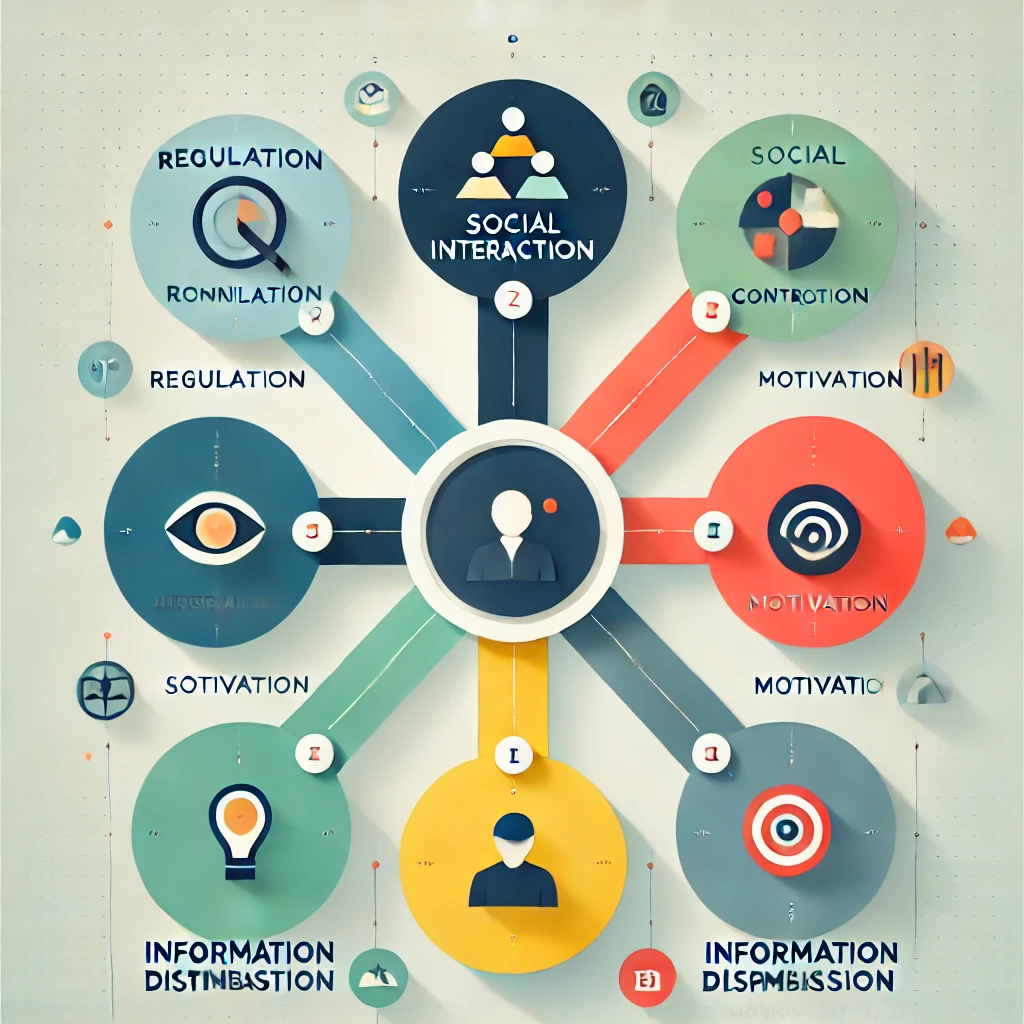
5 Functions Of Communication: Strengthening Connection in the Philippines
Communication serves various important roles in everyday life, shaping human behavior, relationships, and professional careers. In the context of the Philippines, we can categorize communication into five functions: Control/Regulation, Social Interaction, Motivation, Emotional Expression, and Information Dissemination.
Here’s a concise breakdown of each function and examples I’ve seen as a corporate trainer and resource speaker.
1. Control/Regulation: Managing Behavior and Social Norms
Communication as a tool for control or regulation ensures that people’s behaviors are aligned with rules, specific laws, and norms, whether in formal settings like the workplace or informal ones like family and social gatherings.
Controlling communication shouldn’t be viewed as negative but rather as a pathway to managing certain behaviors that aren’t aligned with either individual or organizational goals.
One good example of using communication for control or regulation in the Philippines is frequently seen in public advisories and government regulations. For instance, during natural disasters like typhoons, the government issues warnings and evacuation orders through mass communication channels, ensuring public safety.
At home, elders use verbal and nonverbal communication to guide younger family members and instill values such as respect and obedience. Using “opo” in conversing with elders is one way to show respect and submission to them.
Business communication also helps establish rules, guidelines, and policies to maintain discipline and productivity. Training managers on communication during regular meetings, memos, and employee handbooks help ensure that everyone in the organization understands expectations and complies with standards.
Another way to use communication for control is through performance management. Managers, supervisors, and directors can check and monitor the performance of their direct reports and control it by recommending solutions or through coaching—asking questions to assist their team members with options and solutions.
At Rainmakers, we conduct various managerial and leadership training programs that focus on communication, team management, problem-solving, and decision-making.
2. Social Interaction: Building and Maintaining Relationships
The social interaction function fosters connections and relationships vital in personal and professional contexts. Effective communication enables individuals to establish rapport, share experiences, and maintain social ties.
In the Philippines, where family and community bonds are central, social interaction is deeply embedded in day-to-day communication. Fiestas, weddings, and other gatherings are typical venues for social interaction, where communication strengthens relationships. The value of “pakikisama” (getting along well with others) is practiced in workplaces and among friends, where open communication helps foster cooperation and teamwork.
The context of social interaction for Filipinos is also visible in the workplace. You’ve seen more traffic on the streets on Fridays, as Filipino workers used to spend more time with their colleagues (i.e., “Friday nights”).
Moreover, with the vast diaspora of Filipinos working abroad, social media platforms like Facebook are crucial for maintaining connections between OFWs and their families. This digital form of social interaction keeps relationships alive despite geographic distances.
Today, we have different digital platforms to communicate with our loved ones anywhere and anytime.
3. Motivation: Inspiring Action and Change
Motivational communication drives people to take action, achieve goals, or change behavior. This function is prominent in leadership, education, and marketing.
Politicians, religious leaders, and motivational speakers use communication to inspire action in the Philippines. Political campaigns, for example, rely heavily on persuasive speeches and advertisements to motivate voters to participate in elections. Similarly, teachers encourage students to work hard and pursue their dreams, often with words of encouragement that inspire effort and determination.
Businesses also use motivational communication to drive performance. Sales targets, performance incentives, and corporate goals are communicated effectively to inspire teams to meet objectives and exceed expectations.
Filipino leaders frequently appeal to the heart—“puso”—as part of their motivational strategy. In fact, we adhere to and respect leaders who are more humane than others (pagiging ‘Makawao’), as we want someone who can understand and empathize with our needs and challenges.
In our leadership training for managers and supervisors, we go deep into the root meaning of motivation - “movere”, which comes from both “move” and “motives.”
4. Emotional Expression: Sharing and Managing Emotions
Communication allows individuals to express their emotions and form deeper emotional connections with others. This function is essential in building empathy and understanding.
In Filipino culture, emotional expression is highly valued in personal relationships. The expression of “kilig” (romantic excitement), “hiya” (modesty), or “lambing” (affection) is common in both verbal and non-verbal communication. Whether through heartfelt conversations or simple gestures, communication serves as a medium for emotional expression.
Emotional communication is also essential in mental health advocacy, which has gained more attention in the Philippines. Encouraging open dialogue about emotions has become a key part of destigmatizing mental health concerns, providing individuals with a safe space to express their feelings.
Developing someone’s emotional intelligence is also crucial in the workplace, as leaders must know how to be sensitive to other people’s feelings. They can also enhance their inspirational skills further to push their direct reports to perform better and integrate their professional lives, which further translates to a healthy culture.
5. Information Dissemination: Sharing Knowledge and Facts
Information dissemination is critical for education, public awareness, and decision-making. Communication ensures that knowledge is effectively spread to large groups of people.
In the Philippines, the media—television, radio, and online platforms—plays a vital role in information dissemination. News programs, public service announcements, and government briefings provide essential information on health advisories, education programs, and national events.
For example, media outlets inform the public about candidates, platforms, and voting procedures during election periods.
Educational institutions are also key players in information dissemination. Teachers and trainers pass on knowledge and skills through structured communication, ensuring that students and employees acquire the information they need for personal and professional development.
I’ve seen government agencies actively searching for corporate training providers who can conduct proper digital public relations and communication training for their staff, particularly the ones handling their social media campaigns and offline public relations. These people must be equipped with the right tools to disseminate information with credibility and authenticity.
Conclusion
The five functions of communication—control/Regulation, Social Interaction, Motivation, Emotional Expression, and Information Dissemination—are essential in shaping behavior, building relationships, inspiring action, expressing emotions, and spreading knowledge.
In the Philippines, these functions are deeply ingrained in cultural practices and everyday life, reflecting the importance of effective communication in maintaining social harmony and progress. Understanding and applying these functions can enhance personal, professional, and societal communication, leading to better outcomes across various contexts.

Advanced Presentation Skills: Master Techniques to Captivate and Influence
As a trainer and speaker, I’ve seen the importance of developing advanced presentation skills for leaders and those starting their careers. Whether you’re pitching a potential investor, conducting a meeting with your team, or publicly speaking at a conference, mastering the basics and being aware of the nitty-gritty details of a high-impact presentation is an essential skill anyone can undoubtedly benefit from.
This guide will examine strategies and techniques for improving your presentation skills. I will also share my takeaways as a professional speaker and corporate trainer.
1. Understand Your Audience
One of the fundamental aspects of any presentation is understanding your audience. You can craft a talk that addresses their current challenges and context by determining their needs, wants, and expectations. Thus, it helps them see themselves better if it’s an inspirational presentation or if they are participants in a specific competence training session.
If it is a training or speaking session, conduct a training needs analysis with the organizer and HR representative so you can ask relevant questions to better understand their audience. In a much more comprehensive manner, trainers conduct focus group discussions with a few of the participants to directly gain insights into their current experiences and expectations.
By getting answers to those questions, you can customize your message to better resonate with your audience, making it more relevant and impactful.
It is also best to understand the context of the organization, the company's context within the industry, and how your topic should be discussed in the event—all these can help you speak on point when delivering your presentation.
2. Structure Your Presentation for Maximum Impact
A well-structured presentation is important in capturing and maintaining your audience’s attention, allowing them to experience your message's journey.
In my presentation skills training, I shared a three-step process for structuring a presentation:
- Launch (Introduction)
- Fly (Body of Content)
- Land (Closing)
Let’s have a quick look at each part.
During the Launch stage of the presentation, you start with a solid opening to grab your audience's attention. There is a First 30 to 60-second rule in public speaking that you have to maximize in opening an impactful speech.
During the first 30 seconds, you could use a relevant quote, ask questions, and let your participants engage with each other (left-hand and right-hand tap - like what I do during my training and talks).
The goal is to set the stage for your presentation and provide a good impression at the start of your talk. Remember that at the beginning, your audience will decide whether to listen, trust, and like you based on your opening lines. So, if you’re delivering a perfect punch, you will likely get remembered and maintain their attention throughout your presentation.
At the Fly stage, you present your key points, solutions, or simply the content itself. This is where you tackle the three most important points of your talk—we call them the Big Three.
Simplify your talk by only covering three essential points, then direct towards the finer details from each main point. This way, you can summarize it by discussing those three main points at the end of your speech.
Lastly, the Land stage is where you conclude your presentation. Here, you summarize your key points and end with a strong punch—or closing statement. It could be a challenge they have to do or apply from your talk, a call to action, a powerful quote, or a forward-looking statement that can leave an impactful and lasting impression.
3. Master Non-Verbal Communication
Nonverbal communication, including body language, eye contact, and gestures, plays a significant role in conveying your message and increasing the perceived value of your presentation.
Start mastering nonverbal communication by making eye contact with different participants in your audience. If you speak to a crowd of 50 people for one hour, you can aim to see them once eye-to-eye for at least the duration of your speech.
Use purposeful gestures to emphasize key points. Be careful not to be overly conscious of your hand gestures. Avoid nervous gestures that can distract your audience from your message.
Stand confidently, hands-free, and do not look back or sideways. Smile. Smiling can help remove barriers to your connection with your audience and promote a welcoming experience. You can also utilize a serious expression when emphasizing essential points.
4. Use Visual Aids Effectively
Visual aids can enhance your presence, making it more engaging and appealing to the senses of your participants.
One of the best ways to add effective visuals is to keep your slides simple and uncluttered. Avoid too much text and use bullet points and images more often to highlight data, key points, and information. Instead of overcrowding slides with text, visuals can reinforce points that can hook your audience's attention even more.
Utilize animations and transitions sparingly. These can enhance the flow of your presentation, not distract from it.
I use visual aids in my corporate training programs to remind me of my next point and message. I simply place my laptop in front of me so I do not need to turn back to see my screen and make unnecessary moves that would only distract my audience.
5. Leverage Storytelling For Emotional Engagement
Storytelling is one of the most potent ways to connect with your audience. Facts tell, but stories sell. Stories can make complex concepts relatable and memorable.
When incorporating stories into your presentation, be authentic. Share only personal experiences and anecdotes relevant to your topic. Authenticity in storytelling helps build trust and rapport with your audience.
I usually start my presentation with a story. This is my way of capturing my audience's attention and allowing me to connect the context of my topic with my personal experiences.
Always connect your stories to your message. A well-told story can illuminate the main points and make the message even more practical and relatable.
6. Handle Questions and Challenges Effectively
You must face challenges in every speaking or training session to better engage your audience.
The key to handling all these obstacles is the power of preparation. Prepare yourself by practicing your speech and internalizing the message and its impact on your audience. This will also allow you to anticipate the types of questions and even objections your audience might have and prepare your responses in advance.
Remain calm and composed when answering questions. Take a moment to think before responding. If the question seems unclear, clarify it. This ensures you address their concern accurately.
In some rare cases when you don’t know the answer, admit it or say, “I’ll get back to you on this one”. Be respectful and genuine, as you don’t have to answer everything's scope outside your subject of expertise.
7. Work Hard on the Preparation
Even the most seasoned presenters practice extensively. It is what makes their presentations successful and captivating, as preparation builds your self-confidence and improves your delivery.
One of the best ways to practice is to get feedback from a trusted colleague or mentor. Through constructive feedback, you’ll be able to see your flaws and areas for improvement so you can deliver the presentation better next time.
8. Use the Power of Pausing
Pauses are powerful tools in presentations. They give your audience time to absorb information, emphasize key points, and make you appear more confident.
Utilize pauses strategically before delivering a critical point. You can pause after asking rhetorical questions to allow your audience to reflect and engage with you and your content.
Deliver Your Best Presentation Every Time
Mastering advanced presentation skills isn’t just about what you say but how you say it.
By understanding your audience, structuring your presentation effectively, utilizing visual aids wisely, and practicing diligently, you’ll transform your presentation from mediocre to a successful session your audience would love to engage with. This can eventually translate to more sales, more income, and expanded influence on you as a professional.
The strategies mentioned above have been proven to work for both newbie and seasoned speakers and trainers, both locally (Philippines) and internationally.

Team Training - Comprehensive Guide to Improving Team Performance and Collaboration
Team training is a structured learning approach that aims to improve team performance and collaboration within an organization. It helps enhance communication, trust, and coordination among team participants, leading to higher productivity and better outcomes.
Differences Between Team Training and Team Building
In the local learning and development scene in the Philippines, team training is often intertwined with team building, as both require team participation.
The primary focus of team training is to enhance the specific skills and competencies of team members, particularly team leaders (managers, supervisors, directors, etc.), so that they can perform their jobs effectively in handling their teams, addressing conflicts and issues, and assessing team dynamics day to day.
Conversely, team building helps to strengthen relationships, trust, and collaboration among team members using various activities and methodologies.
Team training enhances competencies, while the latter promotes healthy relationships.
Another way to look at the differences between team training and team building is the content and methodology.
Team training content is usually specific to the job or industry, including technical skills, soft skills, or process improvements, but it is more often contextualized in team settings. It is often structured with a clear outline, objectives, and assessments similar to corporate training programs.
Conversely, team-building activities are less structured, sometimes informal, and experiential in nature. They focus on interpersonal dynamics and are often interactive and fun, designed to engage participants in a way that fosters collaboration.
Why Team Training is Important For Team Dynamics?
Teams face different challenges, whether they’re newly built or flexible enough to exchange members with other teams. The truth is that, more often than not, our fast-pacing environment and technology could affect every team's dynamics.
As such, team training is needed to enhance communication and collaboration. It helps address any issues and conflicts within the team, which is essential for the culture building process.
Team training also develops team cohesion and trust. Given that trust is the glue that binds team members, understanding what makes a high-performing, high-relationships core team can foster a more supportive work environment.
Another upside of team training is that it boosts productivity and efficiency. It aids in equipping team members with the right skills to work more effectively together (not just produce individual output). As team members learn team dynamics and the right delegation and management, they’ll also reduce redundancy and enhance workflow.

Types of Team Training
Different types of team training exist, such as in-house learning and development, or a corporate trainer can help the company or client grow their people. Let me give you the most-applied types of training:
Skill-Based Training
This type of team training focuses on enhancing specific skills necessary for every team member to perform their roles effectively. For instance, technical skills training that help employees master the use of new tools and technological platforms, while leadership could be leadership training to help them prepare team members for management roles.
Soft Skills Training
Soft skills, such as personality development, communication, problem-solving, and presentation skills, are essential for effective teamwork. These soft skills training programs help team members enhance their skills and master specific competencies, leading to better collaboration and conflict resolution.
Cross-Training
Cross-training involves teaching team members to be flexible and adaptive to the ever-changing internal changes of the organization, as it typically happens for companies with multiple projects and juggling client management. Everyone must know how to perform their roles effectively from one team to the next. This doesn’t just help them be more flexible as individuals but helps team members understand each other’s responsibilities - creating a more cohesive team.
Team-Alignment Exercises
Team alignment exercises are designed to strengthen relationships and align everyone to the team's or the entire organization's vision, mission, and goals. These exercises range from simple icebreakers to more complex mental or physical challenges requiring teamwork and collaboration.
The 5 Dynamics of Team Development
The five dynamics of team development were pioneered by a renowned psychologist, Bruce Tuckman, in 1965. Tuckman’s model includes Forming, Storming, Norming, Performing, and Adjourning. It is a comprehensive framework to help trainers and learning and development practitioners understand the dynamics of team development.
Each stage represents a different level of team maturity, collaboration, and productivity.
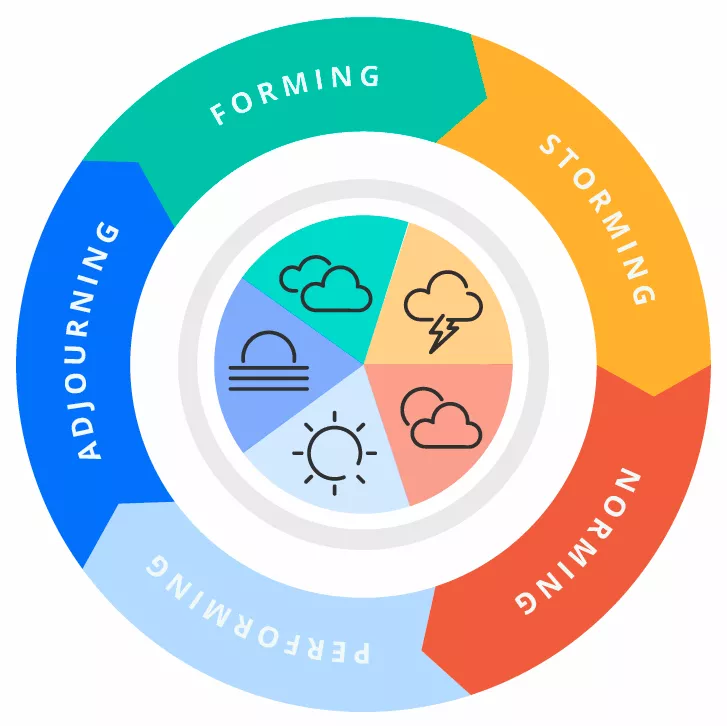
Forming
The forming stage is the initial phase of team development, where members come together and get acquainted. During this stage, individuals are more often than not cautious as they’re still trying to build harmony with others, trying to understand their roles and their team’s objectives and goals, and assessing themselves and how they can fit into the group.
At this stage, you’ll notice a high degree of uncertainty, and team members may look to the leader for guidance and direction. The challenge is building trust and clarifying roles and expectations.
Storming
The storming stage is often the most challenging phase, as this is where conflict and power struggles occur. As team members become more comfortable working with each other, differences in opinions, working styles, beliefs, attitudes, and personalities may lead to tension and disagreements.
This stage is critical for growth, as managers and supervisors must develop early leadership skills to address certain issues and develop ways of working together.
The top challenge during this stage is managing conflicts and finding common ground among individuals. The leader must then know how to facilitate open communication, resolve conflicts, and guide the team towards better collaboration.
Norming
In the norming stage, the team begins to resolve its conflicts and gains a sense of cohesion. Roles and responsibilities become clearer, and team members start to work more collaboratively. The team establishes norms and processes that can help it function more effectively. Here, you’ll see a growing sense of camaraderie and trust.
One challenge at this stage is maintaining momentum built from solid progress in results and achievements and reinforcing positive behaviors so that they encourage continued collaboration and ensure the team stays focused on its goals and objectives.
Performing
As the name suggests, the performing stage represents the peak of team development, where the team operates at high efficiency and effectiveness. Team members are confident in their roles and work together seamlessly to achieve their goals.
Communication is open, and the team can handle challenges and make decisions autonomously. This stage is mostly marked by high productivity, innovation, and satisfaction.
The challenge here is sustaining performance, continuous improvement, and adapting to new challenges. You don’t want your team to stay stagnant; instead, it should remain flexible and adaptive to the ever-changing needs of your organization and customers.
The leaders must empower the team to take ownership of their work, create a succession plan for emerging leaders, provide support as needed, and focus on the company's strategic goals.
Adjourning
The adjourning stage, also known as the “mourning” stage is when the team has completed all its objectives and the project or task ends. The adjourning stage typically happens to the team in many companies with multiple projects.
At this stage, team members may feel a sense of accomplishment while feeling sad or uncertain about which team they’ll join next. This stage is an opportunity for reflection and celebration of the team's achievements.
The top challenges here are managing emotions and ensuring a smooth transition. Leaders should know how to facilitate reflection and debriefing so they can continuously support their team members as they transition to new roles or projects.
The five dynamics of team development are valuable for anyone trying to understand how their teams can evolve from mediocre to high-performing ones. Understanding these stages can allow teams to navigate conflicts, strengthen relationships, and ultimately achieve their team goals.
Implementing an Effective Team Training Program
Every in-house L&D practitioner or corporate trainer must take a structured approach to implementing an effective team training program. Let me share with you how we structure our team training programs as a corporate training provider.
Needs Assessment
The first step in implementing a team training program is to assess the team's specific needs. We call this training needs analysis. This involves identifying areas where the team (and its leaders) must improve or develop skills.
A practical training needs assessment can help customize the team training program to address the issues observed and uncovered during the analysis phase.
Set Clear Goals
Once the training needs assessment is complete, it’s essential to set clear, measurable goals for the training. Practical goal setting using tools like SMARTER goals can help align with the organization's overall objectives and provide a clear direction for the training.
Choose Appropriate Training Methods
Many training methodologies include lectures, interactive discussions, workshops, role-plays, online courses (self-paced learning courses), and hands-on activities based on the team training program outline.
The key to implementing the correct methodology is to match it to the current learning styles and needs.
Measure Training Effectiveness
Ultimately, you want to see if your team training program has a real impact on your audience. You can use the Kirkpatrick Evaluation Model framework to measure and evaluate the effectiveness of the team training programs. It includes four levels:
- Level 1: Reaction—This is where you can measure whether the learners have found the training relevant to their role, engaging, and useful using feedback forms and template surveys after the training program.
- Level 2: Learning—Measure whether or not the learner has acquired the knowledge, skills, attitude, confidence, and commitment that the training program is focused on.
- Level 3: Behavior - measure behavioral changes after learning and see if the learners have applied them in their daily work.
- Level 4: Results - measure whether or not the target objectives have been achieved due to the training program.
Team Training Resources
If you’re interested in exploring team training, several resources are available. For books, you can purchase "The Five Dysfunctions of a Team" by Patrick Lencioni and "Team of Teams" by General Stanley McChrystal.
Invest in Team Training and Development
It is not enough to just have stock knowledge after reading this guide; invest in team training for your employees. Contact one of our teams to set up a training needs analysis session so we can start developing team training programs for your organization.